 Indietro
Cellular Respiration, Fermentation, and Enzyme Regulation: Study Notes for General Biology
Guida di studio - Note intelligenti
 Appunti personalizzati basati sui tuoi materiali, ampliati con definizioni chiave, esempi e contesto.
Cell Respiration & Fermentation
Overview of Cellular Respiration
Cellular respiration is a fundamental metabolic process by which cells extract energy from organic molecules, primarily glucose, to produce ATP, the energy currency of the cell. This process occurs in both plant and animal cells and involves a series of redox reactions.
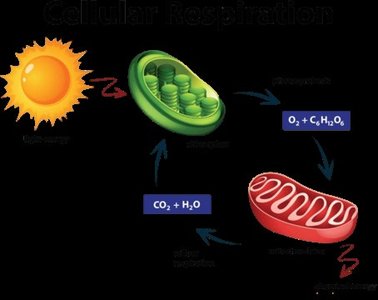
Photosynthesis in chloroplasts converts light energy into chemical energy, producing O2 and organic molecules.
Cellular respiration in mitochondria uses O2 and organic molecules to generate ATP, releasing CO2 and H2O as waste.
Energy enters ecosystems as light and exits as heat; chemical elements are recycled.

Stages of Cellular Respiration
Cellular respiration consists of three main stages, each contributing to the breakdown of glucose and the production of ATP.
Glycolysis: Occurs in the cytoplasm; breaks down glucose into two pyruvate molecules.
Pyruvate Oxidation & Citric Acid Cycle: Completes glucose breakdown to CO2 in mitochondria.
Oxidative Phosphorylation: Electron transport chain and chemiosmosis produce most ATP.
Equation for aerobic respiration:

An Introduction to Metabolism
Metabolism and Enzymes
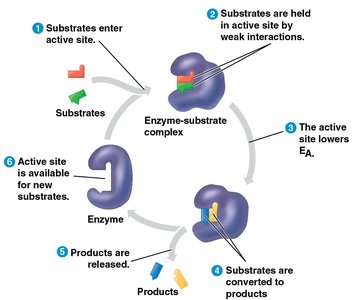
Metabolism encompasses all chemical reactions in a cell, including catabolic (energy-releasing) and anabolic (energy-consuming) pathways. Enzymes are biological catalysts that speed up metabolic reactions by lowering activation energy (EA).
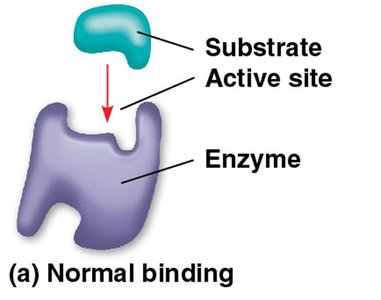
Substrate: The reactant an enzyme acts upon.
Active site: Region of the enzyme where substrate binds.
Enzymes emerge unchanged from reactions, allowing small amounts to have large effects.
Mechanisms of Enzyme Action
Enzymes use several mechanisms to lower activation energy and facilitate reactions.
Orienting substrates to promote reaction.
Stretching substrate bonds for easier breaking.
Providing a favorable microenvironment.
Active site amino acids may participate directly in the reaction.
Effects of Temperature and pH on Enzyme Activity
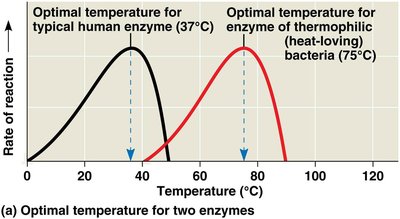
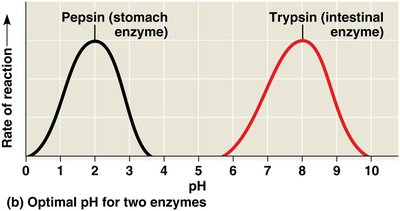
Each enzyme has optimal conditions for activity, determined by its environment.
Temperature: Reaction rate increases with temperature up to an optimum, then decreases as enzymes denature.
pH: Each enzyme has an optimal pH; for example, pepsin (stomach) is optimal at pH 2, trypsin (intestine) at pH 8.
Cofactors and Coenzymes
Cofactors are nonprotein helpers required for enzyme function. They may be inorganic (metal ions) or organic (coenzymes).
Inorganic cofactors: Zinc, iron, copper ions.
Coenzymes: Organic molecules, often derived from vitamins.
Enzyme Inhibition
Certain chemicals inhibit enzyme activity, either reversibly or irreversibly.
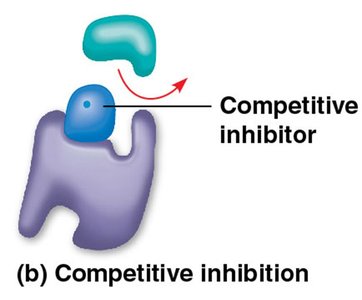
Competitive inhibitors: Resemble substrate and bind to active site, blocking substrate access. Increasing substrate concentration can overcome inhibition.
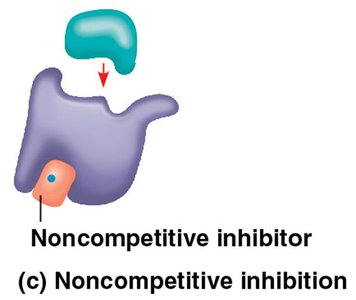
Noncompetitive inhibitors: Bind elsewhere on enzyme, causing shape change and reducing active site effectiveness.
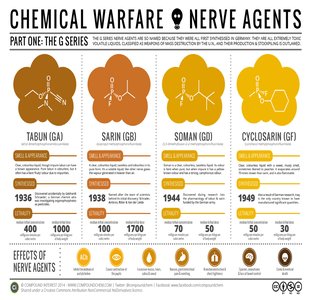
Irreversible inhibitors: Bind covalently, permanently disabling enzyme (e.g., toxins, nerve agents).
Allosteric Regulation and Cooperativity
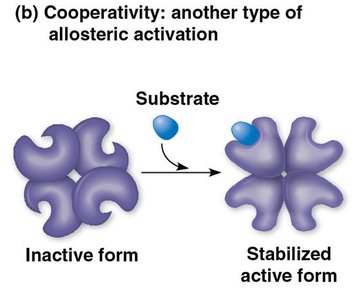
Allosteric regulation involves regulatory molecules binding to sites other than the active site, affecting enzyme activity. Cooperativity is a form of allosteric activation where substrate binding to one site enhances activity at other sites.
Enzymes may oscillate between active and inactive forms.
Cooperativity amplifies enzyme response to substrate.
Feedback Inhibition
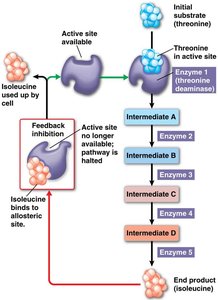
Feedback inhibition is a regulatory mechanism where the end product of a pathway inhibits an earlier step, preventing overproduction and conserving resources.
Common in metabolic pathways.
Ensures efficient use of cellular resources.
Catabolic Pathways and ATP Production
Catabolic Pathways
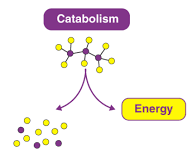
Catabolic pathways break down complex molecules to release energy, often through redox reactions. Cellular respiration is a central catabolic pathway.
Fermentation: Partial degradation of sugars without oxygen.
Aerobic respiration: Uses oxygen as final electron acceptor.
Anaerobic respiration: Uses other molecules as final electron acceptor.
Redox Reactions in Cellular Respiration
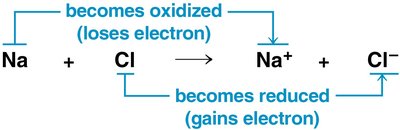
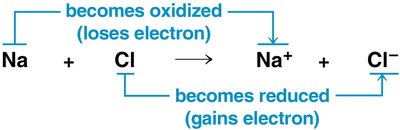
Redox reactions involve electron transfer. Oxidation is loss of electrons; reduction is gain of electrons. These reactions are essential for energy extraction from food.
Reducing agent: Electron donor.
Oxidizing agent: Electron acceptor.
Electron Transport Chain and ATP Synthesis
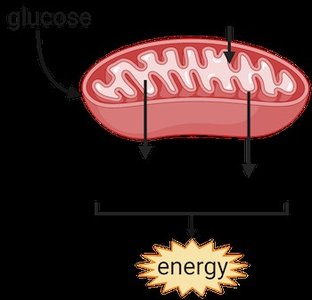
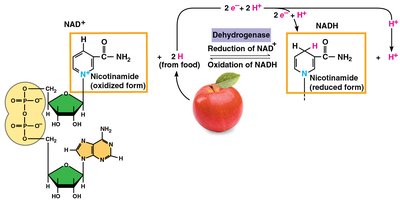
Electrons from NADH and FADH2 are transferred through the electron transport chain, releasing energy used to pump protons and drive ATP synthesis via chemiosmosis.
NAD+: Electron carrier, oxidizing agent.
Electron transport chain: Series of molecules in mitochondrial membrane.
ATP synthase: Enzyme that synthesizes ATP as protons flow through.


Fermentation and Anaerobic Respiration
Fermentation
Fermentation allows cells to produce ATP without oxygen by regenerating NAD+ through alternate pathways.
Alcohol fermentation: Pyruvate converted to ethanol and CO2.
Lactic acid fermentation: Pyruvate reduced to lactate; no CO2 released.
Comparing Fermentation, Anaerobic, and Aerobic Respiration
All three processes use glycolysis to oxidize glucose, but differ in electron acceptors and ATP yield.
Fermentation: Organic molecule is final electron acceptor; yields 2 ATP.
Anaerobic respiration: Uses electron transport chain with non-oxygen acceptor.
Aerobic respiration: Oxygen is final electron acceptor; yields up to 32 ATP.
Regulation of Cellular Respiration
Feedback Mechanisms
Cellular respiration is regulated by feedback inhibition, ensuring efficient energy production and resource use.
ATP concentration controls respiration rate.
Enzyme activity is regulated at key pathway points.
Summary Table: Comparison of Metabolic Pathways
Pathway | Final Electron Acceptor | ATP Yield (per glucose) | Key Products |
|---|---|---|---|
Aerobic Respiration | O2 | ~32 | CO2, H2O, ATP |
Anaerobic Respiration | Non-O2 (e.g., SO42-) | Variable | CO2, H2S, ATP |
Fermentation | Organic molecule (e.g., pyruvate) | 2 | Ethanol or lactate, ATP |
Key Terms and Definitions
ATP (Adenosine Triphosphate): Main energy carrier in cells.
Glycolysis: First stage of cellular respiration; occurs in cytoplasm.
Citric Acid Cycle (Krebs Cycle): Second stage; occurs in mitochondria.
Oxidative Phosphorylation: Final stage; produces most ATP.
Fermentation: Anaerobic process regenerating NAD+.
Enzyme: Protein catalyst for biochemical reactions.
Substrate: Molecule acted upon by an enzyme.
Redox Reaction: Chemical reaction involving electron transfer.
----------------------------------------
