Indietro
Cellular Respiration: Harvesting Energy from Glucose
Guida di studio - Note intelligenti
 Appunti personalizzati basati sui tuoi materiali, ampliati con definizioni chiave, esempi e contesto.
Cellular Respiration and ATP Production
Overview of Energy Harvesting in Cells
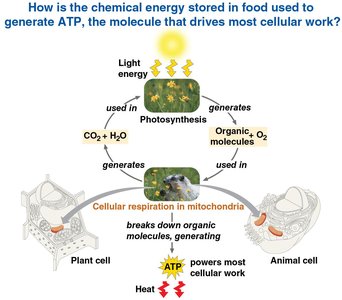
Cells require energy to perform work, and this energy is primarily supplied by ATP, which is generated from the chemical energy stored in food molecules. The process of cellular respiration allows cells to convert the energy in glucose into ATP through a series of metabolic pathways. This process is central to organismal growth and metabolism.
The Fate of Food: Energy and Carbon Skeletons
Food serves two main biological functions: it provides chemical energy for ATP synthesis and supplies carbon skeletons for building cellular structures. Energy harvesting and biomass production are distinct but interconnected processes.
Stages of Cellular Respiration
Four Major Stages
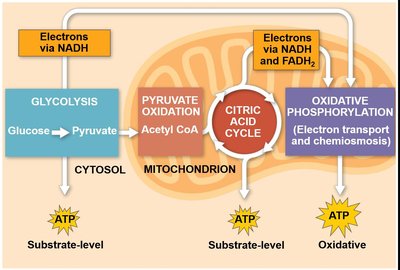
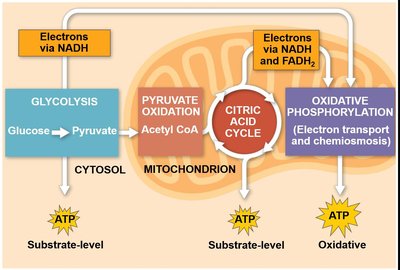
Cellular respiration consists of four interconnected stages that convert glucose to ATP:
Glycolysis – Occurs in the cytosol; splits glucose into two pyruvate molecules.
Pyruvate Oxidation – Occurs in the mitochondrial matrix; converts pyruvate to acetyl-CoA.
Citric Acid Cycle (Krebs Cycle) – Occurs in the mitochondrial matrix; oxidizes acetyl-CoA, generating NADH, FADH2, and ATP.
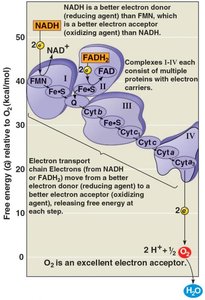
Oxidative Phosphorylation – Occurs in the inner mitochondrial membrane; uses electron transport and chemiosmosis to produce most ATP.
Redox Reactions: The Chemistry of Energy Harvesting
Oxidation and Reduction
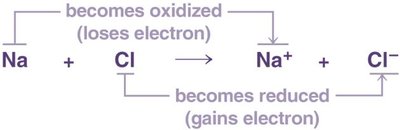
Energy harvesting relies on redox reactions, where electrons are transferred between molecules. Oxidation is the loss of electrons, while reduction is the gain of electrons. These reactions are coupled, and tracking electron flow is essential for understanding cellular respiration.
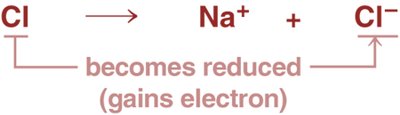
Electron Carriers
Electron carriers such as NAD+ and FAD temporarily capture energy by accepting electrons and becoming reduced to NADH and FADH2. These carriers transport electrons to the electron transport chain, where further ATP production occurs.
Glycolysis: The First Stage
Glycolysis Overview
Glycolysis is an ancient pathway that occurs in the cytosol and does not require oxygen. It splits one six-carbon glucose molecule into two three-carbon pyruvate molecules, producing a small amount of ATP and NADH.
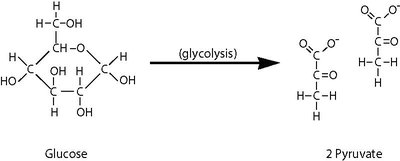
Energy Investment Phase
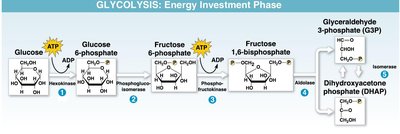
Cells invest ATP to phosphorylate glucose, trapping and activating it for cleavage. Two ATP are used in this phase, preparing glucose for subsequent energy harvesting.
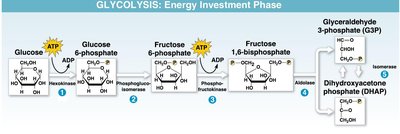
Energy Payoff Phase
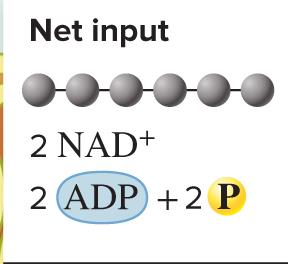
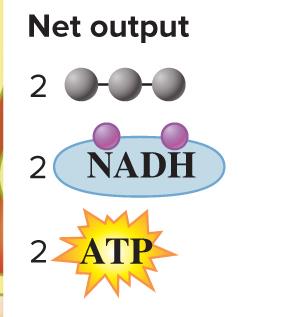
During the energy payoff phase, rearranged three-carbon molecules yield ATP and NADH. Four ATP are produced by substrate-level phosphorylation, and two NAD+ are reduced to NADH. The net yield per glucose is:
2 ATP
2 NADH
2 Pyruvate
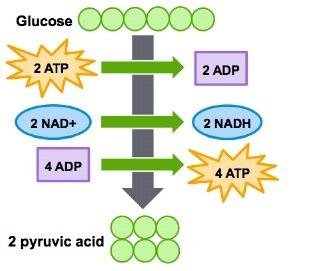
ATP Synthesis Mechanisms
Substrate-Level vs. Oxidative Phosphorylation
ATP can be synthesized by two mechanisms:
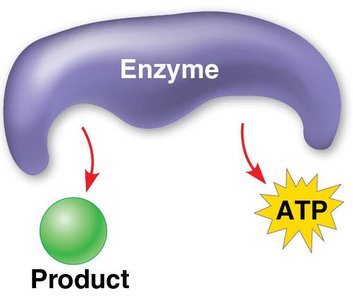
Substrate-level phosphorylation: An enzyme transfers a phosphate group directly to ADP.
Oxidative phosphorylation: ATP synthase uses a proton gradient generated by electron transport to synthesize ATP.
Pyruvate Oxidation and the Citric Acid Cycle
Pyruvate Oxidation
Each pyruvate is converted to a two-carbon acetyl group, releasing CO2 and reducing NAD+ to NADH. The acetyl group attaches to coenzyme A, forming acetyl-CoA.
Citric Acid Cycle (Krebs Cycle)
The citric acid cycle is an electron-harvesting cycle. Acetyl-CoA enters the cycle, and through a series of reactions, NADH, FADH2, and ATP/GTP are produced. The cycle regenerates oxaloacetate, allowing repetition.
Per Acetyl-CoA | Per Glucose |
|---|---|
1 ATP | 2 ATP |
3 NADH | 6 NADH |
1 FADH2 | 2 FADH2 |
2 CO2 | 4 CO2 |
Energy Capture and Carbon Accounting
Summary of Energy Yield
Before oxidative phosphorylation, the direct ATP yield is small. Most energy is captured in NADH and FADH2, which will be used in the electron transport chain to drive ATP synthesis.
Stage | ATP | NADH | FADH2 |
|---|---|---|---|
Glycolysis | 2 | 2 | 0 |
Pyruvate Oxidation | 0 | 2 | 0 |
Citric Acid Cycle | 2 | 6 | 2 |
Total | 4 | 10 | 2 |
Carbon Flow
All six carbons from glucose are eventually released as CO2 through pyruvate oxidation and the citric acid cycle.
Metabolic Flexibility and Biosynthesis
Intermediates for Biosynthesis
Metabolic intermediates from the citric acid cycle can be withdrawn for biosynthesis, such as amino acids, nucleotides, and fatty acids. This flexibility allows organisms to balance ATP generation with the construction of new cellular material.
Summary Table: Cellular Respiration Pathways
Pathway | Location | Main Products |
|---|---|---|
Glycolysis | Cytosol | 2 ATP, 2 NADH, 2 Pyruvate |
Pyruvate Oxidation | Mitochondrial Matrix | 2 NADH, 2 Acetyl-CoA, 2 CO2 |
Citric Acid Cycle | Mitochondrial Matrix | 2 ATP, 6 NADH, 2 FADH2, 4 CO2 |
Oxidative Phosphorylation | Inner Mitochondrial Membrane | ~28 ATP (from NADH and FADH2) |
Key Terms and Concepts
ATP (Adenosine Triphosphate): The primary energy currency of the cell.
Substrate-level phosphorylation: Direct transfer of phosphate to ADP by an enzyme.
Oxidative phosphorylation: ATP synthesis driven by electron transport and chemiosmosis.
NAD+ and FAD: Electron carriers that become NADH and FADH2 when reduced.
Pyruvate: Three-carbon product of glycolysis, precursor to acetyl-CoA.
Acetyl-CoA: Two-carbon molecule entering the citric acid cycle.
Citric Acid Cycle: Series of reactions harvesting electrons and regenerating oxaloacetate.
Equations
Overall Aerobic Glucose Oxidation:
ATP Yield from Glucose (before oxidative phosphorylation):
Redox Reaction Example:
Substrate-level Phosphorylation:
Summary
Cellular respiration is a multi-stage process that allows cells to harvest energy from glucose, producing ATP for cellular work and providing intermediates for biosynthesis. The process involves glycolysis, pyruvate oxidation, the citric acid cycle, and oxidative phosphorylation, with electron carriers playing a central role in energy transfer.