 Indietro
Ch 6: How Cells Harvest Chemical Energy
Guida di studio - Note intelligenti
 Appunti personalizzati basati sui tuoi materiali, ampliati con definizioni chiave, esempi e contesto.
Chapter 6: How Cells Harvest Chemical Energy
Overview of Cellular Respiration
Cellular respiration is a fundamental process by which cells extract energy from organic molecules, primarily glucose, to produce ATP, the energy currency of the cell. This process is essential for powering cellular activities and maintaining life. Cellular respiration is closely linked to photosynthesis, as both are central to energy flow in ecosystems.
Cellular Respiration: Aerobic process that converts glucose and oxygen into carbon dioxide, water, and ATP.
Fermentation: Anaerobic process that allows cells to produce ATP without oxygen, yielding less energy.
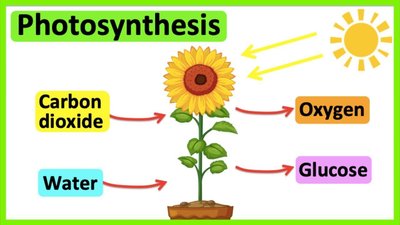
Photosynthesis: Process in plants and some organisms that converts solar energy into chemical energy (glucose).
Photosynthesis and Cellular Respiration: Energy for Life
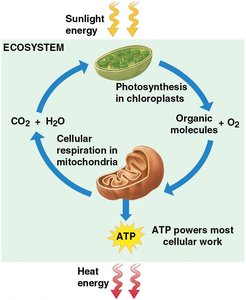
Energy in ecosystems originates from the sun. Photosynthesis captures solar energy and stores it in organic molecules, while cellular respiration releases this energy for cellular work. These processes are interconnected, forming the basis of energy flow in living systems.
Photosynthesis: Converts sunlight, carbon dioxide, and water into glucose and oxygen.
Cellular Respiration: Uses glucose and oxygen to produce ATP, carbon dioxide, and water.
Relationship Between Breathing and Cellular Respiration
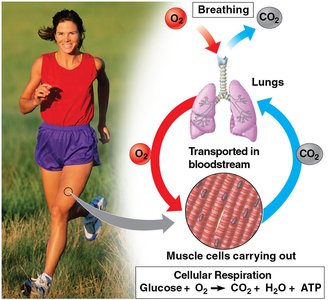
Although breathing and cellular respiration are related, they are distinct processes. Breathing supplies oxygen to the body and removes carbon dioxide, while cellular respiration occurs at the cellular level, using oxygen to extract energy from glucose.
Breathing: Exchange of gases (O2 and CO2) between organism and environment.
Cellular Respiration: Metabolic pathway that uses oxygen to produce ATP from glucose.
ATP: The Energy Currency of the Cell
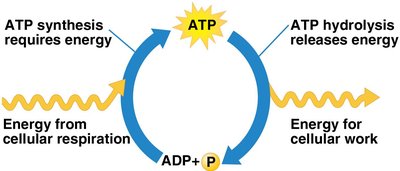
ATP (adenosine triphosphate) is the molecule that stores and transfers energy within cells. Energy is released when the third phosphate group is removed, converting ATP to ADP (adenosine diphosphate).
Exergonic Reactions: Release energy, such as the breakdown of glucose in cellular respiration.
Endergonic Reactions: Require energy input, such as ATP synthesis.
ATP Cycle: ATP is synthesized from ADP and phosphate using energy from cellular respiration, and hydrolyzed to release energy for cellular work.

Mitochondrion Structure and Function
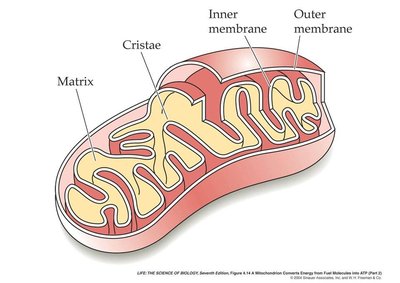
The mitochondrion is the organelle where most cellular respiration occurs. Its structure, including the matrix, cristae, inner and outer membranes, is specialized for efficient energy production.
Matrix: Site of the citric acid cycle.
Cristae: Folds of the inner membrane that increase surface area for oxidative phosphorylation.
Inner and Outer Membranes: Compartmentalize the processes of cellular respiration.
Cellular Respiration: Purpose and Energy Yield
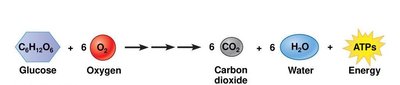
Cellular respiration is an exergonic process that transfers energy from glucose to ATP. Approximately 34% of the energy in glucose is captured as ATP, with the remainder lost as heat.
Energy Yield: About 10 million ATP molecules per second are required to power one active muscle cell.
Equation:
Redox Reactions in Cellular Respiration
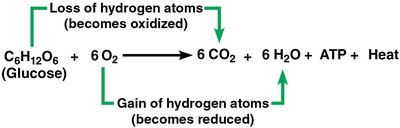
Cellular respiration involves redox reactions, where electrons are transferred from fuel molecules to oxygen. Oxidation is the loss of electrons, while reduction is the gain of electrons. These reactions are essential for extracting energy from glucose.
Oxidation: Loss of electrons (or hydrogen atoms) from a molecule.
Reduction: Gain of electrons (or hydrogen atoms) by a molecule.
Electron Carriers: NAD+ and FAD shuttle electrons during cellular respiration.
Stages of Cellular Respiration
Stage 1: Glycolysis
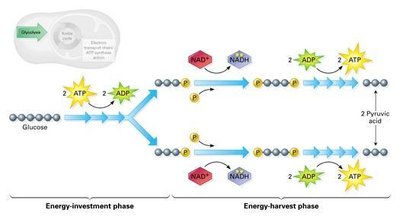
Glycolysis is the first stage of cellular respiration, occurring in the cytoplasm. It splits one glucose molecule into two pyruvate molecules, producing a net gain of 2 ATP and 2 NADH. Glycolysis consists of two phases: energy-investment and energy-payoff.
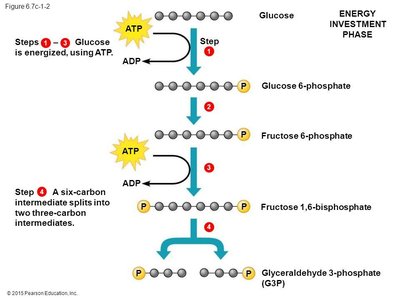
Energy-Investment Phase: 2 ATP are used to energize glucose.
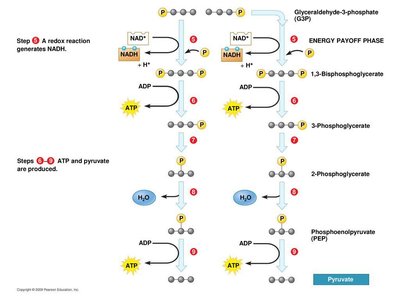
Energy-Payoff Phase: 4 ATP and 2 NADH are produced.
Net Yield: 2 ATP, 2 NADH, 2 pyruvate per glucose.


Metabolic Pathways and Intermediates
Glycolysis is a metabolic pathway composed of multiple steps, each catalyzed by a specific enzyme. Intermediates are compounds formed between the initial reactant and the final product.
Metabolic Pathway: Series of chemical reactions in a cell.
Intermediates: Compounds such as G3P (glyceraldehyde 3-phosphate) formed during glycolysis.
Substrate-Level Phosphorylation
ATP is produced in glycolysis by substrate-level phosphorylation, where a phosphate group is transferred from a substrate molecule to ADP.
Substrate-Level Phosphorylation: Direct transfer of phosphate to ADP to form ATP.
Result: Net gain of 2 ATP per glucose in glycolysis.
Summary of Glycolysis
Glycolysis is a crucial step in cellular respiration, providing energy and electron carriers for subsequent stages. It is the only pathway that can function anaerobically, making it vital for cells lacking oxygen.
Inputs: Glucose, 2 ATP, 2 NAD+
Outputs: 2 pyruvate, 4 ATP (2 net), 2 NADH
Stage 2: Intermediate Step and Citric Acid Cycle
After glycolysis, pyruvate is oxidized in the intermediate step to form acetyl-CoA, which enters the citric acid cycle (Krebs cycle). The citric acid cycle completes the breakdown of glucose, producing CO2, ATP, NADH, and FADH2.
Intermediate Step: Pyruvate is converted to acetyl-CoA, releasing CO2 and producing NADH.
Citric Acid Cycle: Acetyl-CoA is oxidized, generating ATP, NADH, FADH2, and CO2.
Additional info: The notes cover the first two stages of cellular respiration. Oxidative phosphorylation, the third stage, involves the electron transport chain and chemiosmosis, producing the majority of ATP in cellular respiration.
