 Indietro
Ch.6 Cellular Respiration Pt.2 : Intermediate Step, Citric Acid Cycle, & Oxidative Phosphorylation
Guida di studio - Note intelligenti
 Appunti personalizzati basati sui tuoi materiali, ampliati con definizioni chiave, esempi e contesto.
Stage 2: Intermediate Step and Citric Acid Cycle
Oxidation of Pyruvate (Intermediate Step)
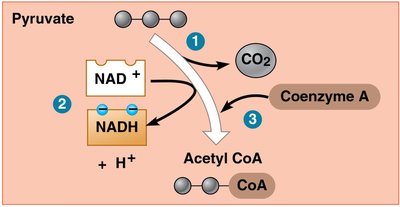
The intermediate step links glycolysis to the citric acid cycle by converting pyruvate into acetyl CoA. This process occurs in the mitochondrial matrix and is essential for cellular respiration.
Key Point 1: Pyruvate is oxidized, releasing CO2 and producing NADH.
Key Point 2: The resulting acetyl group is attached to coenzyme A, forming acetyl CoA.
Example: For each glucose molecule, two pyruvate molecules are converted, yielding two acetyl CoA, two NADH, and two CO2.
The Citric Acid Cycle (Krebs Cycle)
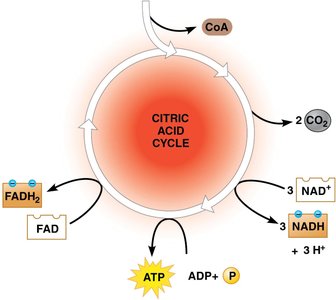
The citric acid cycle completes the oxidation of organic molecules, releasing energy stored in glucose. It takes place in the mitochondrial matrix and is a central pathway in aerobic respiration.
Key Point 1: For each turn of the cycle, two carbons from acetyl CoA are added, two CO2 are released, and high-energy electron carriers are produced.
Key Point 2: Each cycle produces 1 ATP, 3 NADH, and 1 FADH2.
Example: Since each glucose yields two acetyl CoA, the cycle turns twice per glucose, resulting in 2 ATP, 6 NADH, and 2 FADH2.
Stage 3: Oxidative Phosphorylation
Electron Transport Chain (ETC)
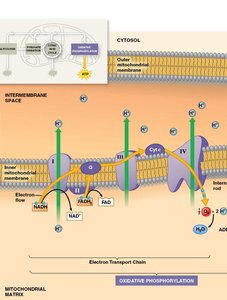
Oxidative phosphorylation is the final stage of cellular respiration, where most ATP is produced. The electron transport chain is a series of protein complexes embedded in the inner mitochondrial membrane.
Key Point 1: Electrons from NADH and FADH2 are transferred through the chain to oxygen, the final electron acceptor.
Key Point 2: Energy from electron transfer is used to pump protons (H+) into the intermembrane space, creating a proton gradient.
Example: Oxygen's high electronegativity makes it an efficient final electron acceptor, forming water as a byproduct.
Chemiosmosis and ATP Synthase
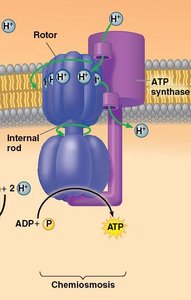
Chemiosmosis is the process by which the proton gradient drives ATP synthesis. ATP synthase is an enzyme complex that uses the energy stored in the gradient to convert ADP and inorganic phosphate into ATP.
Key Point 1: Protons flow back into the mitochondrial matrix through ATP synthase, powering the production of ATP.
Key Point 2: Approximately 28 ATP molecules are produced per glucose during this stage.
Example: The proton gradient is analogous to water stored behind a dam, representing potential energy.

Metabolic Poisons and Cellular Respiration
Effects of Metabolic Poisons
Several poisons can disrupt cellular respiration by interfering with the electron transport chain or chemiosmosis.
Key Point 1: Rotenone, cyanide, and carbon monoxide block electron flow in the ETC, preventing ATP synthesis.
Key Point 2: DNP uncouples chemiosmosis, allowing protons to flow back without generating ATP, which can be fatal.
Example: These poisons halt ATP production, leading to cell death.


Fermentation: Anaerobic Harvesting of Energy
Lactic Acid Fermentation
Fermentation enables cells to produce ATP without oxygen. In lactic acid fermentation, pyruvate is reduced to lactate, regenerating NAD+ for glycolysis.
Key Point 1: Occurs in muscle cells and certain bacteria under anaerobic conditions.
Key Point 2: Produces 2 ATP per glucose, much less than aerobic respiration.
Example: Used in yogurt and cheese production.
Alcoholic Fermentation
Alcoholic fermentation is similar, but pyruvate is converted to ethanol and CO2, regenerating NAD+.
Key Point 1: Occurs in yeast and some bacteria.
Key Point 2: Used in brewing, winemaking, and baking.
Types of Anaerobes
Obligate Anaerobes: Require anaerobic conditions; oxygen is toxic to them.
Facultative Anaerobes: Can switch between fermentation and aerobic respiration depending on oxygen availability.
Connections Between Metabolic Pathways
Use of Organic Molecules as Fuel
Cells can utilize carbohydrates, fats, and proteins as sources of energy for cellular respiration.
Key Point 1: Starches and glycogen are broken down into glucose.
Key Point 2: Proteins are converted to amino acids, which enter glycolysis or the citric acid cycle.
Key Point 3: Fats are broken down into glycerol and fatty acids, which are used in cellular respiration.
Summary Table: ATP Yield from Cellular Respiration
The following table summarizes the ATP yield from each stage of cellular respiration per glucose molecule:
Stage | ATP Produced |
|---|---|
Glycolysis | 2 |
Citric Acid Cycle | 2 |
Oxidative Phosphorylation | ~28 |
Total | ~32 |
Key Equations
Cellular Respiration Overall Equation
The overall process of cellular respiration can be summarized by the following equation:
Review Questions
What is oxidized and what is reduced in cellular respiration?
Why is oxygen necessary for oxidative phosphorylation?
How do metabolic poisons affect ATP synthesis?
What happens to glycolysis and the citric acid cycle if oxygen is not present?
Compare the energy yield of fermentation and aerobic respiration.
Additional info:
Some images and analogies (such as the dam) were used to reinforce the concept of potential energy in the proton gradient. All content is directly relevant to the General Biology course, specifically Chapter 6: How Cells Harvest Chemical Energy.
