 Indietro
Cellular Respiration: Mechanisms and Energy Yield
Guida di studio - Note intelligenti
 Appunti personalizzati basati sui tuoi materiali, ampliati con definizioni chiave, esempi e contesto.
Cellular Respiration: Overview
Introduction to Cellular Respiration
Cellular respiration is a fundamental metabolic process by which cells convert biochemical energy from nutrients into adenosine triphosphate (ATP), the energy currency of the cell. It involves a series of redox reactions and occurs in both aerobic and anaerobic conditions, though the term often refers to aerobic respiration.
Aerobic respiration: Requires oxygen and yields more ATP.
Anaerobic respiration: Occurs without oxygen, yielding less ATP.
Fermentation: A form of anaerobic metabolism that regenerates NAD+ for glycolysis.
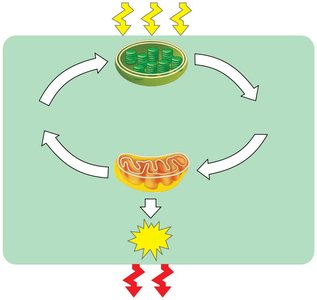
Redox Reactions in Cellular Respiration
Oxidation and Reduction
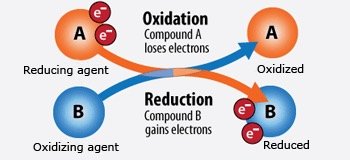
Cellular respiration is a large-scale redox reaction, where electrons are transferred from fuel molecules to oxygen. These reactions release energy that is used to synthesize ATP.
Oxidation: Loss of electrons from a molecule.
Reduction: Gain of electrons by a molecule.
OIL RIG: "Oxidation Is Loss, Reduction Is Gain" (of electrons).
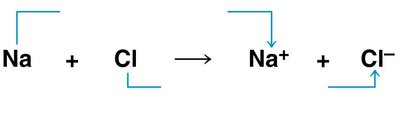
Ionization as Redox
Ionization is an extreme form of redox reaction, involving complete electron transfer, such as in the formation of Na+ and Cl- from Na and Cl.
Overall Chemical Equation for Cellular Respiration
Summary Equation
The overall reaction for aerobic cellular respiration is:

Glucose is oxidized to carbon dioxide.
Oxygen is reduced to water.
Energy is released and used to make ATP.
Stages of Cellular Respiration
Stepwise Energy Harvest
Energy from glucose is harvested in a stepwise manner, allowing cells to store some free energy in carrier molecules rather than losing it all as heat.
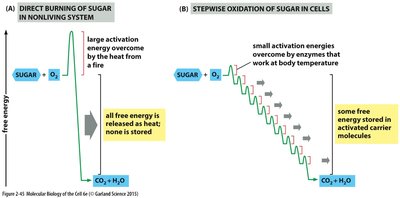
Direct burning: All energy released as heat.
Cellular oxidation: Energy stored in activated carrier molecules (e.g., NADH, FADH2).
Major Stages
Cellular respiration consists of three main stages:
Glycolysis: Occurs in the cytosol; glucose is split into two pyruvate molecules.
Citric Acid Cycle (Krebs Cycle): Occurs in the mitochondrial matrix; completes the oxidation of glucose.
Oxidative Phosphorylation: Occurs across the inner mitochondrial membrane; includes electron transport chain and ATP synthesis.
Glycolysis
Location and Process
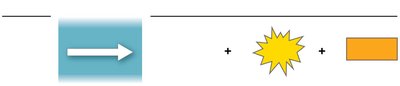
Glycolysis is the first stage of cellular respiration, taking place in the cytosol. It converts glucose into pyruvate, producing a small amount of ATP and NADH.
Inputs: Glucose, 2 NAD+, 2 ADP + 2 Pi
Outputs: 2 Pyruvate, 2 NADH, 2 ATP
Energy Investment and Payoff Phases
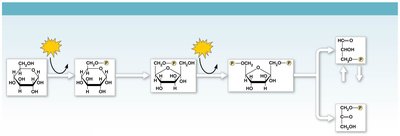
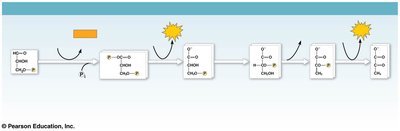
Glycolysis consists of two phases:
Energy Investment: ATP is used to phosphorylate glucose and its intermediates.
Energy Payoff: ATP and NADH are produced as glucose is converted to pyruvate.
Citric Acid Cycle (Krebs Cycle)
Location and Function
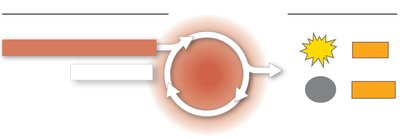
The citric acid cycle occurs in the mitochondrial matrix and completes the oxidation of glucose, releasing CO2 and generating NADH, FADH2, and ATP.
Inputs: 2 Acetyl CoA, NAD+, FAD, ADP + Pi
Outputs: CO2, NADH, FADH2, ATP
Oxidative Phosphorylation
Electron Transport Chain and ATP Synthesis
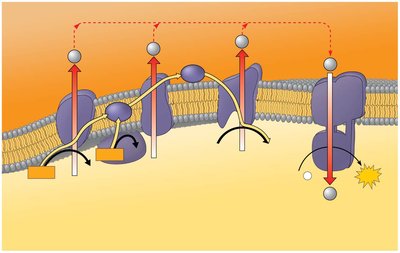
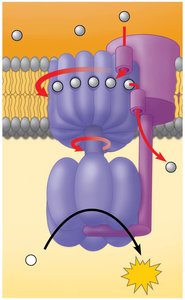
Oxidative phosphorylation occurs across the inner mitochondrial membrane and includes the electron transport chain (ETC) and chemiosmosis. NADH and FADH2 donate electrons to the ETC, which pumps protons to create a gradient used by ATP synthase to generate ATP.
Inputs: NADH, FADH2, O2, ADP + Pi
Outputs: ATP, H2O
Energy Yield and Regulation
ATP Accounting
The maximum ATP yield per glucose molecule is about 30-32 ATP, with most produced during oxidative phosphorylation.
Glycolysis: 2 ATP
Citric Acid Cycle: 2 ATP
Oxidative Phosphorylation: 26-28 ATP
Regulation of Cellular Respiration
Cellular respiration is regulated by feedback mechanisms. High levels of ATP inhibit key enzymes, slowing down the process when energy is abundant.
Fermentation and Anaerobic Respiration
Fermentation Pathways
When oxygen is absent, cells can perform fermentation to regenerate NAD+ and allow glycolysis to continue. Two main types are alcohol fermentation and lactic acid fermentation.
Alcohol fermentation: Produces ethanol and CO2 (yeast).
Lactic acid fermentation: Produces lactate (bacteria and muscle cells).
ATP yield: Only 2 ATP per glucose.
Evolutionary Significance of Glycolysis
Ancient Metabolic Pathway
Glycolysis is thought to be one of the earliest metabolic pathways, as it occurs in nearly all organisms and does not require oxygen. Early prokaryotes likely relied on glycolysis for ATP production before atmospheric oxygen was available.
Summary Table: Cellular Respiration Stages
Stage | Location | Inputs | Outputs | ATP Yield |
|---|---|---|---|---|
Glycolysis | Cytosol | Glucose, NAD+, ADP + Pi | Pyruvate, NADH, ATP | 2 |
Citric Acid Cycle | Mitochondrial Matrix | Acetyl CoA, NAD+, FAD, ADP + Pi | CO2, NADH, FADH2, ATP | 2 |
Oxidative Phosphorylation | Inner Mitochondrial Membrane | NADH, FADH2, O2, ADP + Pi | ATP, H2O | 26-28 |
Example: During intense exercise, muscle cells may switch to lactic acid fermentation when oxygen is scarce, resulting in the production of lactate and a net gain of 2 ATP per glucose.
Additional info: The notes include expanded explanations of redox reactions, ATP yield, and regulatory mechanisms to ensure completeness and academic quality.
