 Indietro
Cellular Respiration: Mechanisms, Energy Extraction, and Metabolic Pathways
Guida di studio - Note intelligenti
 Appunti personalizzati basati sui tuoi materiali, ampliati con definizioni chiave, esempi e contesto.
Cellular Respiration: Fueling the Cell
Overview of Cellular Respiration
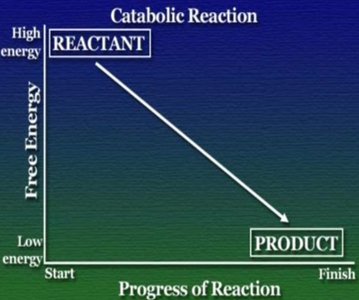
Cellular respiration is a fundamental metabolic pathway by which cells extract energy from nutrients, primarily glucose, to produce ATP, the universal energy currency. This process is essential for life and occurs in all living cells, both prokaryotic and eukaryotic. - Cellular respiration involves a series of catabolic, exergonic, and redox reactions. - The overall equation for aerobic cellular respiration is: - ATP is produced through two main mechanisms: substrate-level phosphorylation and oxidative phosphorylation. 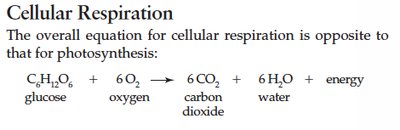
Sources of Chemical Energy in Cells
Chemical energy in cells is stored in the bonds of organic molecules such as carbohydrates, lipids, and proteins. - Chemical bonds are a form of stored energy, particularly C-H bonds, which are rich in electrons. - Breaking these bonds releases energy, but requires an initial input called activation energy. - Examples of activation energy include striking a stove or lighting a candle. 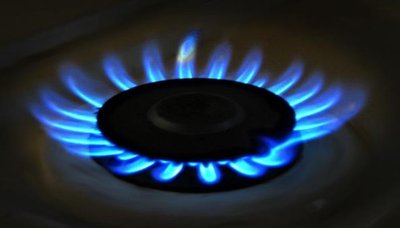
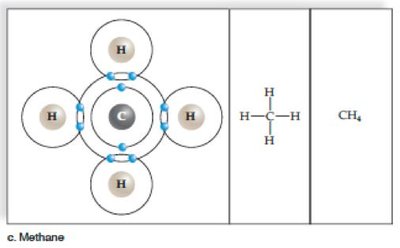

Energy Content of Biomolecules
Different biomolecules provide varying amounts of energy based on their structure and bond composition. - Glucose (carbohydrate): Contains 7 C-H bonds, each releasing -98 Kcal, totaling -686 Kcal per molecule. - Fatty acids (lipids): Rich in C-H bonds, providing more energy per carbon than carbohydrates. - Amino acids (proteins): Also contain C-H bonds, but are primarily used for building proteins rather than energy. - Pentose sugars in nucleotides: Have C-H bonds but are not used for energy extraction. 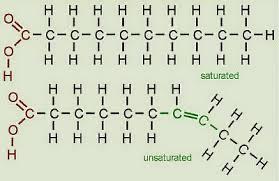
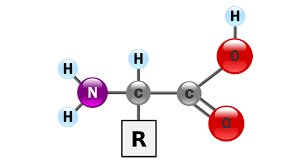
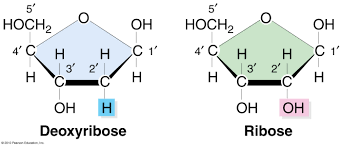
Origin of Food, Nutrients, and Energy
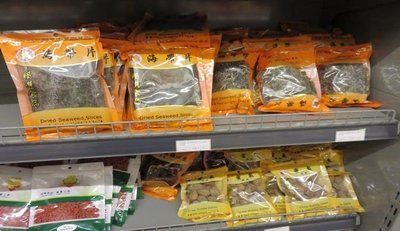
Food is the primary source of nutrients and energy for cells, originating from various sources: - Animal origin: Meat, dairy, etc. - Plant origin: Vegetables, fruits. - Fungi origin: Mushrooms. - Algae: Seaweed and other aquatic plants. - Other origins: Recycling inside the cell (autophagy), microbes (e.g., yogurt). 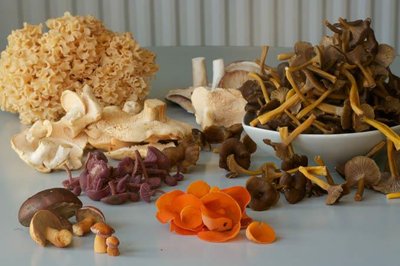
Mechanisms of ATP Production
ATP Structure and Function
ATP (adenosine triphosphate) is the primary energy carrier in cells. - Composed of adenine, ribose, and three phosphate groups. - Energy is released when the terminal phosphate bond is broken, converting ATP to ADP + Pi. 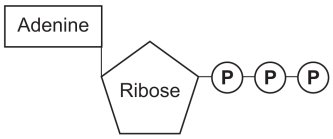
Substrate-Level Phosphorylation
Substrate-level phosphorylation is a direct method of ATP synthesis during metabolic reactions. - ATP is generated when a high-energy phosphate is transferred from a phosphorylated substrate to ADP by an enzyme. - Occurs in glycolysis and the Krebs cycle. - Produces a small amount of ATP compared to oxidative phosphorylation. 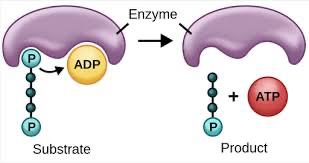
Oxidative Phosphorylation and Chemiosmosis
Oxidative phosphorylation is the main method of ATP production in aerobic respiration. - High-energy electrons from NADH and FADH2 are transferred through the electron transport chain (ETC) in the mitochondria. - The energy released pumps H+ ions across the inner mitochondrial membrane, creating a gradient. - ATP synthase uses this gradient to convert ADP + Pi into ATP, a process called chemiosmosis. - Produces 34 ATPs per glucose molecule. 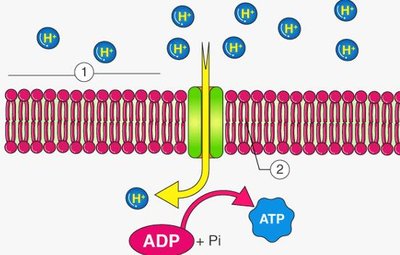
Phases of Cellular Respiration
Phase 1: Glycolysis
Glycolysis is the first step in cellular respiration, occurring in the cytoplasm. - Glucose (6C) is split into two pyruvate (3C) molecules. - Net gain: 2 ATPs (by substrate-level phosphorylation), 2 NADH, 2 pyruvate. - If oxygen is present, pyruvate enters the mitochondria for further processing. - If oxygen is absent, pyruvate undergoes fermentation.
Phase 2: Preparatory/Transition Reaction
In the mitochondrial matrix, pyruvate is converted to acetyl-CoA. - Each pyruvate (3C) loses a carbon as CO2 and binds to coenzyme A, forming acetyl-CoA (2C). - Produces 2 NADH and 2 CO2 per glucose.
Phase 3: Citric Acid Cycle (Krebs Cycle)
The Krebs cycle occurs in the mitochondrial matrix and completes the oxidation of glucose. - Acetyl-CoA combines with oxaloacetate to form citrate (6C). - Produces 6 NADH, 2 FADH2, 2 ATP (by substrate-level phosphorylation), and 4 CO2 per glucose.
Phase 4/5: Electron Transport Chain and Chemiosmosis
The ETC is located in the inner mitochondrial membrane. - NADH and FADH2 donate electrons to the chain, which are passed through a series of carriers. - The energy released pumps H+ ions, creating a gradient used by ATP synthase to produce ATP. - Oxygen is the final electron acceptor, forming water. - Total ATP yield: 34 ATPs from oxidative phosphorylation.
Integration of Metabolic Pathways
Entry Points for Other Biomolecules
Lipids and proteins can also be used for energy by entering cellular respiration at various points. - Fatty acids enter as acetyl-CoA. - Amino acids can enter as pyruvate, acetyl-CoA, or intermediates of the Krebs cycle. - Glycerol enters glycolysis. 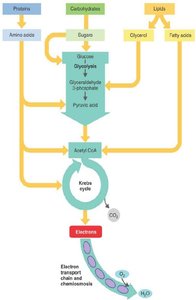
Fermentation: Anaerobic Respiration
Fermentation Pathways
In the absence of oxygen, cells undergo fermentation. - Pyruvate is reduced by NADH to form lactate (in animals) or ethanol and CO2 (in yeast and bacteria). - Only 2 ATPs are produced per glucose, all by substrate-level phosphorylation. - Fermentation is less efficient than aerobic respiration.
Energy Yield and Efficiency
ATP Yield per Glucose
- Aerobic respiration: 36-38 ATPs per glucose (40% efficiency). - Fermentation: 2 ATPs per glucose (5% efficiency). - Most energy in fermentation remains trapped in end products (lactate or ethanol).
Summary Table: ATP Production in Cellular Respiration
Phase | Location | ATP Produced | NADH Produced | FADH2 Produced | CO2 Produced |
|---|---|---|---|---|---|
Glycolysis | Cytoplasm | 2 | 2 | 0 | 0 |
Transition Reaction | Mitochondrial Matrix | 0 | 2 | 0 | 2 |
Krebs Cycle | Mitochondrial Matrix | 2 | 6 | 2 | 4 |
ETC & Chemiosmosis | Inner Mitochondrial Membrane | 34 | 0 | 0 | 0 |
Total | 38 | 10 | 2 | 6 |
Key Terms and Concepts
- Catabolic reaction: A reaction that breaks down molecules and releases energy. - Redox reaction: Involves the transfer of electrons; oxidation is loss, reduction is gain. - Activation energy: The initial energy required to start a reaction. - ATP synthase: Enzyme complex that synthesizes ATP during chemiosmosis. - Substrate-level phosphorylation: Direct transfer of phosphate to ADP. - Oxidative phosphorylation: ATP production via electron transport chain and chemiosmosis. - Fermentation: Anaerobic process yielding low ATP.
Additional info:
- The efficiency of cellular respiration is limited by the second law of thermodynamics; some energy is always lost as heat. - The integration of metabolic pathways allows cells to utilize a variety of nutrients for energy production. - The cycle between photosynthesis and cellular respiration maintains the balance of oxygen and carbon dioxide in nature.
