 Indietro
Cellular Respiration: Mechanisms of Energy Harvest in Cells
Guida di studio - Note intelligenti
 Appunti personalizzati basati sui tuoi materiali, ampliati con definizioni chiave, esempi e contesto.
Cellular Respiration
Overview of Cellular Respiration
Cellular respiration is a series of metabolic processes by which cells extract energy from food molecules, primarily glucose, to generate ATP. This process involves a sequence of redox reactions, where electrons are transferred from glucose to oxygen, releasing energy in manageable steps. The process is essential for life, providing the energy required for cellular activities.
ATP (adenosine triphosphate) is the main energy currency of the cell.
Aerobic respiration requires both glucose and oxygen as inputs.
Energy is released from glucose in a controlled, stepwise manner, allowing efficient ATP synthesis.
Catabolic pathways break down food molecules, releasing energy.
Redox Reactions in Cellular Respiration
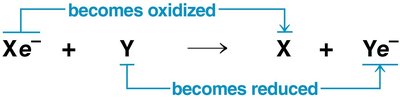
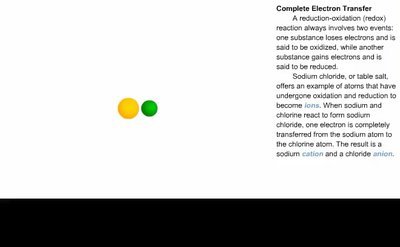
Redox (reduction-oxidation) reactions are central to cellular respiration. These reactions involve the transfer of electrons from one molecule (the reducing agent) to another (the oxidizing agent). Oxidation is the loss of electrons, while reduction is the gain of electrons.
Oxidizing agent: Accepts electrons and becomes reduced.
Reducing agent: Donates electrons and becomes oxidized.
In respiration, glucose is oxidized and oxygen is reduced.
Role of Oxygen and Electron Carriers
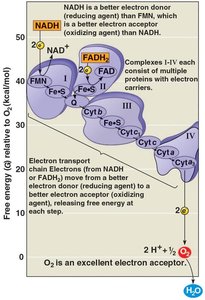
Oxygen is highly electronegative and acts as the final electron acceptor in the electron transport chain. Electrons from glucose are not transferred directly to oxygen but are carried by molecules such as NAD+ and FAD, which become NADH and FADH2 upon reduction. This stepwise transfer allows energy to be harvested efficiently.
Electron carriers (NADH, FADH2) shuttle electrons to the electron transport chain.
Energy released during electron transfer is used to synthesize ATP.

Stages of Cellular Respiration
Stage 1: Glycolysis
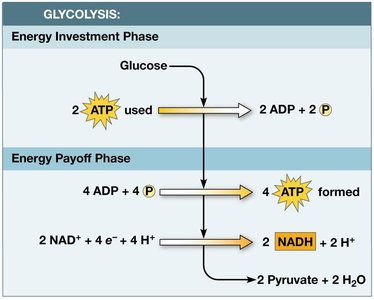
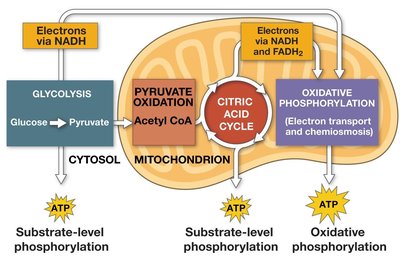
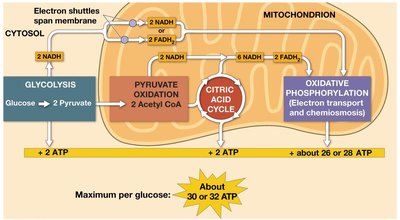
Glycolysis is the first stage of cellular respiration and occurs in the cytosol. It splits one molecule of glucose (6 carbons) into two molecules of pyruvate (3 carbons each), producing a small amount of ATP and NADH.
Does not require oxygen (anaerobic process).
Net gain: 2 ATP and 2 NADH per glucose molecule.
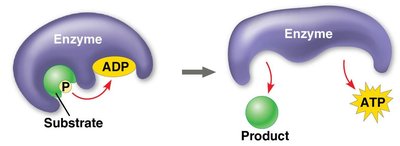
ATP is produced by substrate-level phosphorylation.
Stage 2: Pyruvate Oxidation and Citric Acid Cycle (Krebs Cycle)
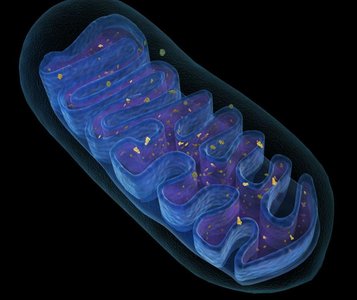
Pyruvate produced in glycolysis is transported into the mitochondrion, where it is converted to Acetyl CoA. The citric acid cycle completes the oxidation of glucose, generating NADH and FADH2 for the next stage.
Each turn of the cycle produces ATP, NADH, and FADH2.
CO2 is released as a waste product.
Occurs in the mitochondrial matrix.
Stage 3: Oxidative Phosphorylation
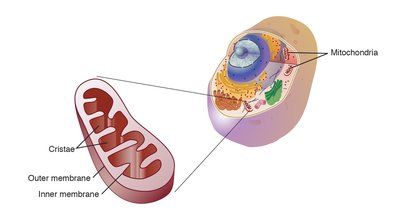
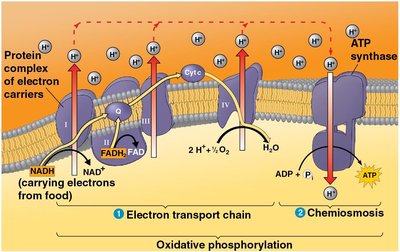
This stage consists of two linked processes: the electron transport chain and chemiosmosis. It occurs in the inner mitochondrial membrane and produces the majority of ATP during cellular respiration.
Electron Transport Chain (ETC): NADH and FADH2 donate electrons to a series of protein complexes. Electrons move down the chain, releasing energy used to pump protons (H+) across the membrane, creating a gradient.
Chemiosmosis: The proton gradient drives ATP synthesis as protons flow back through ATP synthase, a molecular machine that phosphorylates ADP to ATP.
Oxygen acts as the final electron acceptor, forming water.
ATP Yield from Cellular Respiration
The complete oxidation of one molecule of glucose during aerobic respiration can yield up to 30–32 molecules of ATP. The majority of ATP is produced during oxidative phosphorylation.
Stage | ATP Produced |
|---|---|
Glycolysis | 2 |
Citric Acid Cycle | 2 |
Oxidative Phosphorylation | 26–28 |
Total | 30–32 |
Fermentation and Anaerobic Respiration
When oxygen is not available, cells can generate ATP through fermentation or anaerobic respiration. These processes are less efficient than aerobic respiration and yield much less ATP per glucose molecule.
Fermentation: Glycolysis followed by conversion of pyruvate to lactic acid or ethanol, regenerating NAD+.
Anaerobic respiration: Uses an electron acceptor other than oxygen (e.g., nitrate or sulfate).
Summary Table: Key Steps and Outputs of Cellular Respiration
Stage | Main Location | Main Inputs | Main Outputs | ATP Yield |
|---|---|---|---|---|
Glycolysis | Cytosol | Glucose, 2 ATP, 2 NAD+ | 2 Pyruvate, 4 ATP (2 net), 2 NADH | 2 |
Pyruvate Oxidation | Mitochondrial Matrix | 2 Pyruvate, 2 NAD+ | 2 Acetyl CoA, 2 CO2, 2 NADH | 0 |
Citric Acid Cycle | Mitochondrial Matrix | 2 Acetyl CoA, 6 NAD+, 2 FAD | 4 CO2, 6 NADH, 2 FADH2, 2 ATP | 2 |
Oxidative Phosphorylation | Inner Mitochondrial Membrane | 10 NADH, 2 FADH2, O2 | H2O, 26–28 ATP | 26–28 |
Key Terms and Concepts
Redox Reaction: Chemical reaction involving the transfer of electrons.
Substrate-level Phosphorylation: Direct transfer of a phosphate group to ADP to form ATP.
Oxidative Phosphorylation: ATP synthesis powered by the electron transport chain and chemiosmosis.
Electron Carrier: Molecules like NADH and FADH2 that transport electrons during cellular respiration.
ATP Synthase: Enzyme that synthesizes ATP using the energy from a proton gradient.
Key Equations
The overall equation for aerobic cellular respiration is:
