 Indietro
Cellular Respiration: Mechanisms, Structures, and Energy Flow
Guida di studio - Note intelligenti
 Appunti personalizzati basati sui tuoi materiali, ampliati con definizioni chiave, esempi e contesto.
Cellular Respiration: Overview
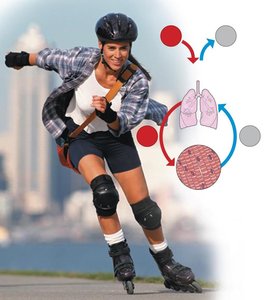
Relationship Between Breathing and Cellular Respiration
Cellular respiration is a fundamental metabolic process that enables cells to extract energy from glucose, powering cellular activities. While organismal respiration (breathing) involves the exchange of gases (O2 and CO2) between the environment and the lungs, cellular respiration refers to the intracellular breakdown of organic molecules to produce ATP. Oxygen acquired through breathing is essential for aerobic cellular respiration, which occurs in muscle cells and other tissues.
Breathing: The physical process of inhaling oxygen and exhaling carbon dioxide.
Cellular Respiration: The biochemical process in cells that uses oxygen to convert glucose into ATP, releasing carbon dioxide as a byproduct.
Connection: Oxygen from breathing is delivered to cells for cellular respiration; CO2 produced is expelled via the lungs.
Life and the Flow of Energy
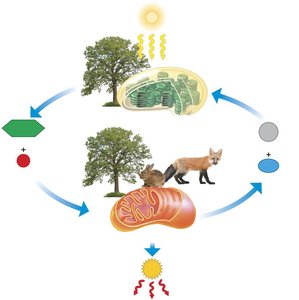
Energy flows through ecosystems via sunlight, which is captured by photosynthesis in plants and then transferred to animals through cellular respiration. Cellular respiration releases energy stored in glucose, driving cellular work and producing heat.
Photosynthesis: Converts sunlight, CO2, and H2O into glucose and O2.
Cellular Respiration: Breaks down glucose and O2 to produce CO2, H2O, and ATP.
Energy Transfer: ATP produced powers cellular functions; heat is released.
Oxidation-Reduction (Redox) Reactions
Definition and Mechanism
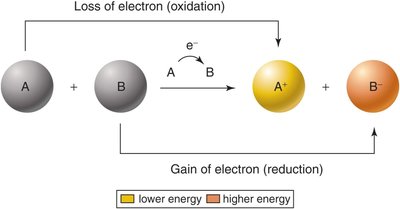
Redox reactions are chemical processes where electrons are transferred between molecules, resulting in changes in their oxidation states. These reactions are central to energy transfer in cellular respiration.
Oxidation: Loss of electrons from a molecule.
Reduction: Gain of electrons by a molecule.
Redox Pair: The molecule that loses electrons is oxidized; the one that gains electrons is reduced.
Example: Formation of Table Salt
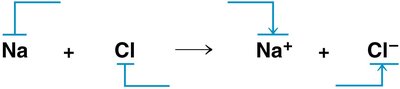
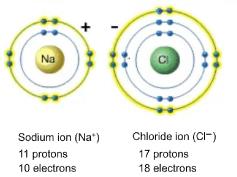
When sodium (Na) reacts with chlorine (Cl), Na loses an electron (oxidized) and Cl gains an electron (reduced), forming Na+ and Cl- ions.
Oxidizing Agent: Chlorine (Cl)
Reducing Agent: Sodium (Na)
Cellular Respiration: Chemical Reaction
Overall Reaction
The overall reaction for aerobic cellular respiration is a multi-step, exergonic pathway catalyzed by enzymes. Energy is transferred via electrons in redox reactions.
Reactants: Glucose (C6H12O6) and Oxygen (O2)
Products: Carbon dioxide (CO2), Water (H2O), and Energy (ATP)
Equation:

Electron Carriers: NADH and FADH2
Role in Cellular Respiration
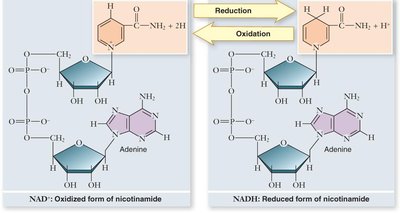
Electron carriers such as NAD+ and FAD shuttle electrons from glucose to oxygen, enabling controlled energy release. Each transfer releases energy used for ATP synthesis.
NAD+: Nicotinamide adenine dinucleotide; carries 2 electrons and 1 H+ as NADH.
FAD: Flavin adenine dinucleotide; carries 2 electrons and 2 H+ as FADH2.
Function: Facilitate stepwise energy extraction from glucose.
ATP Synthesis Mechanisms
Substrate-Level Phosphorylation
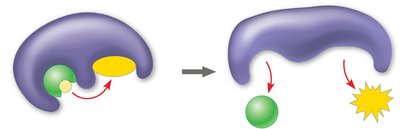
ATP is produced directly during enzyme-catalyzed reactions by transferring a phosphate group from a substrate to ADP.
Occurs: During glycolysis and the citric acid cycle.
Produces: A small fraction of total ATP.
Oxidative Phosphorylation
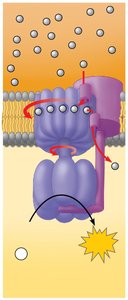
Most ATP is generated via oxidative phosphorylation, which uses the enzyme ATP synthase. Electron transport chain creates a H+ gradient, and ATP synthase uses this gradient to catalyze ATP formation.
Location: Inner mitochondrial membrane.
Produces: Majority of ATP in cellular respiration.
Cellular Respiration: Location and Mitochondrial Structure
Cellular Respiration Sites
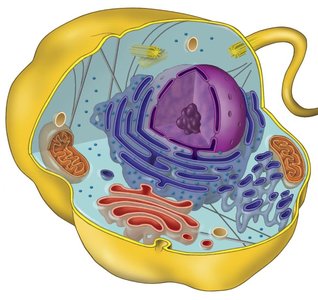
Cellular respiration begins in the cytoplasm (glycolysis) and continues in the mitochondria (pyruvate oxidation, citric acid cycle, oxidative phosphorylation) in both animal and plant cells.
Cytoplasm: Glycolysis
Mitochondria: Remaining stages
Mitochondrial Structure
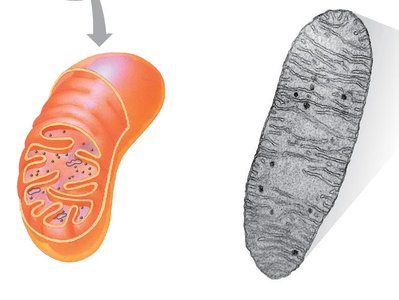
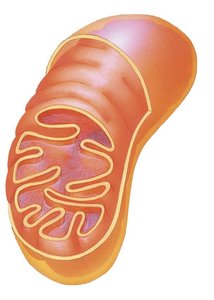
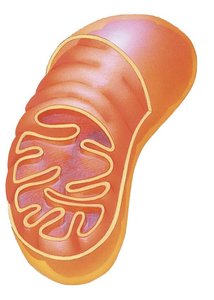
The mitochondrion is a double-membrane organelle with a highly folded inner membrane (cristae), intermembrane space, matrix, and its own DNA and ribosomes. The structure supports efficient ATP production.
Outer Membrane: Encloses the organelle
Inner Membrane: Site of electron transport chain and ATP synthase
Cristae: Folds increase surface area for reactions
Matrix: Contains enzymes for the citric acid cycle
Stages of Cellular Respiration
Overview of Stages
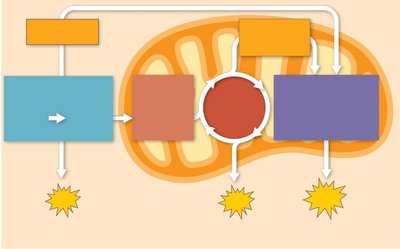
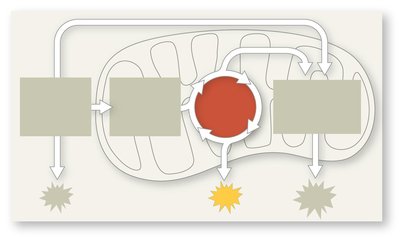
Cellular respiration consists of four main stages: glycolysis, pyruvate oxidation, citric acid cycle, and oxidative phosphorylation. Each stage produces specific products and occurs in distinct cellular locations.
Glycolysis: Glucose breakdown in cytosol
Pyruvate Oxidation: Conversion of pyruvate to acetyl CoA in mitochondria
Citric Acid Cycle: Complete oxidation of acetyl CoA in mitochondrial matrix
Oxidative Phosphorylation: ATP production via electron transport chain and chemiosmosis
Glycolysis
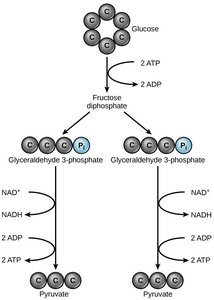
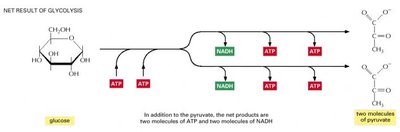
Glycolysis is the initial breakdown of glucose into two pyruvate molecules. It is a 10-step pathway occurring in the cytosol and does not require oxygen.
Input: 2 ATP, 1 glucose
Output: 2 pyruvate, 2 NADH, 4 ATP (net gain: 2 ATP), 2 H2O
Key Steps: 6-carbon glucose split into two 3-carbon G3P molecules, which are oxidized
Pyruvate Oxidation and Citric Acid Cycle
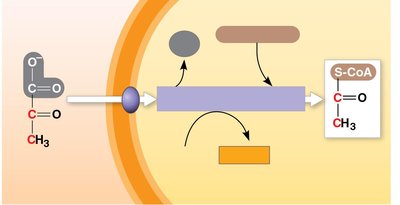
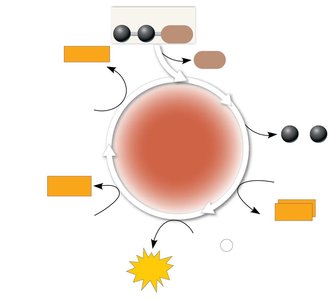
If oxygen is present, pyruvate enters the mitochondria and is oxidized to acetyl CoA by pyruvate dehydrogenase. Acetyl CoA then enters the citric acid cycle, which completes the breakdown of glucose to CO2.
Pyruvate Oxidation: Pyruvate + NAD+ + CoA → Acetyl-CoA + NADH + CO2 + H+
Citric Acid Cycle: 8-step pathway in matrix; uses NAD+ and FAD as electron carriers
Per Acetyl CoA: 2 CO2, 1 ATP, 3 NADH, 1 FADH2
Cycle turns twice per glucose molecule
Summary Table: Pyruvate Oxidation and Citric Acid Cycle
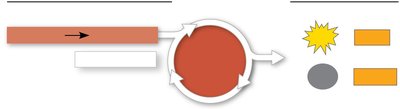
Stage | Inputs | Outputs |
|---|---|---|
Pyruvate Oxidation | 2 Pyruvate, 2 NAD+, 2 CoA | 2 Acetyl CoA, 2 NADH, 2 CO2 |
Citric Acid Cycle | 2 Acetyl CoA, 6 NAD+, 2 FAD, 2 ADP + Pi | 6 NADH, 2 FADH2, 2 ATP, 4 CO2 |
Additional info: The citric acid cycle also regenerates oxaloacetate, allowing the cycle to continue. NADH and FADH2 produced are used in oxidative phosphorylation to generate ATP.
