Indietro
Cellular Respiration: Pathways and Mechanisms
Guida di studio - Note intelligenti
 Appunti personalizzati basati sui tuoi materiali, ampliati con definizioni chiave, esempi e contesto.
Cellular Respiration: Overview
Introduction to Cellular Respiration
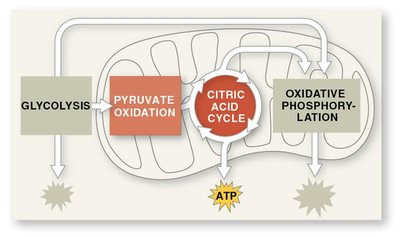
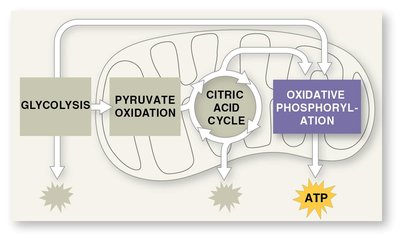
Cellular respiration is a fundamental metabolic process by which cells extract energy from organic molecules, primarily glucose, through a series of stepwise redox reactions. The energy released is used to synthesize ATP, the cell’s main energy currency. The process involves several stages: glycolysis, pyruvate oxidation, the citric acid cycle, and oxidative phosphorylation.
Redox Reactions: Involve electron transfer, releasing energy as electrons move toward more electronegative atoms.
ATP Production: Energy released is harnessed to replenish cellular ATP levels.
Electron Carriers: Molecules such as NAD+ and FAD facilitate electron transfer between metabolic pathways.
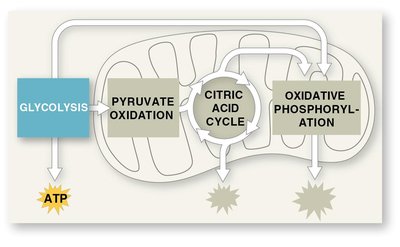
Glycolysis
Mechanism and Phases of Glycolysis
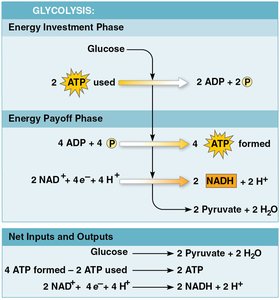
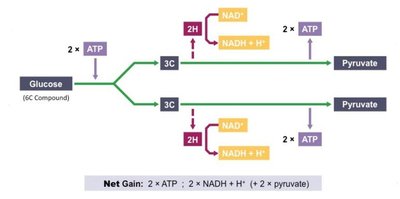
Glycolysis is the first stage of cellular respiration, occurring in the cytosol. It breaks down one molecule of glucose (6C) into two molecules of pyruvate (3C), generating ATP and NADH. Glycolysis consists of two main phases:
Energy Investment Phase: 2 ATP molecules are consumed to phosphorylate glucose, producing two three-carbon sugars.
Energy Payoff Phase: 4 ATP molecules are produced via substrate-level phosphorylation, and 2 NAD+ are reduced to NADH. The three-carbon sugars are oxidized to form pyruvate and water.
Key Properties of Glycolysis
Carbon Accounting: All carbon atoms from glucose are present in the two pyruvate molecules.
Anaerobic Process: Glycolysis does not require oxygen and does not release carbon dioxide.
Net Yield: 2 ATP and 2 NADH per glucose molecule.
Pyruvate Oxidation
Conversion of Pyruvate to Acetyl-CoA
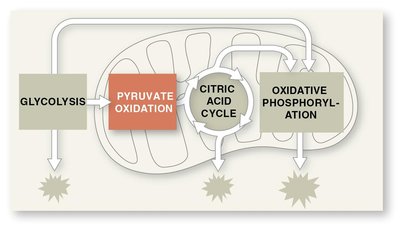
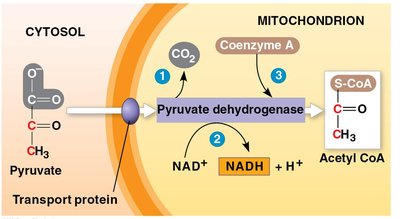
Pyruvate oxidation links glycolysis to the citric acid cycle. In eukaryotes, it occurs in the mitochondria; in prokaryotes, in the cytosol. Pyruvate is converted to acetyl-CoA by the enzyme pyruvate dehydrogenase, through a series of redox reactions.
Step 1: The carboxyl group of pyruvate is oxidized, releasing CO2.
Step 2: NAD+ is reduced to NADH.
Step 3: The remaining two-carbon fragment is attached to Coenzyme A, forming acetyl-CoA.
Citric Acid Cycle (Krebs Cycle)
Overview and Steps of the Citric Acid Cycle
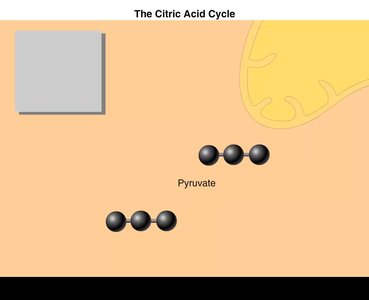
The citric acid cycle completes the oxidation of glucose by further breaking down acetyl-CoA. It occurs in the mitochondrial matrix and consists of eight steps, each catalyzed by a specific enzyme.
Step 1: Acetyl-CoA combines with oxaloacetate to form citrate.
Steps 2-8: Citrate is converted back to oxaloacetate, producing NADH, FADH2, ATP (or GTP), and releasing CO2 as a waste product.
Cycle Repeats: Each glucose molecule yields two acetyl-CoA, so the cycle runs twice per glucose.
Products of the Citric Acid Cycle
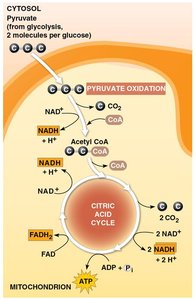
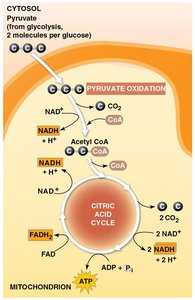
Electron Carriers: NADH and FADH2 transport electrons to the electron transport chain.
ATP: Produced by substrate-level phosphorylation.
CO2: Released as a waste product.
Oxidative Phosphorylation
Electron Transport Chain (ETC)
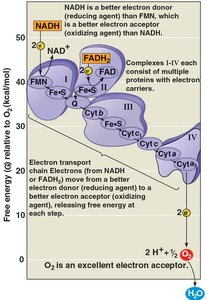
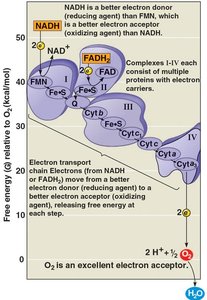
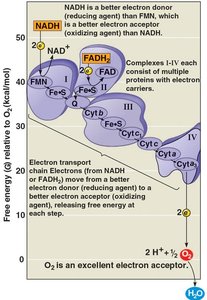
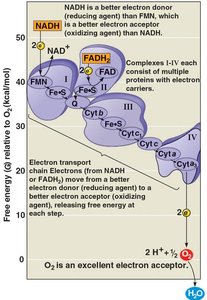
Oxidative phosphorylation is the final stage of cellular respiration, occurring in the inner mitochondrial membrane. NADH and FADH2 donate electrons to the ETC, a series of protein complexes and carrier molecules.
Electron Flow: Electrons are passed through complexes I-IV, dropping in free energy at each step.
Cytochromes: Proteins with heme groups facilitate electron transfer.
Final Electron Acceptor: Oxygen accepts electrons, forming water.
Chemiosmosis and ATP Synthesis
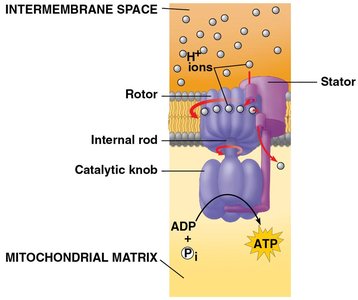
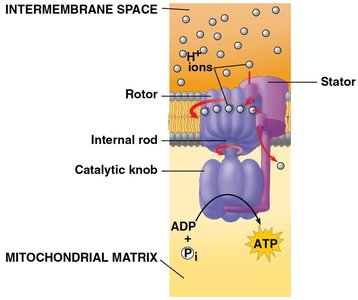
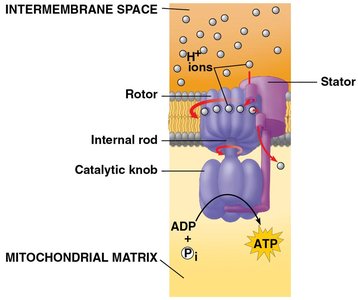
The ETC is coupled to ATP synthesis by chemiosmosis. As electrons move through the chain, energy is used to pump protons (H+) from the mitochondrial matrix to the intermembrane space, creating a proton gradient.
ATP Synthase: Protons flow back into the matrix through ATP synthase, driving the phosphorylation of ADP to ATP.
Mechanism: The rotor of ATP synthase spins, catalyzing ATP formation.
Energy Yield and Efficiency
ATP Accounting in Cellular Respiration
The complete oxidation of one glucose molecule yields a maximum of about 30-32 ATP, depending on the efficiency of electron transport and ATP synthesis.
Glycolysis: 2 ATP
Citric Acid Cycle: 2 ATP
Oxidative Phosphorylation: About 26-28 ATP
Efficiency: Only about 34% of the energy in glucose is captured as ATP; the rest is lost as heat.
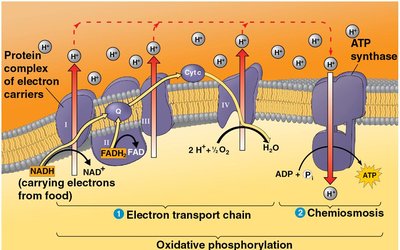
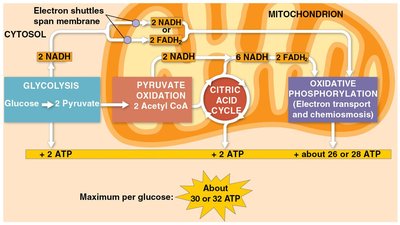
Table: Summary of Cellular Respiration Pathways
Stage | Main Location | Key Inputs | Key Outputs | ATP Yield |
|---|---|---|---|---|
Glycolysis | Cytosol | Glucose, 2 ATP, 2 NAD+ | 2 Pyruvate, 2 NADH, 2 ATP | 2 |
Pyruvate Oxidation | Mitochondrial Matrix | 2 Pyruvate, 2 NAD+, 2 CoA | 2 Acetyl-CoA, 2 NADH, 2 CO2 | 0 |
Citric Acid Cycle | Mitochondrial Matrix | 2 Acetyl-CoA, 6 NAD+, 2 FAD, 2 ADP | 6 NADH, 2 FADH2, 2 ATP, 4 CO2 | 2 |
Oxidative Phosphorylation | Inner Mitochondrial Membrane | NADH, FADH2, O2 | ATP, H2O | 26-28 |
Additional Info
Substrate-Level Phosphorylation: Direct transfer of a phosphate group to ADP to form ATP, occurs in glycolysis and citric acid cycle.
Oxidative Phosphorylation: ATP synthesis powered by the energy released from electron transport and chemiosmosis.
Equation for Cellular Respiration:
Summary
Cellular Respiration in Context
Cells utilize a stepwise process of redox reactions to harvest the chemical energy stored in glucose. Glycolysis breaks glucose down into pyruvate, which is then oxidized to acetyl-CoA. Acetyl-CoA is cycled through the citric acid cycle to fill electron carriers, which transport electrons to the ETC. As electrons move through the ETC, the chemiosmosis process drives the flow of protons through ATP synthase, producing ATP.