 Indietro
Cellular Respiration: Pathways, Mechanisms, and Applications
Guida di studio - Note intelligenti
 Appunti personalizzati basati sui tuoi materiali, ampliati con definizioni chiave, esempi e contesto.
Cellular Respiration
Overview and Importance
Cellular respiration is a fundamental catabolic process in biology, responsible for converting glucose into usable energy in the form of ATP. This process occurs in all living cells—both prokaryotic and eukaryotic—and powers essential cellular activities such as movement, division, and transport.
ATP (Adenosine Triphosphate): The primary energy carrier in cells, used for muscle contraction, cell division, exocytosis, endocytosis, and more.
Passive Processes: Diffusion and osmosis do not require ATP.
Universality: All cells perform cellular respiration, though mechanisms differ between prokaryotes and eukaryotes.
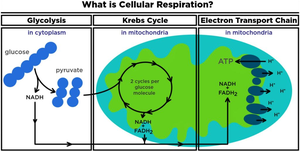
Catabolic Pathway and Summary Reaction
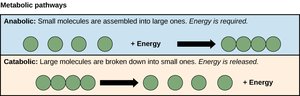
Cellular respiration is a catabolic pathway, breaking down complex molecules into simpler ones and releasing energy. The overall reaction is:
Glucose + Oxygen → Water + Carbon Dioxide + ATP
One molecule of glucose yields approximately 30-32 ATP molecules.
Direct combustion of glucose releases too much energy; cellular respiration stores it in manageable ATP packets.
Relationship to Photosynthesis
Cellular respiration and photosynthesis are interconnected metabolic pathways.
Photosynthesis: Anabolic; builds glucose in chloroplasts (plants).
Cellular Respiration: Catabolic; breaks down glucose in mitochondria (plants and animals).
Glucose Source: Plants produce glucose; animals obtain it by consuming plants or other animals.
Three Sequential Steps of Cellular Respiration
Step 1: Glycolysis
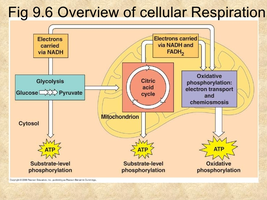
Glycolysis is the first step, occurring in the cytoplasm and not requiring oxygen. It is a primitive process found in all cells.
Location: Cytoplasm
Oxygen Requirement: None (anaerobic)
Process: Glucose (C6H12O6) is converted to 2 pyruvate molecules.
Energy Budget: 2 ATP used, 4 ATP produced, net yield = 2 ATP.
Isomers: Glucose and fructose are hexose sugars with the same formula but different spatial arrangements.
Step 2: Citric Acid (Krebs) Cycle
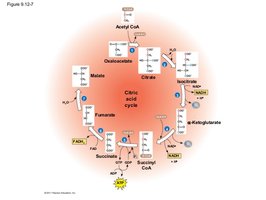
The Citric Acid Cycle occurs in the mitochondria and is limited to eukaryotic cells. It processes the pyruvate from glycolysis, cycling through several organic acids.
Location: Mitochondria
Process: Each pyruvate is converted to Acetyl CoA, which enters the cycle.
Cycle: Runs twice per glucose molecule.
Products per cycle: 1 ATP, 3 NADH, 1 FADH2
Total ATP: 2 ATP per glucose (after two cycles)
Key Molecules: Citric acid (citrate) and malic acid (malate) are present in all mitochondria.
Step 3: Electron Transport Chain (ETC)
The ETC is the final step, occurring on the surface of the mitochondrial cristae. It produces the largest amount of ATP and requires oxygen.
Location: Mitochondria (cristae)
Oxygen Requirement: Yes (aerobic)
Process: NADH and FADH2 donate electrons, driving ATP synthesis.
ATP Yield: 26-28 ATP per glucose
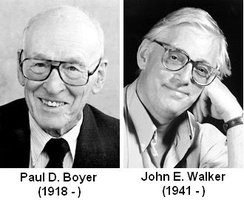
Recent Discoveries: ATP synthase enzyme recognized by Nobel Prize (Paul Boyer & John Walker, 1997)
Summary Table: Cellular Respiration Steps
Process | Location | ATP Yield | Cell Type |
|---|---|---|---|
Glycolysis | Cytoplasm | 2 ATP | All cells |
Citric Acid/Krebs Cycle | Mitochondria | 2 ATP | Eukaryotes only |
Electron Transport Chain | Mitochondria | 26-28 ATP | Eukaryotes only |
Total | Prokaryotes: 2 Eukaryotes: 32 |
Anaerobic Respiration and Fermentation
Overview
Anaerobic respiration and fermentation occur in organisms living in oxygen-poor environments. These processes are less efficient, producing fewer ATP molecules.
Examples: Mud flats, hot sulfur springs, deep-sea vents, cake batter (yeasts).
Yeasts: Unicellular fungi capable of both aerobic and anaerobic respiration.

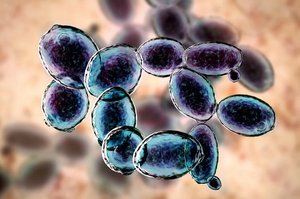
Fermentation By-products
Different yeast varieties produce economically important by-products:
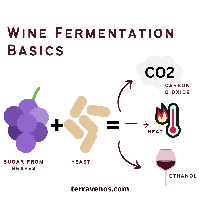
Baking Yeasts: Glucose → ATP + CO2 (CO2 causes dough to rise)
Alcoholic Drink Yeasts: Glucose → ATP + Ethanol + CO2 (Ethanol is used in beverages)
Key Terms and Concepts
ATP: Adenosine triphosphate, the energy currency of the cell.
Glycolysis: The breakdown of glucose to pyruvate in the cytoplasm.
Citric Acid Cycle: Also known as Krebs cycle; occurs in mitochondria, producing NADH, FADH2, and ATP.
Electron Transport Chain: Series of protein complexes in mitochondria that generate ATP using electrons from NADH and FADH2.
Fermentation: Anaerobic process producing ATP and by-products like ethanol or CO2.
Summary
Cellular respiration is a multi-step, enzyme-mediated process essential for life. It efficiently converts glucose into ATP, supporting cellular functions. The process differs between prokaryotes and eukaryotes, and alternative pathways like fermentation are used in oxygen-poor environments.
