 Indietro
Cellular Respiration: Pathways, Mechanisms, and Biological Significance
Guida di studio - Note intelligenti
 Appunti personalizzati basati sui tuoi materiali, ampliati con definizioni chiave, esempi e contesto.
Cellular Respiration: Overview
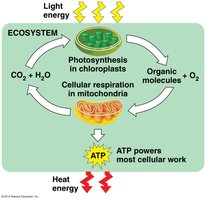
Relationship Between Photosynthesis and Cellular Respiration
Cellular respiration is a fundamental metabolic process in all living organisms, enabling the extraction of energy from organic molecules. It is tightly linked to photosynthesis, which produces the organic molecules used as fuel in respiration. The cycle of photosynthesis and cellular respiration sustains ecosystems by recycling carbon and energy.
Photosynthesis converts light energy into chemical energy, producing organic molecules and O2.
Cellular respiration breaks down organic molecules, releasing CO2 and H2O, and generating ATP for cellular work.
ATP is the universal energy currency in cells, powering most cellular activities.
Catabolic Pathways and RedOx Reactions
Cellular respiration involves catabolic pathways that release stored energy by transferring electrons through redox reactions. These reactions are essential for the production of ATP.
Reduction: Gain of electrons by a molecule.
Oxidation: Loss of electrons by a molecule.
During respiration, fuel molecules are oxidized, and electron acceptors are reduced.
Key electron carriers: NAD+, FAD, NADP+ (reduced to NADH, FADH2, NADPH).
Major Pathways of Cellular Respiration
Pathway Outline and Color Coding
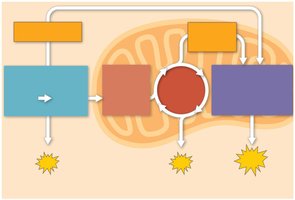
Cellular respiration consists of three main pathways, each with distinct roles and locations within the cell. Color coding is often used to distinguish these pathways in diagrams and textbooks.
Glycolysis (blue): Occurs in the cytosol.
Pyruvate Oxidation & Citric Acid Cycle (orange): Occurs in the mitochondrial matrix.
Oxidative Phosphorylation (purple): Occurs across the inner mitochondrial membrane.

Cellular Respiration Pathways: Summary Diagram
The three pathways are interconnected, with products from one serving as substrates for the next. ATP is produced at each stage, but the amount varies.
Glycolysis: Glucose is split into two pyruvate molecules.
Pyruvate Oxidation: Pyruvate is converted to Acetyl CoA.
Citric Acid Cycle: Acetyl CoA is fully oxidized to CO2.
Oxidative Phosphorylation: Electron transport and chemiosmosis generate most ATP.
Glycolysis
Energy Investment and Payoff Phases
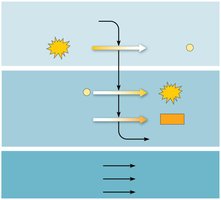
Glycolysis is the first step in cellular respiration, breaking down glucose into pyruvate and generating ATP and NADH. It consists of two phases: energy investment and energy payoff.
Energy Investment Phase: 2 ATP are used to phosphorylate glucose.
Energy Payoff Phase: 4 ATP are produced (net gain: 2 ATP), and 2 NADH are generated.
End products: 2 pyruvate, 2 ATP (net), 2 NADH, 2 H2O.
Glycolysis: Stepwise Reactions
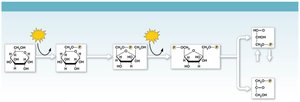
Glycolysis involves a series of enzyme-catalyzed reactions, each making small changes to the substrate. The process starts as soon as glucose enters the cell.
Key enzymes: Hexokinase, Phosphoglucoisomerase, Phosphofructokinase, Aldolase, Isomerase.
Intermediate molecules: Glucose-6-phosphate, Fructose-6-phosphate, Fructose-1,6-bisphosphate, G3P, DHAP.
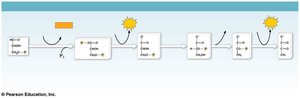
Glycolysis: Energy Payoff Phase Details
During the energy payoff phase, substrate-level phosphorylation occurs, directly transferring a phosphate group to ADP to form ATP.
Key intermediates: 1,3-Bisphosphoglycerate, 3-Phosphoglycerate, 2-Phosphoglycerate, Phosphoenolpyruvate (PEP), Pyruvate.
Enzymes: Triose phosphate dehydrogenase, Phosphoglycerokinase, Phosphoglyceromutase, Enolase, Pyruvate kinase.
Electron carrier: NAD+ is reduced to NADH.
Pyruvate Oxidation
Conversion of Pyruvate to Acetyl CoA
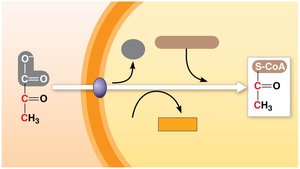
Pyruvate produced in glycolysis is transported into the mitochondrion (in eukaryotes) and converted to Acetyl CoA, releasing CO2 and generating NADH.
Occurs in the mitochondrial matrix (eukaryotes) or cytosol (prokaryotes).
Inputs: Pyruvate, NAD+, Coenzyme A.
Outputs: Acetyl CoA, NADH, CO2.
Citric Acid Cycle (Krebs Cycle, TCA Cycle)
Cycle Overview and Key Steps
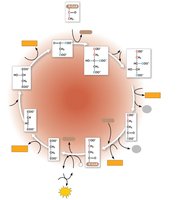
The citric acid cycle completes the oxidation of glucose, producing CO2, NADH, FADH2, and ATP (or GTP). It is a cyclic pathway with multiple enzyme-catalyzed steps.
Inputs: Acetyl CoA, NAD+, FAD, ADP/GDP, Pi.
Outputs: CO2, NADH, FADH2, ATP/GTP.
Key intermediates: Citrate, Isocitrate, α-Ketoglutarate, Succinyl CoA, Succinate, Fumarate, Malate, Oxaloacetate.
Oxidative Phosphorylation
Electron Transport Chain (ETC) and Chemiosmosis
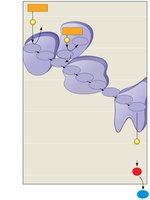
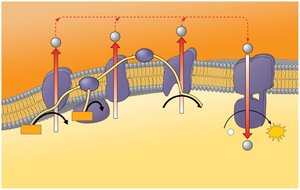
Oxidative phosphorylation is the final stage of cellular respiration, where most ATP is produced. Electrons from NADH and FADH2 are transferred through the ETC, creating a proton gradient used by ATP synthase to generate ATP.
ETC consists of multiprotein complexes (I-IV) embedded in the inner mitochondrial membrane.
Electrons are passed from one carrier to another, ultimately reducing O2 to H2O.
Proton gradient drives ATP synthesis via chemiosmosis.
This step is why oxygen is essential for aerobic respiration.
Aerobic vs Anaerobic Cellular Respiration
Differences in Final Electron Acceptors
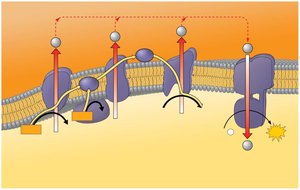
Aerobic and anaerobic respiration use the same basic pathways, but differ in their final electron acceptors.
Aerobic respiration: Oxygen is the final electron acceptor.
Anaerobic respiration: Other molecules (e.g., sulfate, nitrate, CO2) serve as electron acceptors; only occurs in prokaryotes.
Anaerobic respiration produces less ATP than aerobic respiration.
Fermentation
Fermentation Pathways and Their Significance
Fermentation is an alternative pathway used when oxygen is unavailable. It allows glycolysis to continue by recycling NADH to NAD+, but does not fully oxidize organic molecules to CO2 and H2O.
Occurs in muscle cells (lactic acid fermentation) and yeast (alcohol fermentation).
Solves two problems: detoxifies pyruvate and recycles NADH.
Fermentation products retain energy in C–C bonds.
Cellular Respiration in Prokaryotes and Eukaryotes
Location of Pathways
Cellular respiration occurs in different cellular compartments depending on the organism.
Eukaryotes: Glycolysis in cytosol; pyruvate oxidation, citric acid cycle, and oxidative phosphorylation in mitochondria.
Prokaryotes: All pathways occur in the cytosol or across the cell membrane.
Origin of Eukaryotes and Mitochondria
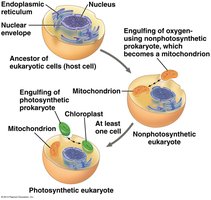
The evolution of eukaryotes involved the engulfment of prokaryotic cells, leading to the formation of mitochondria and chloroplasts.
Mitochondria originated from oxygen-using prokaryotes.
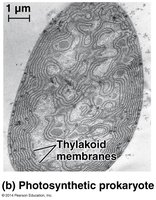
Chloroplasts originated from photosynthetic prokaryotes.
Key Questions and Applications
Do Plants Perform Cellular Respiration?
Yes, plants perform glycolysis, citric acid cycle, and require O2 for aerobic respiration.
Plants have mitochondria and use cellular respiration to generate ATP for cellular work.
Summary Table: Cellular Respiration Pathways
Pathway | Location | Main Inputs | Main Outputs | ATP Yield |
|---|---|---|---|---|
Glycolysis | Cytosol | Glucose, 2 ATP, 2 NAD+ | 2 Pyruvate, 2 NADH, 4 ATP (net 2) | 2 |
Pyruvate Oxidation | Mitochondrial matrix | 2 Pyruvate, 2 NAD+, 2 CoA | 2 Acetyl CoA, 2 NADH, 2 CO2 | 0 |
Citric Acid Cycle | Mitochondrial matrix | 2 Acetyl CoA, 6 NAD+, 2 FAD, 2 ADP/GDP | 4 CO2, 6 NADH, 2 FADH2, 2 ATP/GTP | 2 |
Oxidative Phosphorylation | Inner mitochondrial membrane | NADH, FADH2, O2 | ATP, H2O | ~26-28 |
Additional info:
Extreme metabolic diversity in prokaryotes allows for various electron acceptors and pathways.
Fermentation is distinct from anaerobic respiration and does not fully oxidize substrates.
