 Indietro
Cellular Respiration: Pathways, Mechanisms, and Energy Yield
Guida di studio - Note intelligenti
 Appunti personalizzati basati sui tuoi materiali, ampliati con definizioni chiave, esempi e contesto.
Cellular Respiration
Introduction to Cellular Respiration
Cellular respiration is a series of metabolic pathways that convert organic molecules into ATP, the main energy currency of the cell. This process occurs in both plants and animals, with plants also performing photosynthesis. Cellular respiration can be aerobic (requiring oxygen) or anaerobic (not requiring oxygen), and involves the breakdown of carbohydrates, fats, and proteins to release energy.
Producers (e.g., plants): Use sunlight to convert CO2 into carbohydrates and O2 via photosynthesis, then use these carbohydrates for ATP production and biosynthesis of other molecules.
Consumers (e.g., animals): Obtain organic compounds by eating and convert them into ATP through cellular respiration.
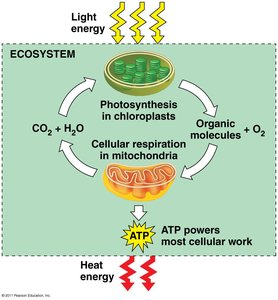
Key Point: Plants perform both photosynthesis and cellular respiration, while animals perform only cellular respiration.
The Carbon Cycle and Energy Flow
The carbon cycle describes the movement of carbon through the biosphere, linking photosynthesis and cellular respiration. Photosynthesis captures light energy to produce organic molecules and oxygen, while cellular respiration breaks down these molecules to generate ATP, releasing CO2 and water as byproducts.
Overview of Cellular Respiration
Definition and Pathways
Cellular respiration refers to the catabolic pathways (aerobic and anaerobic) that break down organic molecules and use an electron transport chain to produce ATP. The process is highly regulated and occurs in multiple steps to maximize energy capture.
Aerobic respiration: Uses O2 as the final electron acceptor, producing large amounts of ATP. Most efficient and common in eukaryotes and many prokaryotes.
Anaerobic respiration: Uses other inorganic molecules (not O2) as electron acceptors, producing less ATP. Common in some bacteria and archaea in oxygen-poor environments.
ATP: The Energy Currency
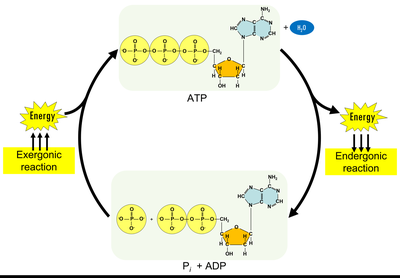
ATP (adenosine triphosphate) stores and transfers energy within cells. The hydrolysis of ATP to ADP and inorganic phosphate releases energy for cellular work.
Exergonic reactions: Release energy (e.g., breakdown of glucose).
Endergonic reactions: Require energy input (e.g., synthesis of ATP).
Redox Reactions in Cellular Respiration
Oxidation and Reduction
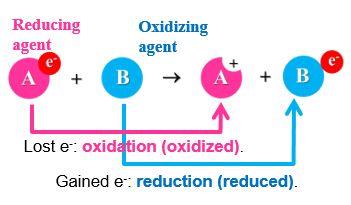
Redox reactions involve the transfer of electrons between molecules. The molecule that loses electrons is oxidized (reducing agent), and the molecule that gains electrons is reduced (oxidizing agent).
Oxidation: Loss of electrons (often with loss of hydrogen atoms).
Reduction: Gain of electrons (often with gain of hydrogen atoms).
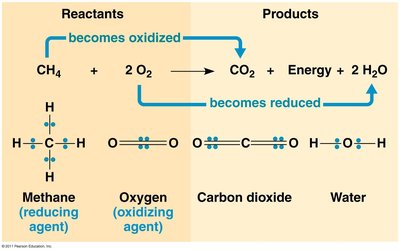
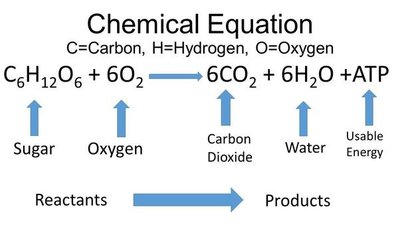
Example: In cellular respiration, oxygen is the final electron acceptor and is reduced to water, while glucose is oxidized to carbon dioxide.
Overall Equation for Cellular Respiration
The overall chemical equation for aerobic cellular respiration is:

Mitochondria: The Site of Cellular Respiration
Structure and Function
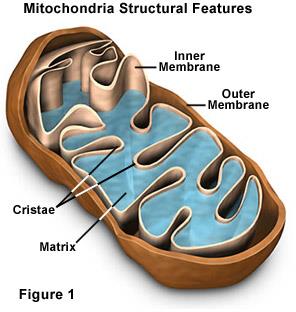
Mitochondria are double-membraned organelles found in all eukaryotic cells. They are the primary site of ATP synthesis via oxidative phosphorylation.
Outer membrane: Encloses the organelle.
Inner membrane: Folded into cristae, increasing surface area for the electron transport chain.
Matrix: The innermost compartment, containing enzymes for the citric acid cycle.
Stages of Cellular Respiration
Overview of the Four Main Stages
Glycolysis: Occurs in the cytoplasm; splits glucose into two pyruvate molecules.
Pyruvate Oxidation (Link Reaction): Converts pyruvate to acetyl-CoA in the mitochondrial matrix.
Citric Acid Cycle (Krebs Cycle): Completes the breakdown of glucose, generating NADH and FADH2.
Oxidative Phosphorylation (Electron Transport Chain and Chemiosmosis): Produces the majority of ATP using electron carriers.
Step 1: Glycolysis
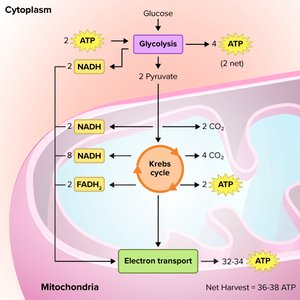
Glycolysis is a series of reactions in the cytoplasm that splits one glucose molecule (6 carbons) into two pyruvate molecules (3 carbons each). It is anaerobic and occurs in both prokaryotes and eukaryotes.
Requires 2 ATP to initiate.
Produces 4 ATP (net gain of 2 ATP) and 2 NADH.
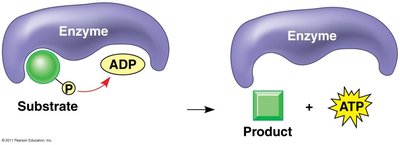
ATP is generated by substrate-level phosphorylation (direct transfer of phosphate to ADP).
Step 2: Pyruvate Oxidation (Link Reaction)
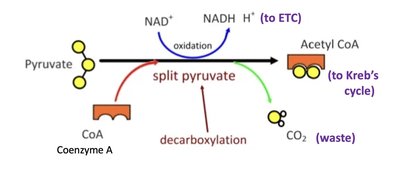
Pyruvate oxidation occurs in the mitochondrial matrix, converting each pyruvate into acetyl-CoA. This step links glycolysis to the citric acid cycle.
Each pyruvate loses a carbon (decarboxylation), releasing CO2 as waste.
NAD+ is reduced to NADH.
Coenzyme A is added to form acetyl-CoA.
Step 3: Citric Acid Cycle (Krebs Cycle)
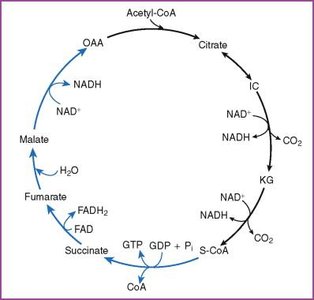
The citric acid cycle is a cyclical series of reactions in the mitochondrial matrix. Each acetyl-CoA combines with oxaloacetate to form citrate, which is then metabolized to regenerate oxaloacetate.
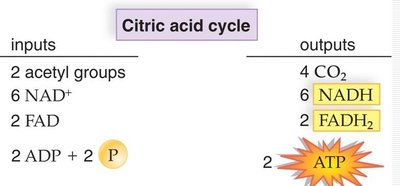
For each glucose (2 acetyl-CoA):
Produces 2 ATP (or GTP), 6 NADH, 2 FADH2, and 4 CO2.
NADH and FADH2 carry electrons to the electron transport chain.
Step 4: Oxidative Phosphorylation (Electron Transport Chain and Chemiosmosis)
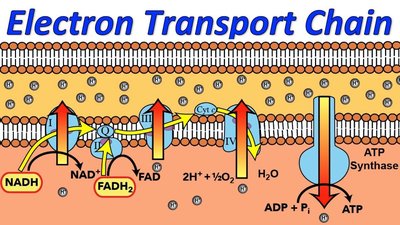
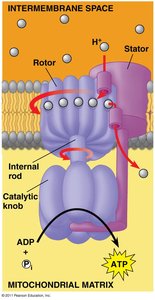
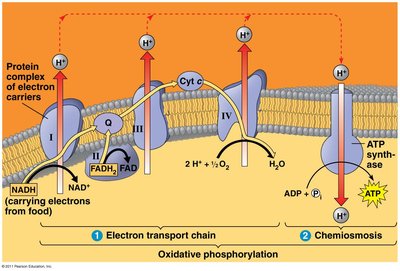
Oxidative phosphorylation occurs across the inner mitochondrial membrane (cristae). Electrons from NADH and FADH2 are transferred through a series of protein complexes (electron transport chain), which pump H+ ions into the intermembrane space, creating a proton gradient.
H+ ions flow back into the matrix through ATP synthase, driving ATP production (chemiosmosis).
Oxygen is the final electron acceptor, forming water.
This stage produces 26–34 ATP per glucose molecule.
Summary Table: ATP Yield from Cellular Respiration
Stage | ATP Produced | NADH Produced | FADH2 Produced |
|---|---|---|---|
Glycolysis | 2 | 2 | 0 |
Pyruvate Oxidation | 0 | 2 | 0 |
Citric Acid Cycle | 2 | 6 | 2 |
Oxidative Phosphorylation | 26–34 | — | — |
Total | 30–38 | — | — |
Alternative Energy Sources
Fats and Proteins as Fuel
Fats: Broken into fatty acids, converted to acetyl-CoA, yielding about twice as much ATP per gram as carbohydrates.
Proteins: Broken into amino acids, which can enter the respiration pathway at various points after deamination (removal of amino group).
Anaerobic Respiration and Fermentation
Fermentation Pathways
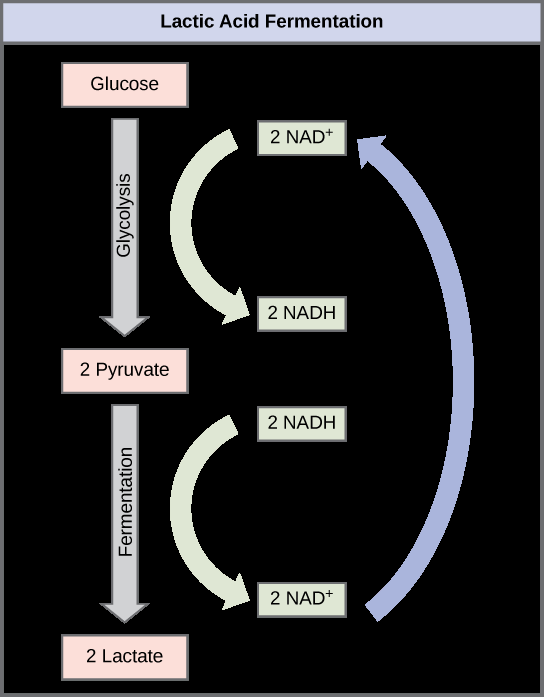
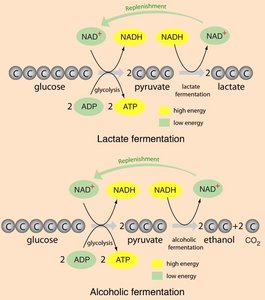
When oxygen is absent, cells can generate ATP through fermentation. This process allows glycolysis to continue by recycling NAD+, but yields only 2 ATP per glucose.
Lactic acid fermentation: Occurs in animal muscle cells and some bacteria; pyruvate is reduced to lactate.
Alcoholic fermentation: Occurs in yeast and some bacteria; pyruvate is converted to ethanol and CO2.
Key Point: Lactic acid buildup in muscles causes temporary discomfort, which is relieved when aerobic conditions return and lactate is metabolized.
Photosynthesis and Cellular Respiration: The Biological Cycle
Photosynthesis and cellular respiration form a biological cycle, with the products of one serving as the reactants for the other. This cycle is fundamental to the flow of energy and matter in ecosystems.
Summary
Cellular respiration is essential for converting organic molecules into usable energy (ATP).
It involves glycolysis, pyruvate oxidation, the citric acid cycle, and oxidative phosphorylation.
Oxygen is crucial for efficient ATP production; in its absence, fermentation provides a less efficient alternative.
Both plants and animals rely on cellular respiration, but only plants perform photosynthesis as well.
