 Indietro
Cellular Respiration: Pathways, Mechanisms, and Regulation
Guida di studio - Note intelligenti
 Appunti personalizzati basati sui tuoi materiali, ampliati con definizioni chiave, esempi e contesto.
Cellular Respiration
Overview of Cellular Respiration
Cellular respiration is the process by which cells extract energy from organic molecules to produce ATP, the main energy currency of the cell. This process is essential for all living organisms, as it provides the energy required for cellular work.
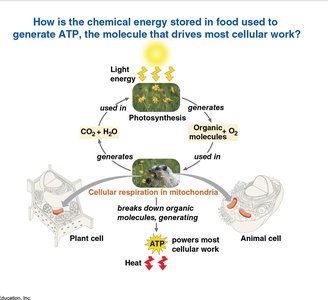
Energy Flow: Energy enters ecosystems as sunlight and is converted by photosynthesis into organic molecules and O2. Cellular respiration then breaks down these molecules to regenerate ATP, releasing heat as a byproduct.
ATP Production: Cells use the chemical energy stored in organic molecules to regenerate ATP, which powers cellular activities.

Catabolic Pathways and ATP Production
Types of Catabolic Pathways
Catabolic pathways break down organic molecules, releasing energy. The main types include fermentation, aerobic respiration, and anaerobic respiration.
Fermentation: Partial degradation of sugars without O2.
Aerobic Respiration: Consumes organic molecules and O2, yielding ATP.
Anaerobic Respiration: Similar to aerobic respiration but uses electron acceptors other than O2.
The overall equation for aerobic respiration using glucose is:

Redox Reactions in Cellular Respiration
Oxidation and Reduction
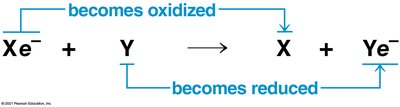
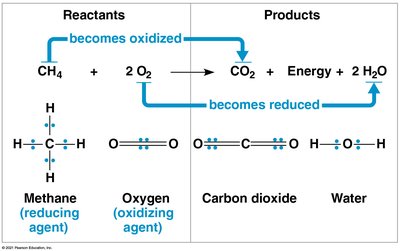
Redox reactions involve the transfer of electrons between molecules, releasing energy used to synthesize ATP.
Oxidation: Loss of electrons from a substance.
Reduction: Gain of electrons by a substance.
Reducing Agent: Electron donor.
Oxidizing Agent: Electron acceptor.
Stepwise Energy Harvest via NAD+ and the Electron Transport Chain
NAD+ and NADH
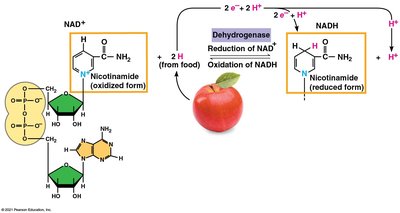
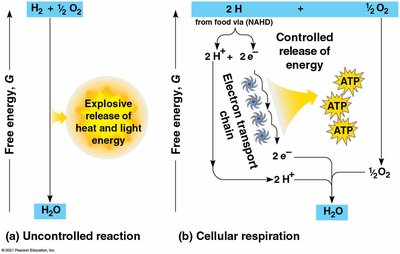
During cellular respiration, electrons from organic compounds are transferred to NAD+, forming NADH. NADH stores energy and transfers electrons to the electron transport chain (ETC).
NAD+: Functions as an oxidizing agent, accepting electrons.
NADH: Reduced form, carries electrons to the ETC.
Electron Transport Chain (ETC)
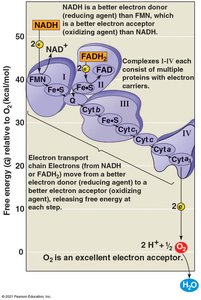
The ETC passes electrons in a series of steps, releasing energy gradually to synthesize ATP. O2 is the final electron acceptor, forming water.
Stages of Cellular Respiration
Three Main Stages
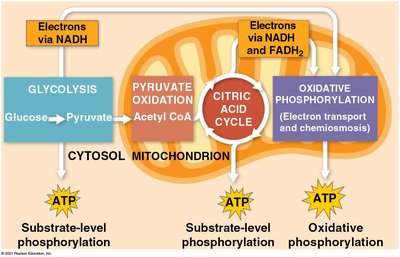
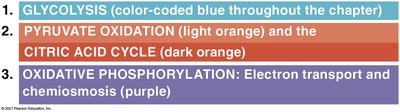
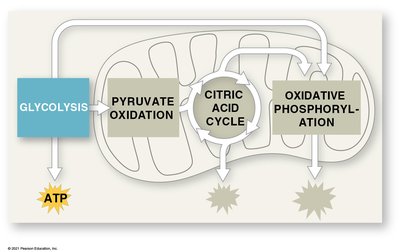
Cellular respiration consists of three main stages:
Glycolysis: Breaks down glucose into two pyruvate molecules (cytosol).
Citric Acid Cycle (Krebs Cycle): Completes glucose breakdown (mitochondrial matrix).
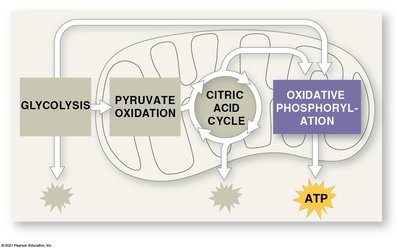
Oxidative Phosphorylation: Electron transport and chemiosmosis produce most ATP (mitochondrial inner membrane).
ATP Synthesis Mechanisms
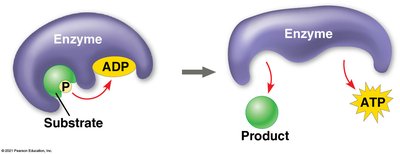
Substrate-level Phosphorylation: Direct transfer of phosphate to ADP to form ATP (in glycolysis and citric acid cycle).
Oxidative Phosphorylation: ATP synthesis powered by redox reactions in the ETC and chemiosmosis.
Glycolysis
Process and Phases
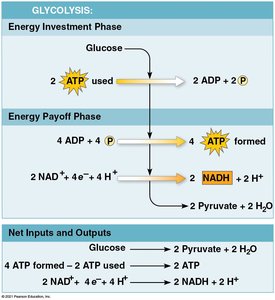
Glycolysis is the first step in cellular respiration, occurring in the cytoplasm. It splits glucose into two pyruvate molecules through two phases:
Energy Investment Phase: 2 ATP are used to phosphorylate glucose intermediates.
Energy Payoff Phase: 4 ATP and 2 NADH are produced, resulting in a net gain of 2 ATP per glucose.
The Citric Acid Cycle (Krebs Cycle)
Overview and Steps
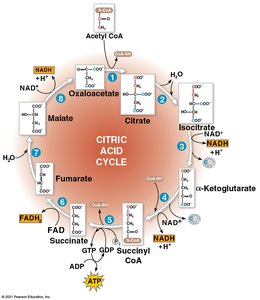
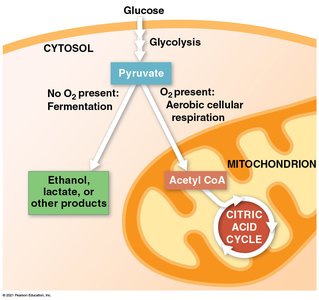
In the presence of O2, pyruvate enters the mitochondrion and is converted to acetyl CoA, which enters the citric acid cycle. This cycle completes the oxidation of glucose derivatives, generating ATP, NADH, and FADH2.
Location: Mitochondrial matrix.
Products per cycle: 1 ATP, 3 NADH, 1 FADH2 (per acetyl CoA).
Eight Steps: Each catalyzed by a specific enzyme, regenerating oxaloacetate.
Oxidative Phosphorylation and Chemiosmosis
Electron Transport Chain (ETC)
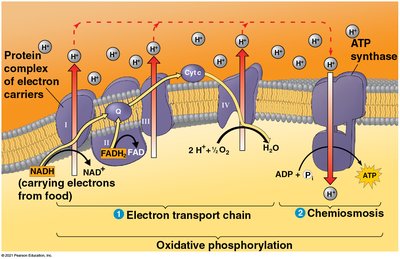
The ETC is located in the inner mitochondrial membrane (cristae). It consists of protein complexes that transfer electrons from NADH and FADH2 to O2, releasing energy in steps.
Function: Breaks the large free-energy drop from food to O2 into smaller steps, releasing energy in manageable amounts.
Final Electron Acceptor: O2, forming H2O.
Chemiosmosis and ATP Synthase
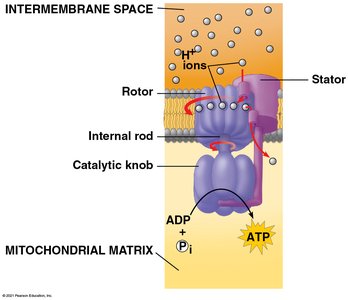
Electron transfer in the ETC pumps H+ ions into the intermembrane space, creating a proton gradient (proton-motive force). H+ flows back into the matrix through ATP synthase, driving ATP production.
Chemiosmosis: The use of energy in a H+ gradient to drive cellular work (ATP synthesis).
ATP Synthase: Enzyme that synthesizes ATP from ADP and Pi using the proton gradient.
ATP Yield
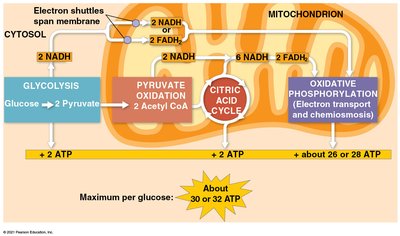
Most energy flows in this sequence: glucose → NADH → electron transport chain → proton-motive force → ATP. About 30–32 ATP are produced per glucose molecule.
Fermentation and Anaerobic Respiration
ATP Production Without Oxygen
When O2 is absent, cells can produce ATP via fermentation or anaerobic respiration.
Anaerobic Respiration: Uses an electron transport chain with a final electron acceptor other than O2 (e.g., sulfate).
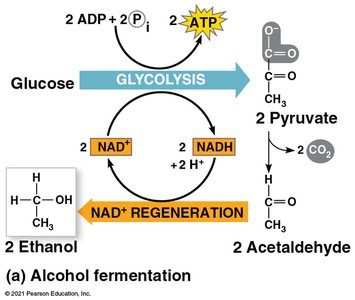
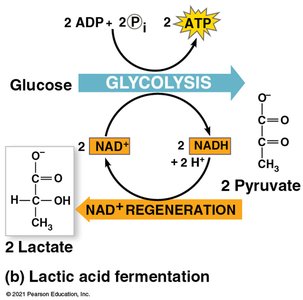
Fermentation: Glycolysis plus reactions that regenerate NAD+ by transferring electrons to organic acceptors.
Types of Fermentation
Alcohol Fermentation: Pyruvate is converted to ethanol, releasing CO2. Used by yeast in brewing and baking.
Lactic Acid Fermentation: Pyruvate is reduced to lactate without releasing CO2. Used by some bacteria, fungi, and muscle cells.
Comparison of Fermentation and Cellular Respiration
Both use glycolysis to oxidize glucose to pyruvate.
Fermentation: Final electron acceptor is an organic molecule; yields 2 ATP per glucose.
Cellular Respiration: Final electron acceptor is O2; yields about 38 ATP per glucose.
Obligate vs. Facultative Anaerobes
Obligate Anaerobes: Only survive via fermentation or anaerobic respiration; cannot tolerate O2.
Facultative Anaerobes: Can survive using either fermentation or cellular respiration (e.g., yeast, many bacteria).
Connections to Other Metabolic Pathways
Catabolic Pathway Versatility
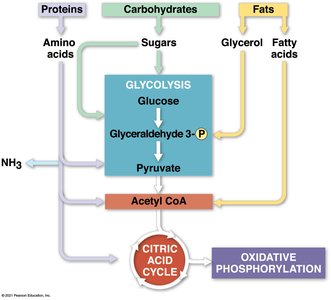
Glycolysis and the citric acid cycle are central hubs, connecting to the metabolism of carbohydrates, fats, and proteins.
Carbohydrates: Enter glycolysis as glucose or other sugars.
Proteins: Broken into amino acids, which feed into glycolysis or the citric acid cycle after deamination.
Fats: Glycerol enters glycolysis; fatty acids are converted to acetyl CoA via beta oxidation.
Fats yield more than twice as much ATP per gram as carbohydrates.
Biosynthesis (Anabolic Pathways)
Cells use small molecules from food, glycolysis, or the citric acid cycle to build other macromolecules as needed.
Regulation of Cellular Respiration
Feedback Mechanisms
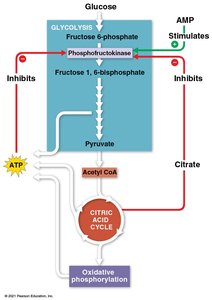
Cellular respiration is tightly regulated by feedback inhibition, primarily at key enzymatic steps such as phosphofructokinase in glycolysis.
High ATP: Inhibits respiration.
Low ATP: Stimulates respiration.
Control Point: Phosphofructokinase is inhibited by ATP and citrate, and stimulated by AMP.
Summary Table: Comparison of Fermentation and Cellular Respiration
Process | Final Electron Acceptor | ATP Yield (per glucose) | Location |
|---|---|---|---|
Fermentation | Organic molecule (e.g., pyruvate, acetaldehyde) | 2 | Cytosol |
Aerobic Respiration | O2 | ~30–32 | Cytosol & Mitochondria |
Anaerobic Respiration | Other than O2 (e.g., sulfate) | Varies | Cytosol & Mitochondria |
Key Concepts to Know
How redox reactions are involved in energy exchanges.
The three stages of cellular respiration, their locations, and products.
The role of the electron transport chain in cellular respiration.
How the electron transport chain creates a proton gradient.
Differences between fermentation and anaerobic respiration.
Distinctions between obligate and facultative anaerobes.
