 Indietro
Cellular Respiration: Structure, Function, and Metabolic Pathways
Guida di studio - Note intelligenti
 Appunti personalizzati basati sui tuoi materiali, ampliati con definizioni chiave, esempi e contesto.
Cellular Respiration Overview
Purpose and General Equation
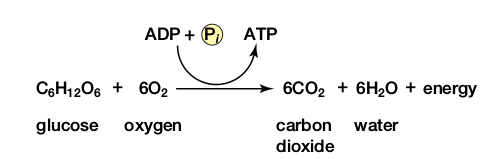
Cellular respiration is a fundamental metabolic process in all living organisms, designed to convert biochemical energy from nutrients into adenosine triphosphate (ATP), the cell's energy currency. The process primarily uses carbohydrates, such as glucose, but can also utilize fats and proteins.
Goal: To produce ATP from glucose.
Reactants: Glucose (C6H12O6) and Oxygen (O2).
Products: Carbon dioxide (CO2), water (H2O), and energy (ATP).
Equation:
ATP Formation: ADP + Pi → ATP
Mitochondria: The Powerhouse of the Cell
Structure and Function
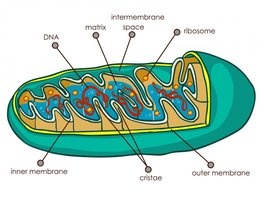
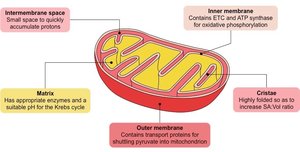
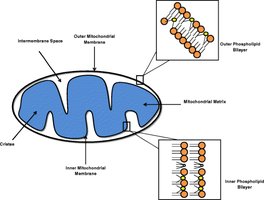
The mitochondrion is the organelle where most aerobic respiration occurs. Its unique structure maximizes efficiency in ATP production.
Double Membrane: Consists of an outer and inner membrane.
Inner Membrane: Highly folded into cristae to increase surface area for reactions.
Intermembrane Space: Fluid-filled area between membranes, important for proton gradient formation.
Matrix: Contains enzymes for the Krebs cycle and mitochondrial DNA.
Unique Features: Contains its own DNA and ribosomes, allowing some protein synthesis independent of the nucleus.
Stages of Cellular Respiration
Metabolic Pathways and ATP Yield
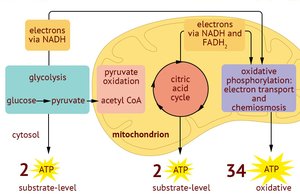
Cellular respiration consists of four main stages, each contributing to the overall production of ATP.
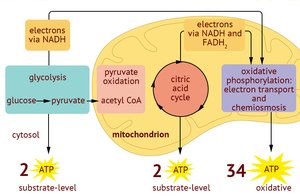
Glycolysis: Occurs in the cytosol; anaerobic; produces 2 ATP.
Pyruvate Oxidation: Occurs in the mitochondrial matrix; aerobic.
Krebs Cycle (Citric Acid Cycle): Occurs in the matrix; aerobic; produces 2 ATP.
Electron Transport Chain (ETC): Occurs in the inner membrane; aerobic; produces up to 34 ATP.
Electron Carriers: NAD+ and FAD
Role in Cellular Respiration
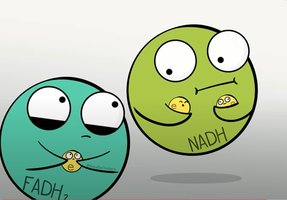
Electron carriers are essential for transferring electrons and hydrogen ions between metabolic stages.
NAD+: Reduced to NADH during glycolysis, pyruvate oxidation, and the Krebs cycle.
FAD: Reduced to FADH2 during the Krebs cycle.
Function: Shuttle electrons to the ETC for ATP production.
Glycolysis
Process and Evolutionary Significance
Glycolysis is the first step in cellular respiration, breaking down glucose into pyruvate in the cytosol. It is an ancient pathway, used by all cells, and does not require oxygen.
Location: Cytosol
Oxygen Requirement: Anaerobic
Efficiency: Net yield of 2 ATP per glucose
Steps: 10 enzyme-catalyzed reactions
Evolutionary Perspective: Prokaryotes evolved glycolysis before mitochondria existed; all cells use glycolysis.
Steps of Glycolysis
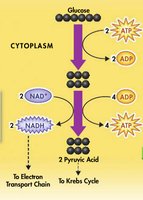
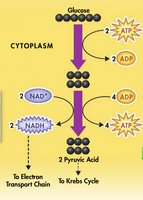
Two phosphate groups are added to glucose from 2 ATP.
Glucose is split into two 3-carbon pyruvate molecules.
Each pyruvate is oxidized, producing 2 NADH and 4 ATP (gross).
Net yield: 2 ATP and 2 NADH per glucose.
Branching Point: Aerobic vs. Anaerobic Respiration
Decision Based on Oxygen Availability
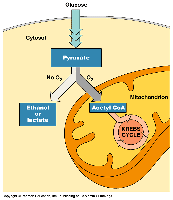
After glycolysis, cells decide whether to proceed with aerobic respiration or switch to fermentation, depending on oxygen presence.
With Oxygen: Pyruvate enters mitochondria for aerobic respiration.
Without Oxygen: Pyruvate remains in cytoplasm for anaerobic respiration (fermentation).
Types of Fermentation: Alcoholic (yeast, bacteria) and Lactic Acid (animals, some fungi).
Lactic Acid Fermentation
Pyruvate is converted to lactate and 2 ATP.
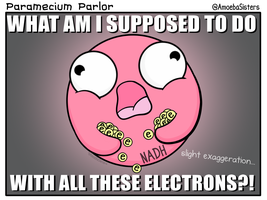
NADH is oxidized back to NAD+ for glycolysis reuse.
Occurs in muscle cells during intense activity, causing cramping.
Reversible: Lactate can be converted back to pyruvate when oxygen returns.
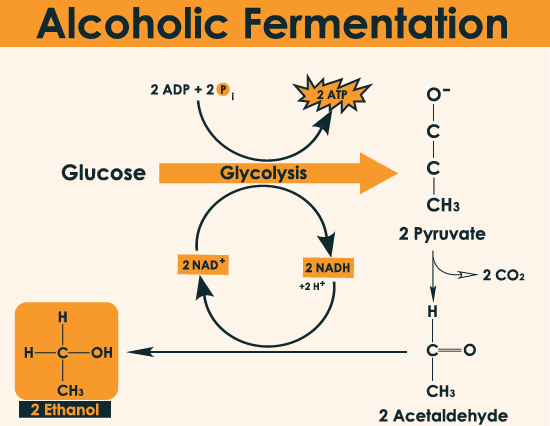
Alcoholic Fermentation
Pyruvate is converted to ethanol, CO2, and 2 ATP.
NADH is oxidized back to NAD+.
Used in baking, pickling, and alcohol production.
Irreversible reaction.
Pyruvate Oxidation
Conversion to Acetyl-CoA
Pyruvate oxidation is the link between glycolysis and the Krebs cycle, occurring in the mitochondrial matrix if oxygen is present.
Each pyruvate loses a carbon (released as CO2).
NAD+ is reduced to NADH.
Coenzyme A attaches to the remaining 2-carbon fragment, forming Acetyl-CoA.
Products per glucose: 2 Acetyl-CoA, 2 NADH, 2 CO2.
Krebs Cycle (Citric Acid Cycle)
Cycle Steps and Outputs
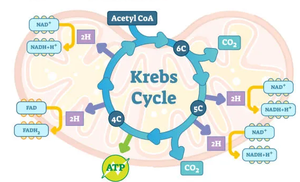
The Krebs cycle completes the oxidation of glucose derivatives, generating electron carriers for the ETC.
Acetyl-CoA combines with oxaloacetate to form citric acid.
Citric acid is oxidized, releasing CO2 and reducing NAD+ and FAD.
Cycle regenerates oxaloacetate for continuous operation.
Per glucose: 2 ATP, 6 NADH, 2 FADH2, 4 CO2.
Electron Transport Chain (ETC) and Oxidative Phosphorylation
Structure and Function
The ETC is a series of protein complexes embedded in the inner mitochondrial membrane (cristae), responsible for the majority of ATP production.
Location: Inner membrane (cristae)
Components: Electron carriers, ATP synthase
Function: Transfers electrons from NADH and FADH2 to oxygen, creating a proton gradient.
Building a Proton Gradient
Electrons from NADH and FADH2 are passed through the ETC.
Energy released pumps H+ into the intermembrane space, creating a gradient.
NAD+ and FAD are recycled.
Oxidative Phosphorylation
H+ diffuses back into the matrix through ATP synthase, generating ATP.
Electrons combine with O2 (final electron acceptor) and H+ to form H2O.
Most ATP is produced in this stage (up to 34 ATP per glucose).
Summary Table: ATP Yield from Cellular Respiration
Stage | Location | ATP Produced |
|---|---|---|
Glycolysis | Cytosol | 2 |
Krebs Cycle | Matrix | 2 |
ETC & Oxidative Phosphorylation | Inner Membrane | ~34 |
Total | ~38 |
*Additional info: Actual ATP yield may vary slightly depending on cell type and conditions.
What Happens Without Oxygen?
Impact on Cellular Respiration
ETC cannot function without oxygen as the final electron acceptor.
NADH and FADH2 cannot unload electrons, halting glycolysis and Krebs cycle.
Cell reverts to fermentation to regenerate NAD+ and produce limited ATP.
Summary Questions
Where did the glucose come from? (Photosynthesis or food intake)
Where did the O2 come from? (Atmospheric oxygen, photosynthesis)
Where did the CO2 come from? (Decarboxylation reactions in pyruvate oxidation and Krebs cycle)
Where did the H2O come from? (ETC, when electrons combine with O2 and H+)
Where did the ATP come from? (All stages, mainly ETC)
Why do we breathe? (To supply O2 for ETC and remove CO2 waste)
