 Indietro
Cellular Respiration: The Fate of Carbons and Energy Flow
Guida di studio - Note intelligenti
 Appunti personalizzati basati sui tuoi materiali, ampliati con definizioni chiave, esempi e contesto.
Enzyme Function and Regulation
How Enzymes Work
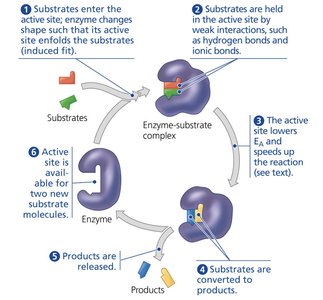
Enzymes are biological catalysts that accelerate chemical reactions by lowering the activation energy required. Their function depends on the structure of their active site and the induced fit mechanism.
Active Site: A pocket in the enzyme where substrates bind, fitting precisely due to the enzyme's shape and chemistry.
Induced Fit: Binding of the substrate causes the enzyme to change shape, holding the substrate tightly and straining its bonds toward the transition state.
Enzyme-Substrate Complex: The temporary association between enzyme and substrate during catalysis.
Product Release: After the reaction, products are released and the enzyme is ready for new substrates.
Enzyme Regulation: Inhibition and Allostery
Enzyme activity can be regulated by inhibitors and allosteric modulators, which affect the rate and efficiency of catalysis.
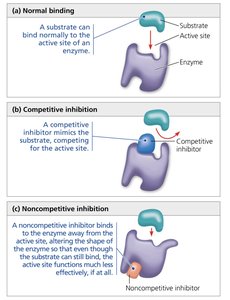
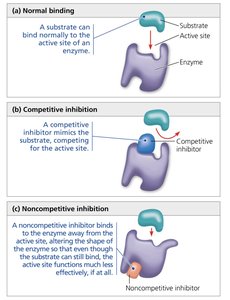
Competitive Inhibition: Inhibitor competes with substrate for the active site; increasing substrate concentration can overcome inhibition.
Noncompetitive Inhibition: Inhibitor binds elsewhere, changing enzyme shape and reducing activity regardless of substrate concentration.
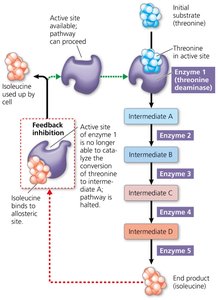
Allosteric Regulation: Molecules bind to a site other than the active site, stabilizing either the active or inactive form of the enzyme.
Feedback Inhibition: The end product of a pathway inhibits an early enzyme, preventing overproduction and matching supply to demand.
Overview of Cellular Respiration
Stages and Locations
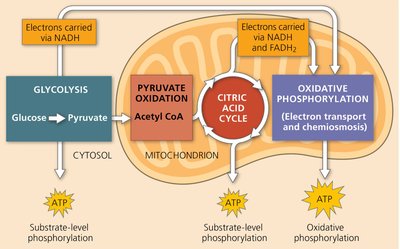
Cellular respiration is a multi-stage process that converts glucose into ATP, the cell's energy currency. It occurs in distinct cellular compartments and involves several key steps:
Glycolysis: Occurs in the cytosol; splits glucose into two pyruvate molecules.
Pyruvate Oxidation: Occurs in the mitochondrial matrix; converts pyruvate to acetyl-CoA, releasing CO2.
Citric Acid Cycle (Krebs Cycle): Occurs in the mitochondrial matrix; completes the oxidation of carbon, producing CO2, NADH, FADH2, and ATP.
Oxidative Phosphorylation: Occurs in the mitochondrial inner membrane; uses NADH and FADH2 to drive ATP synthesis via the electron transport chain and chemiosmosis.
Mitochondria: The Powerhouse of the Cell
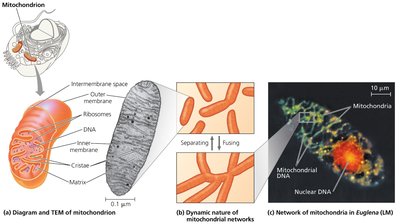
Mitochondria are double-membraned organelles with their own DNA, responsible for energy production in eukaryotic cells. Their structure is essential for the compartmentalization of respiration stages.
Outer and Inner Membranes: Create distinct spaces for metabolic reactions.
Matrix: Site of pyruvate oxidation and the citric acid cycle.
Cristae: Folded inner membrane increases surface area for oxidative phosphorylation.
Glycolysis: Splitting Glucose
Energy Investment and Payoff
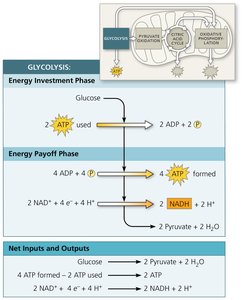
Glycolysis is the first stage of cellular respiration, occurring in the cytosol. It consists of two phases:
Energy Investment Phase: 2 ATP are used to phosphorylate glucose.
Energy Payoff Phase: 4 ATP and 2 NADH are produced, along with 2 pyruvate.
Net Yield: 2 ATP, 2 NADH, and 2 pyruvate per glucose.
No O2 Used: Glycolysis does not require oxygen and releases no CO2.
Pyruvate Oxidation: Entry to the Mitochondrion
Conversion to Acetyl-CoA
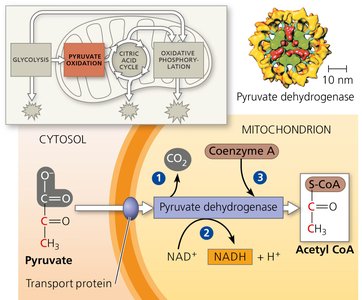
Pyruvate produced in glycolysis is transported into the mitochondrial matrix, where it is oxidized to acetyl-CoA. This process releases CO2 and loads electrons onto NADH.
Inputs: Pyruvate, NAD+, Coenzyme A.
Outputs: Acetyl-CoA, NADH, CO2.
Carbon Tracking: Each pyruvate loses one carbon as CO2; per glucose, two carbons are released.
Citric Acid Cycle (Krebs Cycle): Complete Oxidation of Carbon
Cycle Steps and Products
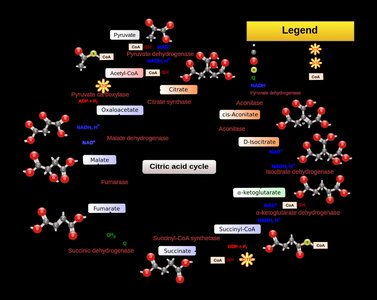
The citric acid cycle completes the breakdown of glucose, releasing the remaining carbons as CO2 and loading electron shuttles.
Per Turn: 2 CO2, 3 NADH, 1 FADH2, 1 ATP.
Per Glucose (Two Turns): 4 CO2, 6 NADH, 2 FADH2, 2 ATP.
Carbon Fate: All six carbons from glucose are released as CO2 by the end of this stage.
No O2 Used: Oxygen is not consumed until the electron transport chain.
Integration of Metabolic Pathways
Fats, Proteins, and Carbohydrates
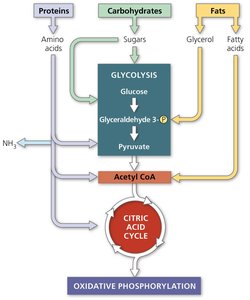
Cellular respiration is not limited to glucose; fats and proteins can also enter the pathway. Fatty acids are broken down into acetyl-CoA, and amino acids enter at various points after deamination.
Fat: Yields more energy per gram due to more C–H bonds.
Protein: After removal of nitrogen, amino acids feed into glycolysis or the citric acid cycle.
Carbohydrates: Enter as sugars, primarily glucose.
Key Concepts and Definitions
Redox Reactions and Electron Shuttles
Cellular Respiration: Stepwise oxidation of fuel molecules to make ATP; aerobic respiration uses O2 as the final electron acceptor.
Redox Reaction: Electrons move from one molecule to another; oxidation is loss, reduction is gain.
NAD+/NADH: Main electron shuttle; NAD+ is empty, NADH is loaded with electrons.
FAD/FADH2: Second electron shuttle, loaded in the citric acid cycle.
Summary Table: Respiration Stages
Stage | Location | Carbons Out | ATP | NADH | FADH2 | O2 Used |
|---|---|---|---|---|---|---|
Glycolysis | Cytosol | 0 | 2 | 2 | 0 | 0 |
Pyruvate Oxidation | Matrix | 2 (as CO2) | 0 | 2 | 0 | 0 |
Citric Acid Cycle | Matrix | 4 (as CO2) | 2 | 6 | 2 | 0 |
Total so far | 6 of 6 | 4 | 10 | 2 | 0 |
Key Equations
Overall Equation for Cellular Respiration
The classic equation for aerobic respiration is:
ΔG = −686 kcal/mol (energy released per mole of glucose)
Summary: Fate of Carbons and Energy
Glucose is oxidized stepwise; its carbons leave as CO2 through the citric acid cycle.
Most energy is transferred to NADH and FADH2, which later drive ATP synthesis.
Fat and protein metabolism converge on acetyl-CoA and the citric acid cycle.
Mass is conserved: lost fat leaves the body mainly as CO2 exhaled from the lungs.
Additional info: The notes integrate textbook content and lecture slides, expanding on metabolic regulation, enzyme function, and the fate of carbon atoms in cellular respiration. Practice questions and poll answers reinforce understanding of pathway logic and metabolic control.
