 Indietro
Cellular Transport Mechanisms: Passive and Active Transport
Guida di studio - Note intelligenti
 Appunti personalizzati basati sui tuoi materiali, ampliati con definizioni chiave, esempi e contesto.
Types of Cellular Transport
Overview of Cellular Transport
Cellular transport refers to the movement of substances across the cell membrane. It is essential for maintaining homeostasis and supporting cellular functions. Transport mechanisms are classified as passive or active based on energy requirements and direction relative to concentration gradients.
Passive Transport
Simple Diffusion
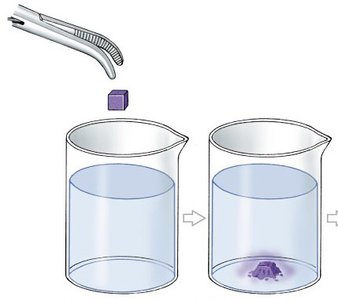
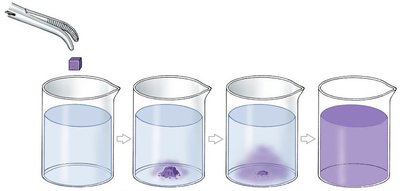
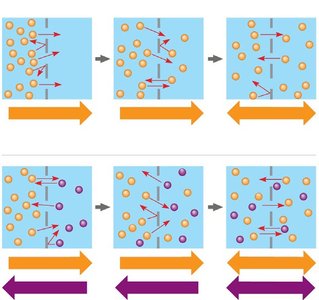
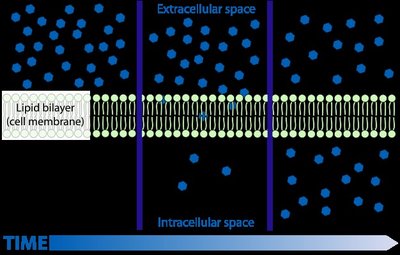
Simple diffusion is the movement of molecules from an area of higher concentration to an area of lower concentration, down the concentration gradient, without the use of cellular energy (ATP). It continues until equilibrium is reached, where molecules are evenly distributed.
Key Point: No energy required; movement is down the gradient.
Key Point: Molecules move randomly, but net movement is from high to low concentration.
Example: Oxygen and carbon dioxide gases diffuse across cell membranes.
Factors Affecting Diffusion Rate
The rate of diffusion is influenced by:
Concentration gradient: Greater differences increase diffusion rate.
Temperature: Higher temperatures increase kinetic energy and diffusion rate.
Surface area: Larger membrane area allows more molecules to pass.
Physiological Example: Gas Exchange in Alveoli
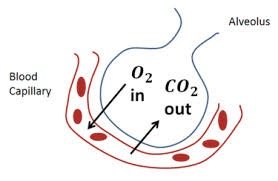
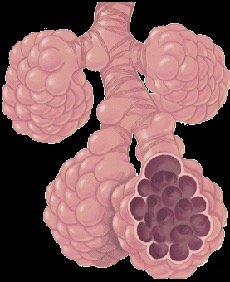
Simple diffusion is critical in the lungs, where oxygen diffuses into blood and carbon dioxide diffuses out across alveolar membranes.
Key Point: Gas exchange relies on concentration gradients between alveoli and blood.
Osmosis
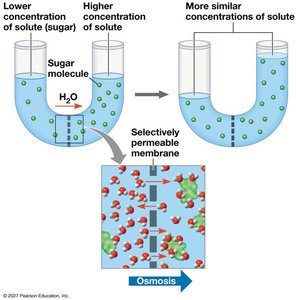
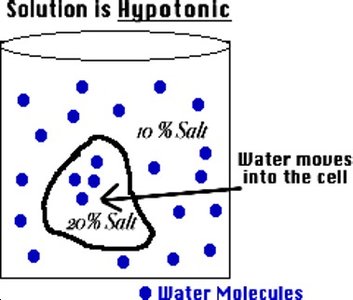
Osmosis is the diffusion of water across a selectively permeable membrane from a region of lower solute concentration to higher solute concentration. The direction of water movement depends on the total dissolved solutes in the solutions.
Key Point: Water moves to balance solute concentrations across membranes.
Key Point: Osmosis is vital for cell volume regulation.
Tonicity and Effects on Cells
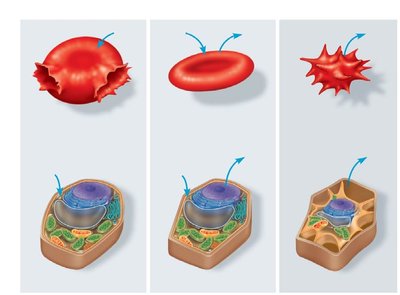
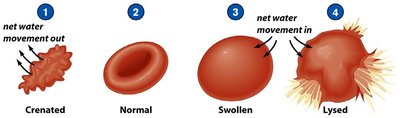
Tonicity describes the ability of a solution to cause a cell to gain or lose water. Solutions can be:
Isotonic: Equal solute concentration; no net water movement.
Hypotonic: Lower solute concentration outside; water enters cell, causing swelling or lysis.
Hypertonic: Higher solute concentration outside; water leaves cell, causing shrinkage.
Facilitated Diffusion
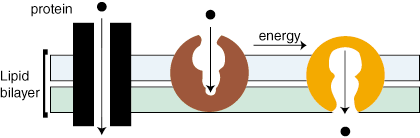
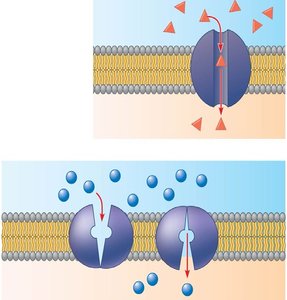
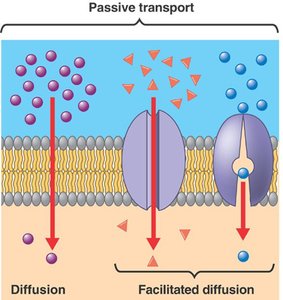
Facilitated diffusion is a passive process where molecules move down their concentration gradient with the help of transport proteins. These proteins include channel proteins (forming hydrophilic channels) and carrier proteins (binding and shuttling molecules).
Key Point: No energy required; transport proteins provide specificity.
Key Point: Can become saturated when all transport proteins are occupied.
Example: Glucose transport into cells via carrier proteins.
Active Transport
Primary Active Transport
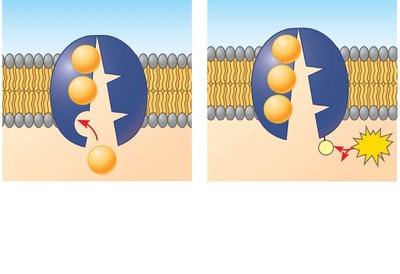
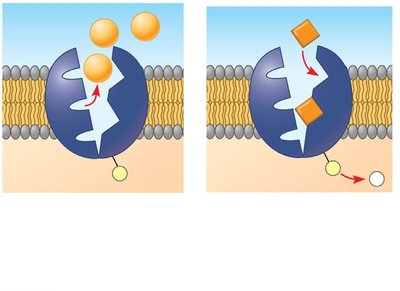
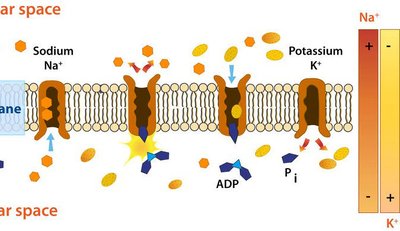
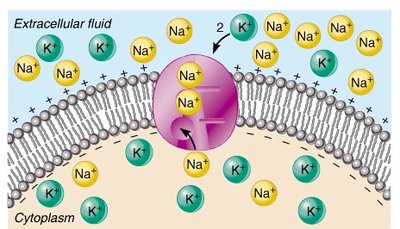
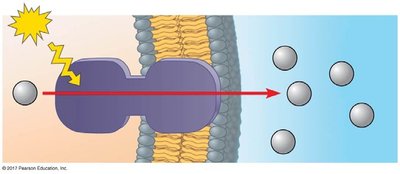
Active transport moves solutes against their concentration gradient using energy, usually from ATP. Primary active transport directly uses ATP to fuel transport proteins, such as the sodium-potassium pump (Na+/K+ ATPase).
Key Point: Maintains internal solute concentrations different from the environment.
Example: Na+/K+ pump exchanges 3 Na+ out and 2 K+ in, creating electrochemical gradients.
Electrochemical Gradient and Membrane Potential
The Na+/K+ pump creates a separation of charge across the membrane, resulting in a membrane potential. The cytoplasmic side is negative relative to the extracellular side. Two forces drive ion diffusion: chemical (concentration) and electrical (charge).
Key Point: Electrogenic pumps generate voltage across membranes.
Example: Proton pumps in plants, fungi, and bacteria.

Secondary Active Transport (Cotransport)
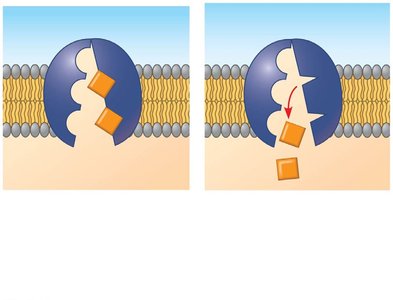
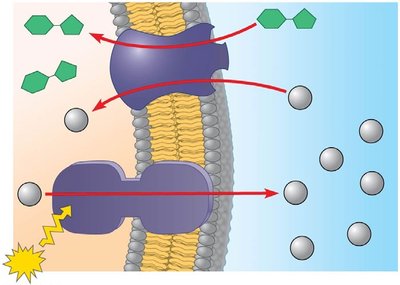
Secondary active transport uses the energy stored in gradients created by primary active transport. For example, a proton pump creates an H+ gradient, which then drives the transport of nutrients like sucrose into the cell via cotransporters.
Key Point: Indirectly uses ATP; relies on gradients established by primary pumps.
Bulk Transport: Exocytosis and Endocytosis
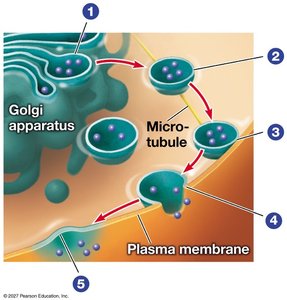
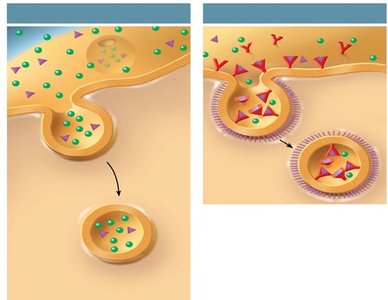
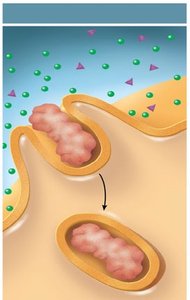
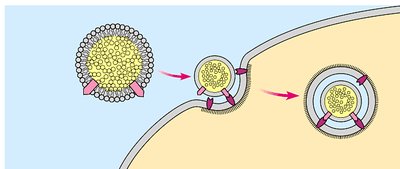
Bulk transport moves large molecules across the membrane via vesicles. Exocytosis exports substances, while endocytosis imports them. Endocytosis includes phagocytosis (cellular eating), pinocytosis (cellular drinking), and receptor-mediated endocytosis (specific uptake).
Key Point: Requires energy; essential for macromolecule transport.
Example: Cholesterol uptake via receptor-mediated endocytosis.
Summary Table: Types of Cellular Transport
Type | Energy Required? | Direction | Transport Proteins? | Examples |
|---|---|---|---|---|
Simple Diffusion | No | Down gradient | No | O2, CO2 |
Osmosis | No | Down gradient | Sometimes (aquaporins) | H2O |
Facilitated Diffusion | No | Down gradient | Yes | Glucose, ions |
Primary Active Transport | Yes (ATP) | Against gradient | Yes | Na+/K+ pump |
Secondary Active Transport | Yes (indirect) | Against gradient | Yes | H+/sucrose cotransporter |
Bulk Transport | Yes | Varies | Vesicles | Exocytosis, endocytosis |
Key Vocabulary
Diffusion: Movement of molecules from high to low concentration.
Concentration gradient: Difference in concentration across a space.
Osmosis: Diffusion of water across a membrane.
Tonicity: Effect of a solution on cell water balance.
Equilibrium: State where concentrations are equal.
Osmoregulation: Control of water and solute balance.
Electrochemical gradient: Combined chemical and electrical forces driving ion movement.
Membrane potential: Voltage difference across a membrane.
Important Equations
Fick's Law of Diffusion:
Where J is the rate of diffusion, D is the diffusion coefficient, and \frac{dC}{dx} is the concentration gradient.
Osmotic Pressure:
Where \Pi is osmotic pressure, i is the van't Hoff factor, M is molarity, R is the gas constant, and T is temperature.
Additional info: The notes have been expanded to include definitions, examples, and academic context for clarity and completeness. All included images directly reinforce the explanations of cellular transport mechanisms.
