 Indietro
Cellular Transport: Passive and Active Mechanisms
Guida di studio - Note intelligenti
 Appunti personalizzati basati sui tuoi materiali, ampliati con definizioni chiave, esempi e contesto.
Cellular Transport Overview
Introduction to Cellular Transport
Cellular transport is essential for maintaining homeostasis in cells by regulating the movement of substances across the plasma membrane. Transport mechanisms are classified based on their energy requirements:
Passive transport: Does not require cellular energy (ATP).
Active transport: Requires cellular energy (ATP).
Passive Transport
Definition and Types
Passive transport involves the movement of molecules across the cell membrane without the expenditure of energy. Molecules move down their concentration gradient, from areas of high concentration to low concentration. 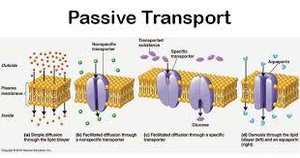
Diffusion
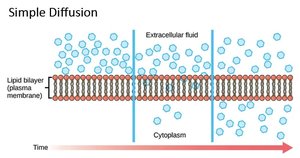
Diffusion is the spontaneous movement of molecules from an area of higher concentration to an area of lower concentration. The difference in concentration is known as the concentration gradient.
Simple diffusion: Small, nonpolar molecules (e.g., O2, CO2) pass directly through the lipid bilayer.
Facilitated diffusion: Larger or polar molecules move via protein channels or carriers.
Osmosis
Osmosis is the diffusion of water molecules across a selectively permeable membrane. Water moves from areas of low solute concentration to areas of high solute concentration. 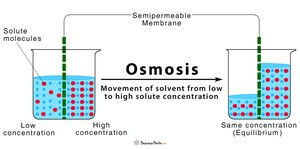
Equilibrium
Equilibrium is reached when the concentration of molecules is equal on both sides of the membrane. Molecules continue to move, but there is no net change in concentration. 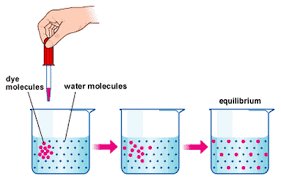
Tonicity
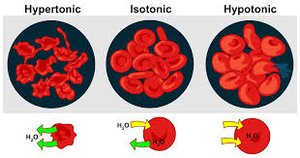
Tonicity describes the osmotic relationship between a cell and its environment, affecting cell volume and shape.
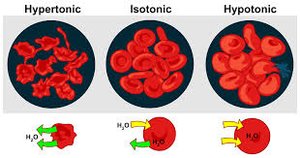
Hypertonic solution: Higher solute concentration outside the cell; water moves out, causing cell shrinkage.
Isotonic solution: Equal solute concentration; no net water movement.
Hypotonic solution: Lower solute concentration outside; water moves in, causing cell swelling.
Types of Solutions
The effects of hypertonic, isotonic, and hypotonic solutions on cells are summarized below:
Solution Type | Solute Concentration | Water Movement | Cell Effect |
|---|---|---|---|
Hypertonic | Higher outside | Out of cell | Shrinks |
Isotonic | Equal | No net movement | Normal |
Hypotonic | Lower outside | Into cell | Swells |
Facilitated Diffusion
Facilitated diffusion is a type of passive transport for molecules that are too large or not lipid-soluble. Carrier proteins or channel proteins assist their movement across the membrane. 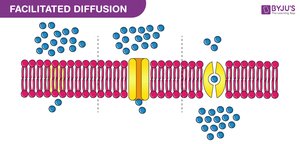
Carrier Proteins
Carrier proteins bind to specific molecules and change shape to transport them across the membrane, functioning like a revolving door. 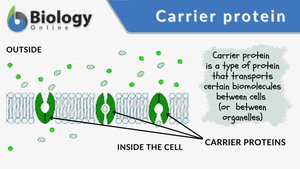
Ion Channels
Ion channels are specialized proteins that allow ions to pass through the membrane. Some channels are always open, while others open in response to stimuli. 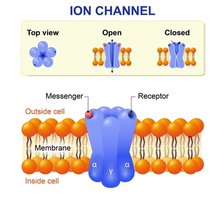
Active Transport
Definition and Mechanism
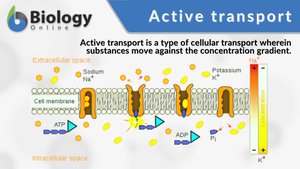
Active transport moves molecules against their concentration gradient, from low to high concentration, using energy from ATP.
Essential for maintaining cellular ion balance.
Examples include the sodium-potassium pump and proton pumps.
Sodium-Potassium Pump
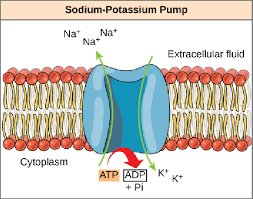
The sodium-potassium pump is a vital active transport mechanism that moves sodium ions (Na+) out of the cell and potassium ions (K+) into the cell. This maintains the electrochemical gradient necessary for cell function.
Uses ATP to change protein shape and transport ions.
Maintains high K+ and low Na+ inside the cell.
Endocytosis
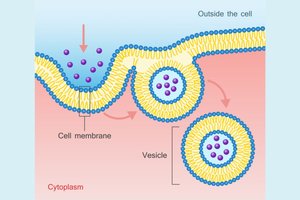
Endocytosis is a form of active transport where the cell engulfs substances by wrapping the plasma membrane around them, forming a vesicle.
Phagocytosis: Uptake of large particles (e.g., bacteria).
Pinocytosis: Uptake of fluids and dissolved substances.
Receptor-mediated endocytosis: Specific uptake via receptor binding.
Phagocytosis
Phagocytosis is the process by which cells (such as macrophages) engulf large particles or pathogens, forming a phagosome. 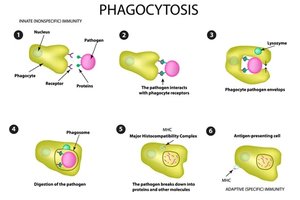
Pinocytosis
Pinocytosis is the uptake of extracellular fluid and dissolved substances by the cell, forming small vesicles. 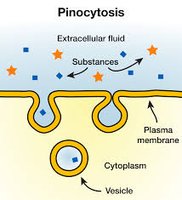
Receptor-Mediated Endocytosis
Receptor-mediated endocytosis involves specific receptors on the cell surface binding to target molecules, triggering vesicle formation for selective uptake. 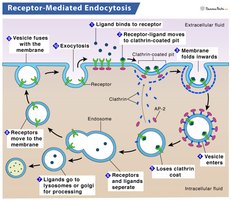
Exocytosis
Exocytosis is the process by which cells release substances (such as hormones or waste) using secretory vesicles. The vesicle fuses with the plasma membrane, expelling its contents outside the cell. 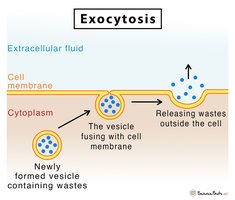
Summary Table: Passive vs. Active Transport
Transport Type | Energy Required | Direction | Examples |
|---|---|---|---|
Passive | No | High to low concentration | Diffusion, Osmosis, Facilitated Diffusion |
Active | Yes (ATP) | Low to high concentration | Sodium-Potassium Pump, Endocytosis, Exocytosis |
Key Equations
Fick's Law of Diffusion
The rate of diffusion () across a membrane is given by: where:
= diffusion coefficient
and = concentrations on either side of the membrane
= thickness of the membrane
Osmotic Pressure Equation
Osmotic pressure () can be calculated as: where:
= van 't Hoff factor
= molarity
= gas constant
= temperature (Kelvin)
Conclusion
Understanding cellular transport mechanisms is fundamental to biology, as these processes regulate nutrient uptake, waste removal, and cell signaling. Mastery of passive and active transport concepts is essential for further study in cell physiology and molecular biology.
