 Indietro
Central Dogma of Molecular Biology and Gene Regulation
Guida di studio - Note intelligenti
 Appunti personalizzati basati sui tuoi materiali, ampliati con definizioni chiave, esempi e contesto.
Central Dogma of Molecular Biology
Overview of the Central Dogma
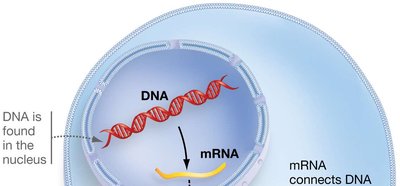
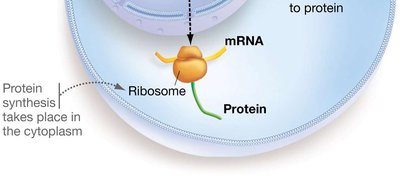
The central dogma of molecular biology describes the flow of genetic information within a biological system. It explains how genetic information stored in DNA is transcribed into RNA and then translated into proteins, which ultimately determine the phenotype of an organism.
DNA (deoxyribonucleic acid) stores genetic information in the nucleus of eukaryotic cells.
Transcription is the process by which a segment of DNA is copied into messenger RNA (mRNA).
Translation is the process by which mRNA is decoded by ribosomes to synthesize proteins.
Proteins are responsible for most cellular functions and contribute to the organism's phenotype.
Nucleic Acids: DNA and RNA
Structure of Nucleotides
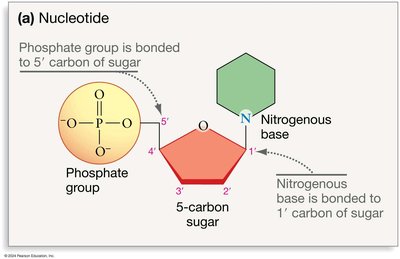
Nucleic acids are polymers made up of nucleotide monomers. Each nucleotide consists of three components: a phosphate group, a five-carbon sugar, and a nitrogenous base.
Phosphate group: Attached to the 5' carbon of the sugar.
Pentose sugar: Deoxyribose in DNA and ribose in RNA.
Nitrogenous base: Purines (adenine, guanine) and pyrimidines (cytosine, thymine in DNA, uracil in RNA).
DNA Structure
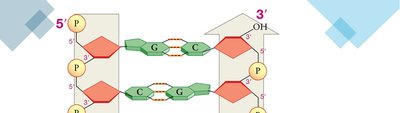
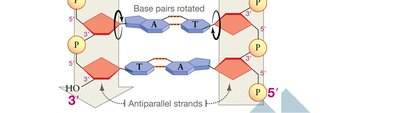
DNA is a double-stranded helix with antiparallel strands held together by hydrogen bonds between complementary bases (A-T and G-C).
Antiparallel orientation: One strand runs 5' to 3', the other 3' to 5'.
Base pairing: Adenine pairs with thymine (A-T), guanine pairs with cytosine (G-C).
Phosphodiester bonds: Link nucleotides together in a strand.
RNA Structure
RNA is typically single-stranded but can form complex secondary structures through intramolecular base pairing. RNA contains ribose sugar and uracil instead of thymine.
Single-stranded but can fold into hairpins and loops.
Base pairing: Adenine pairs with uracil (A-U), guanine pairs with cytosine (G-C).
From Nucleic Acids to Proteins
Transcription: DNA to RNA
Transcription is the synthesis of RNA from a DNA template. In eukaryotes, this process occurs in the nucleus and involves several steps and regulatory elements.
RNA polymerase synthesizes RNA by reading the DNA template strand.
Promoter regions signal the start site for transcription.
In eukaryotes, three types of RNA polymerases exist: RNA polymerase I (rRNA), II (mRNA), and III (tRNA and some rRNA).
General Transcription Factors (GTFs) are required for RNA polymerase binding in eukaryotes (no sigma factor as in prokaryotes).
Termination involves specific sequences (e.g., polyadenylation signal in eukaryotes).
Translation: RNA to Protein
Translation is the process by which ribosomes synthesize proteins using the sequence of codons in mRNA as a template.
mRNA carries the genetic code from DNA to the ribosome.
tRNA molecules bring amino acids to the ribosome, matching codons in mRNA with the correct amino acid.
Ribosomes are the molecular machines that facilitate the assembly of amino acids into polypeptides.
Gene Regulation
Regulation of Transcription in Prokaryotes and Eukaryotes
Gene expression is tightly regulated at multiple levels, especially during transcription. The mechanisms differ between prokaryotes and eukaryotes.
Prokaryotes: A single RNA polymerase, sigma factor required for promoter recognition, simple termination signals.
Eukaryotes: Three RNA polymerases, complex promoter regions (often with TATA box), general transcription factors (GTFs) instead of sigma factor, and polyadenylation signals for termination.
Feature | Prokaryotes | Eukaryotes |
|---|---|---|
RNA Polymerases | One | Three (I, II, III) |
Promoter Elements | -10, -35 regions | TATA box, others |
Initiation Factors | Sigma factor | General Transcription Factors (GTFs) |
Termination | Hairpin/poly-U or protein-dependent | Polyadenylation signal, cleavage |
Summary Table: DNA and RNA Structure
Level of Structure | DNA | RNA |
|---|---|---|
Primary | Sequence of deoxyribonucleotides; bases are A, T, G, C | Sequence of ribonucleotides; bases are A, U, G, C |
Secondary | Double helix, antiparallel strands, base pairing (A-T, G-C) | Single strand, can form hairpins and loops by base pairing |
Tertiary | Supercoiling, DNA-protein complexes (chromatin) | Complex 3D shapes (e.g., tRNA, rRNA) |
Key Terms and Definitions
Central Dogma: The flow of genetic information from DNA to RNA to protein.
Nucleotide: The monomer unit of nucleic acids, consisting of a phosphate group, a five-carbon sugar, and a nitrogenous base.
Transcription: The synthesis of RNA from a DNA template.
Translation: The synthesis of a polypeptide (protein) from an mRNA template.
RNA Polymerase: The enzyme that synthesizes RNA from a DNA template.
Promoter: A DNA sequence that signals the start of a gene and the binding site for RNA polymerase.
General Transcription Factors (GTFs): Proteins in eukaryotes that help RNA polymerase bind to promoters.
Polyadenylation Signal: A sequence in eukaryotic genes that signals the end of transcription and addition of a poly-A tail to mRNA.
Equations and Chemical Reactions
Phosphodiester Bond Formation:
ATP Hydrolysis (energy for polymerization):
Additional info: The above content integrates foundational concepts from chapters on nucleic acids, gene expression, and gene regulation, as outlined in a typical General Biology curriculum.
