 Indietro
Chapter 1: An Introduction to Life on Earth – General Biology Study Notes
Guida di studio - Note intelligenti
 Appunti personalizzati basati sui tuoi materiali, ampliati con definizioni chiave, esempi e contesto.
Chapter 1: An Introduction to Life on Earth
Defining Life and Its Boundaries
Biology is the scientific study of life, but the definition of life remains a fundamental question. The boundaries of life are explored through case studies such as viruses, which challenge the criteria for living organisms. Understanding what constitutes life is essential for biological inquiry.
Living organisms share several characteristics: organized complexity, acquisition and use of energy, response to stimuli, growth, reproduction, and evolution.
Viruses exhibit some traits of life but lack others, leading to debate about their classification.
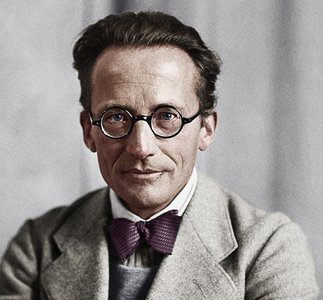
Entropy and Life: Living organisms maintain order by drawing in 'negative entropy' from their environment, as described by Erwin Schrödinger.
Metabolism is the process by which organisms manage energy and entropy.

Characteristics of Living Organisms
Organisms are defined by a set of shared characteristics that distinguish them from nonliving matter.
Organized Complexity: Life is organized at the cellular level. Cells are the basic units of life, separated from their environment by a plasma membrane.
Cell Types: There are two main cell types: eukaryotic (with organelles and a nucleus) and prokaryotic (lacking organelles).
Unicellular vs. Multicellular: Prokaryotes are always unicellular; eukaryotes can be unicellular or multicellular.

Acquisition and Use of Energy: Organisms obtain energy through photosynthesis or consumption. Materials are acquired from the environment.
Homeostasis: The ability to maintain stable internal conditions despite external changes.


Response to Stimuli: Organisms detect and respond to environmental changes using specialized cells or structures.

Growth and Development: All organisms grow, either by cell enlargement or division. Development increases complexity.

Reproduction: Organisms reproduce by various methods, ensuring continuity of life.
DNA and Heredity: DNA is the molecule of heredity, with genes as its basic units.

Evolution: All living organisms share a common ancestor and evolve through descent with modification.
Evolution and Natural Selection
Evolution is a central concept in biology, explaining the diversity and adaptation of life.
Scientific Theory of Evolution: All organisms are related by common ancestry and have changed over time. Formulated by Charles Darwin and Alfred Russell Wallace.
Natural Selection: Individuals with advantageous traits survive and reproduce more successfully, leading to adaptation.
Variation: Traits vary within populations due to mutations and gene transfer.
Adaptation: Adaptations are traits that enhance survival and reproduction.
Extinction: Species unable to adapt may become extinct.


Levels of Biological Organization
Life is organized hierarchically, from atoms to the biosphere. Each level exhibits emergent properties not found in its constituents.
Atoms form molecules, which build cells.
Cells form tissues, which form organs and organ systems.
Organisms form populations, which interact in communities.
Communities and their environment form ecosystems; all ecosystems together make up the biosphere.

Classification of Life
Biologists classify organisms based on evolutionary relationships, using a binomial system for naming species.
Three Domains: Bacteria, Archaea, and Eukarya.
Cell Structure: Bacteria and Archaea are prokaryotic; Eukarya are eukaryotic.
Binomial Nomenclature: Each species is named using its genus and species (e.g., Daphnia longispina).
The Nature of Science
Science is a systematic inquiry based on observation and experimentation. It relies on principles such as natural causality, consistency of natural laws, and value neutrality.
Scientific Method: Observation, question, hypothesis, prediction, experiment, and conclusion.
Falsifiable Hypothesis: Developed by Karl Popper, this principle underpins scientific inquiry.
Controls: Experiments include controls to isolate variables.
Repeatability and Communication: Validity requires repetition and sharing of results.
Scientific Theory: A thoroughly tested and reliable explanation of natural phenomena (e.g., cell theory).
Example Table: Domains of Life
Domain | Cell Type | Example Organisms |
|---|---|---|
Bacteria | Prokaryotic | Streptococcus, Escherichia coli |
Archaea | Prokaryotic | Halobacterium, Thermoproteus |
Eukarya | Eukaryotic | Plants, Animals, Fungi, Protists |
Summary
Biology provides a framework for understanding life, its organization, evolution, and the scientific methods used to study it. The chapter introduces foundational concepts that underpin all subsequent study in General Biology.
