 Indietro
Chapter 1: Biology – Exploring Life (Campbell Biology, 10th Edition)
Guida di studio - Note intelligenti
 Appunti personalizzati basati sui tuoi materiali, ampliati con definizioni chiave, esempi e contesto.
Biology: Exploring Life
Introduction to Biology
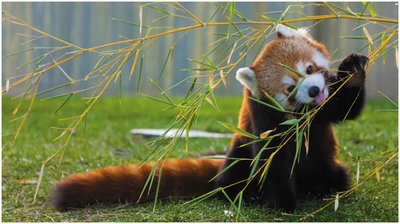
Biology is the scientific study of life, encompassing the structure, function, growth, origin, evolution, and distribution of living organisms. Organisms such as the red panda (Ailurus fulgens) demonstrate adaptations that allow them to thrive in specific environments, such as camouflage, specialized limbs, and dietary preferences.
Properties of Life
All living things share a set of fundamental properties that distinguish them from nonliving matter:
Order: Highly organized structures, such as cells and tissues.
Reproduction: Ability to produce offspring.
Growth and Development: Consistent growth and development controlled by inherited DNA.
Energy Processing: Use of energy to power activities and chemical reactions.
Regulation: Ability to maintain internal stability (homeostasis).
Response to the Environment: Ability to respond to environmental stimuli.
Evolutionary Adaptation: Populations evolve over generations to adapt to their environment.

The Cell: The Basic Unit of Life
The cell is the structural and functional unit of life. All organisms are composed of one or more cells, which carry out the essential processes of life.
Biological Organization and Diversity
Levels of Biological Organization
Biologists study life across a hierarchy of structural levels, from molecules to the biosphere. Each level exhibits emergent properties—new characteristics that arise from the interactions of components at lower levels.
Molecule
Organelle
Cell
Tissue
Organ
Organ system
Organism
Population
Community
Ecosystem
Biosphere
Classification: The Three Domains of Life
Taxonomists classify life into three domains based on cell structure and genetics:
Domain Bacteria: Prokaryotic, unicellular organisms with simple cells.
Domain Archaea: Prokaryotic, unicellular organisms often found in extreme environments.
Domain Eukarya: Eukaryotic organisms, including protists, fungi, plants, and animals.

The Process of Science
What Is Science?
Science is a systematic approach to understanding the natural world through observation and experimentation. The scientific method involves:
Making observations
Forming hypotheses
Making predictions
Testing hypotheses through experiments or further observations
Analyzing data
A scientific theory is a broad explanation supported by a large body of evidence.
Controlled Experiments
Controlled experiments test hypotheses by manipulating one variable (independent variable) and measuring the effect on another (dependent variable), while keeping other factors constant. Experimental groups are compared to control groups to determine the effect of the variable.
Habitat | Number of Attacks on Camouflaged Models | Number of Attacks on Noncamouflaged Models | % Attacks on Noncamouflaged Models |
|---|---|---|---|
Beach (light habitat) | 2 | 5 | 71% |
Inland (dark habitat) | 5 | 16 | 76% |
Additional info: This table demonstrates that noncamouflaged models are attacked more frequently, supporting the hypothesis that camouflage reduces predation.
Observational Studies
Not all scientific questions can be tested experimentally. Observational studies, such as comparing DNA sequences, can provide evidence for hypotheses about evolutionary relationships.
Unifying Themes in Biology
Evolution: The Core Theme of Biology
Evolution explains both the unity and diversity of life. Charles Darwin's theory of evolution by natural selection describes how populations change over generations as individuals with advantageous traits reproduce more successfully.
Natural Selection: The process by which organisms better adapted to their environment tend to survive and produce more offspring.
Artificial Selection: Humans selectively breed plants and animals for desired traits.
Life Depends on the Flow of Information
Genetic information, stored in DNA, is transmitted from one generation to the next and directs the activities of cells by coding for proteins. Signaling pathways regulate gene expression and cellular activities.
Structure and Function Are Related
Biological structures are closely related to their functions at all levels of organization. For example, the shape of hemoglobin enables it to transport oxygen, and the structure of nerve cells allows for efficient transmission of signals.
Life Depends on the Transfer and Transformation of Energy and Matter
Energy flows through ecosystems, entering as sunlight, converted to chemical energy by producers, transferred to consumers, and lost as heat. Matter cycles between the biotic and abiotic components of ecosystems.
Life Depends on Interactions Within and Between Systems
Emergent properties arise from the interactions of system components. Systems biology seeks to understand these complex interactions by modeling biological systems.
Summary Table: Properties of Life
Property | Description | Example |
|---|---|---|
Order | Highly organized structure | Plant leaf arrangement |
Reproduction | Ability to produce offspring | Elephants giving birth |
Growth and Development | Increase in size and complexity | Embryo development |
Energy Processing | Use of energy for activities | Caterpillar eating leaves |
Regulation | Maintaining internal balance | Lizard basking for warmth |
Response to Environment | Reacting to stimuli | Venus flytrap closing on insect |
Evolutionary Adaptation | Inherited traits that enhance survival | Red panda's camouflage |
