 Indietro
Chapter 1: Biology – The Study of Life (Mini-Textbook Study Notes)
Guida di studio - Note intelligenti
 Appunti personalizzati basati sui tuoi materiali, ampliati con definizioni chiave, esempi e contesto.
Biology: The Study of Life
Introduction to Biology
Biology is the scientific study of life and living organisms. It encompasses a wide range of topics, from the molecular mechanisms inside cells to the interactions of organisms within ecosystems. Understanding biology requires recognizing the unifying themes that connect all forms of life.
What Does It Mean to Say That Something is Alive?
Five Fundamental Characteristics of Life
Cells: All living things are composed of one or more membrane-bound cells, which are the basic units of life.
Replication: Living organisms are capable of reproduction, ensuring the continuation of their species.
Information: Organisms process hereditary information encoded in genes and respond to environmental signals.
Energy: All organisms acquire and use energy to maintain their internal order and support life processes.
Evolution: Populations of organisms change over time through evolutionary processes.
Levels of Biological Organization
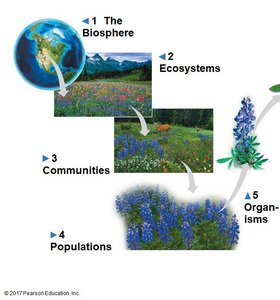
Life can be studied at various levels, from molecules to the entire biosphere. Each level represents an increase in complexity and emergent properties.
Biosphere: All environments on Earth that support life.
Ecosystem: All living and nonliving things in a particular area.
Community: All organisms in an ecosystem.
Population: All individuals of a species in a specific area.
Organism: An individual living thing.
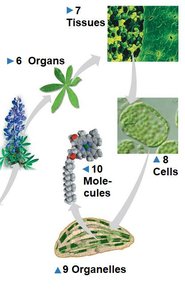
Organ and Organ Systems: Specialized body parts made up of tissues.
Tissue: Groups of similar cells performing a specific function.
Cell: The fundamental unit of structure and function in living things.
Organelle: Specialized structures within cells.
Molecule: Chemical structures consisting of atoms.
Theories in Biology
Major Biological Theories
Theory: An explanation for a broad class of phenomena, supported by a large body of evidence. In science, a theory is not a guess but a well-substantiated explanation.
Cell Theory: All organisms are made of cells, and all cells come from preexisting cells.
Theory of Evolution by Natural Selection: Explains the diversity of life and how species change over time.
Chromosome Theory of Inheritance: Hereditary information is encoded in genes located on chromosomes.
Life is Cellular and Replicates through Cell Division
Discovery of Cells
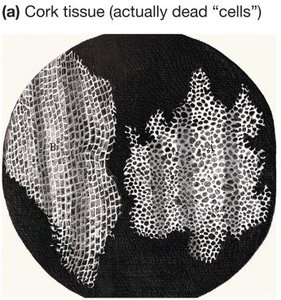
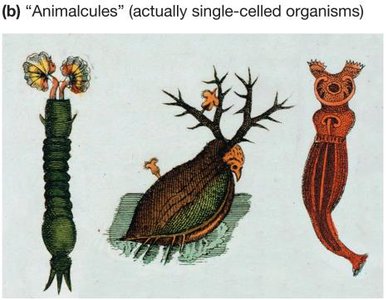
The invention of the microscope allowed scientists to observe cells for the first time. Robert Hooke observed cork tissue and coined the term "cells," while Anton van Leeuwenhoek observed single-celled organisms he called "animalcules."
Principles of Cell Theory
All living things are composed of cells.
Cells are highly organized compartments separated from their environment by a membrane.
All cells arise from preexisting cells, not by spontaneous generation.
Testing the Cell Theory
Louis Pasteur's experiments disproved the idea of spontaneous generation, showing that cells arise only from other cells.
Life Processes Information and Requires Energy
Chromosome Theory of Inheritance
Genes, the units of heredity, are located on chromosomes.
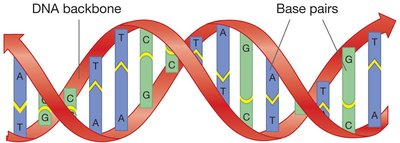
DNA (deoxyribonucleic acid) is the hereditary material, and genes are segments of DNA that code for cell products.
Structure of DNA
DNA is a double helix composed of four types of nucleotides: adenine (A), thymine (T), cytosine (C), and guanine (G). The sequence of these bases encodes genetic information.
The Central Dogma of Molecular Biology
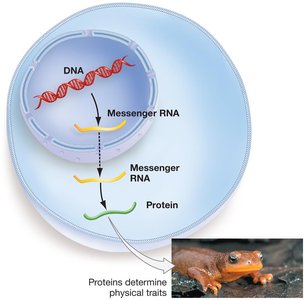
The central dogma describes the flow of genetic information in cells: DNA is transcribed into RNA, which is then translated into protein. Proteins determine the structure and function of cells.
Messenger RNA (mRNA): Carries genetic information from DNA to the ribosome for protein synthesis.
Proteins: Perform most of the functions in cells, including catalyzing reactions and providing structural support.
Mutations and Genetic Variation
DNA is copied with high fidelity, but mistakes (mutations) can occur.
Mutations can lead to changes in proteins and result in heritable variation, which is the basis for evolution.
Energy and Life
All organisms require energy to drive chemical reactions necessary for life.
Energy is often stored and transferred in the form of adenosine triphosphate (ATP).
Organisms acquire energy in diverse ways, such as photosynthesis in plants and ingestion in animals.
Life Evolves
Evolution and Natural Selection
Evolution: The change in the characteristics of a population over time.
Population: A group of individuals of the same species living in the same area at the same time.
Natural Selection: The process by which individuals with advantageous traits reproduce more successfully, leading to changes in the population.
Two conditions for natural selection:
Individuals vary in heritable traits.
Certain traits increase reproductive success in a given environment.
Fitness: The ability of an individual to produce surviving offspring.
Adaptation: A trait that increases an individual's fitness in a particular environment.
The Tree of Life Depicts Evolutionary History
Phylogeny and the Tree of Life
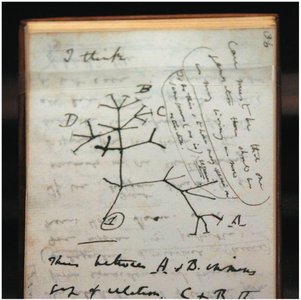
The tree of life is a diagram that depicts the evolutionary relationships among all organisms, with a single ancestral species at its base. Phylogeny refers to the actual genealogical relationships among species.
Genetic variation is analyzed by comparing DNA or RNA sequences among organisms.
Fewer sequence differences indicate a closer evolutionary relationship.
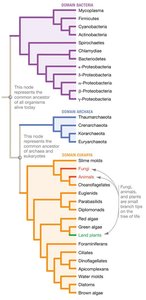
Major Domains of Life
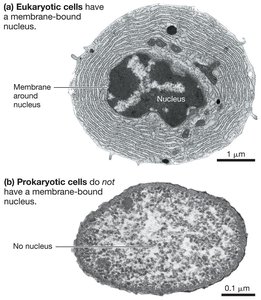
Bacteria: Prokaryotic cells without a nucleus.
Archaea: Prokaryotic cells distinct from bacteria, also lacking a nucleus.
Eukarya: Eukaryotic cells with a membrane-bound nucleus, including protists, plants, fungi, and animals.
Taxonomy and Classification
Taxonomy: The science of naming and classifying organisms.
Domain: The highest taxonomic rank, including Bacteria, Archaea, and Eukarya.
Phylum: Major lineage within a domain.
Linnaean System: Each species is given a unique two-part scientific name (genus and species), e.g., Homo sapiens.
Doing Biology: The Scientific Method
The Nature of Science
Science is based on asking testable questions and collecting data to answer them.
Hypotheses are testable statements that explain observations.
Experiments are designed to test hypotheses by manipulating variables and observing outcomes.
Experimental Design
Variables:
Independent variable: Manipulated by the researcher.
Dependent variable: Predicted to be affected by the independent variable.
Controlled variables: Kept constant to ensure a fair test.
Good experimental design includes control groups, constant conditions, repetition, and large sample sizes.
Case Study: How Do Ants Navigate?
Researchers tested the hypothesis that desert ants use stride length and step number to calculate distance from their nest (the "pedometer hypothesis"). The experiment manipulated the ants' legs to change stride length and observed their ability to return to the nest.
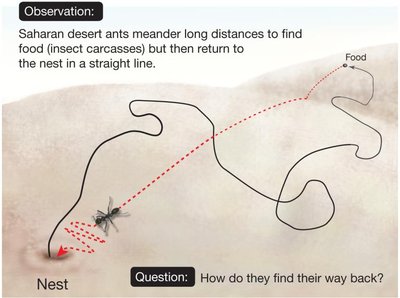
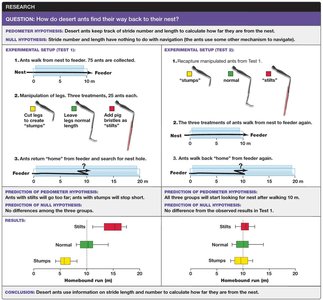
Results supported the hypothesis: ants with shortened legs stopped short, those with lengthened legs overshot the nest, and control ants returned accurately.
Conclusion: Ants use stride length and step number to navigate.
Summary Table: Levels of Biological Organization
Level | Description |
|---|---|
Biosphere | All environments on Earth supporting life |
Ecosystem | All living and nonliving things in a particular area |
Community | All organisms in an ecosystem |
Population | All individuals of a species in an area |
Organism | An individual living thing |
Organ/Organ System | Specialized body parts made of tissues |
Tissue | Group of similar cells |
Cell | Basic unit of structure and function |
Organelle | Specialized structure within a cell |
Molecule | Chemical structure consisting of atoms |
Key Equations
Central Dogma of Molecular Biology:
