 Indietro
Chapter 1: Evolution, the Themes of Biology, and Scientific Inquiry – Study Notes
Guida di studio - Note intelligenti
 Appunti personalizzati basati sui tuoi materiali, ampliati con definizioni chiave, esempi e contesto.
Chapter 1: Evolution, the Themes of Biology, and Scientific Inquiry
Introduction to Biology
Biology is the scientific study of life, encompassing a vast scope from molecules to the entire biosphere. Life is recognized by the unique activities and properties of living things, and the study of biology reveals several unifying themes that connect all forms of life.
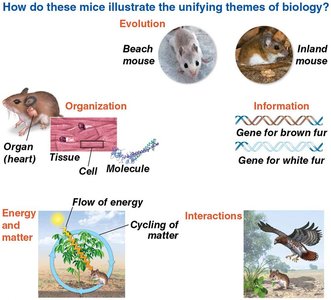
Unifying Themes in Biology
Major Themes
Organization
Information
Energy and Matter
Interactions
Evolution
Properties of Life
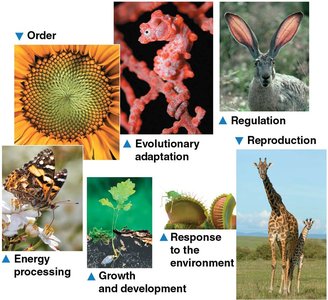
All living organisms share several key properties:
Order: Highly ordered structure that typifies life.
Evolutionary adaptation: Organisms adapt over generations through the process of evolution.
Regulation: Ability to maintain internal environment (homeostasis).
Reproduction: Ability to produce offspring.
Energy processing: Use of energy to power activities.
Growth and development: Inherited information controls growth patterns.
Response to the environment: Ability to respond to stimuli.
Levels of Biological Organization
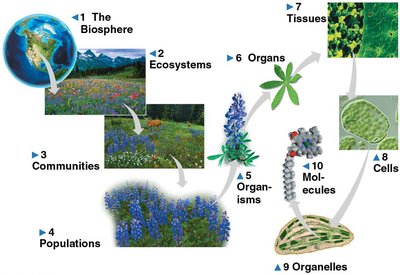
Life is organized into a hierarchy of levels, each with emergent properties:
The Biosphere
Ecosystems
Communities
Populations
Organisms
Organs and Organ Systems
Tissues
Cells
Organelles
Molecules
Emergent Properties
Emergent properties arise from the arrangement and interaction of parts as complexity increases. For example, a functioning cell emerges from the interaction of organelles, and life itself is an emergent property of cellular organization.
The Cell: Basic Unit of Life
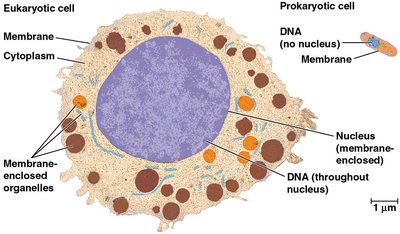
The cell is the smallest unit capable of performing all activities required for life. There are two main types of cells:
Prokaryotic cells: Simpler, smaller, lack a nucleus and membrane-bound organelles (e.g., Bacteria, Archaea).
Eukaryotic cells: Larger, contain a nucleus and membrane-bound organelles (e.g., Plants, Animals, Fungi, Protists).
Genetic Information and Its Expression
Genetic Material: DNA
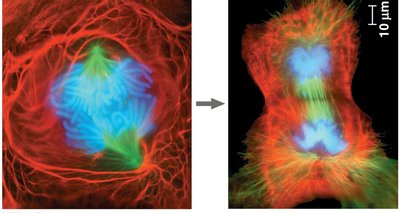
Within cells, chromosomes contain DNA (deoxyribonucleic acid), the hereditary material. Each chromosome consists of one long DNA molecule with many genes, which encode instructions for building cellular molecules.
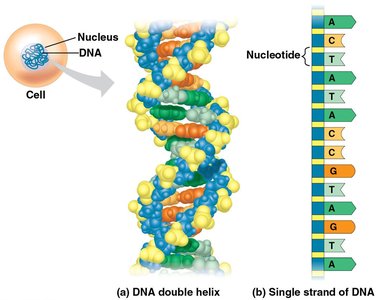
Structure of DNA
DNA is composed of two long chains forming a double helix, made up of four types of nucleotides: Adenine (A), Guanine (G), Cytosine (C), and Thymine (T). The sequence of these nucleotides encodes genetic information.
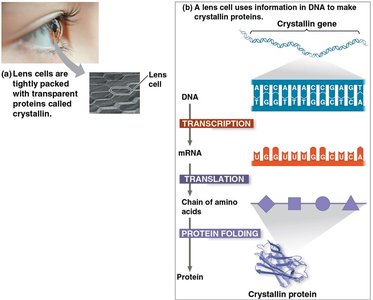
Gene Expression
Gene expression is the process by which information from a gene is used to synthesize a functional product, typically a protein. The steps include:
Transcription: DNA is transcribed into messenger RNA (mRNA).
Translation: mRNA is translated into a chain of amino acids, forming a protein.
Genomics and Proteomics
Genomics is the study of whole sets of genes (genomes) in one or more species. Proteomics is the study of the entire set of proteins (proteome) expressed by a cell, tissue, or organism.
Energy and Matter in Biological Systems
Energy Flow and Chemical Cycling
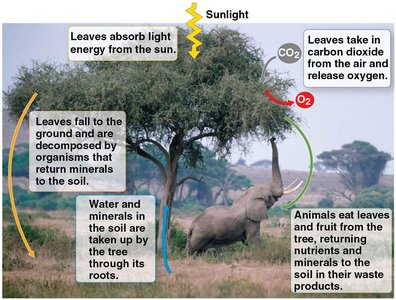
Life requires the transfer and transformation of energy and matter. Energy flows through ecosystems, usually entering as sunlight and exiting as heat, while chemicals cycle within ecosystems.
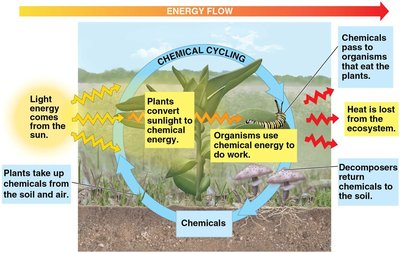
Producers and Consumers
Producers (e.g., plants) convert sunlight into chemical energy via photosynthesis.
Consumers (e.g., animals) obtain energy by eating other organisms or their remains.
Interactions in Biological Systems
Organismal and Environmental Interactions
Organisms interact with each other and with their physical environment. These interactions can be beneficial, harmful, or neutral, and they influence both the organisms and their environment.
Evolution: The Core Theme of Biology
Unity and Diversity of Life
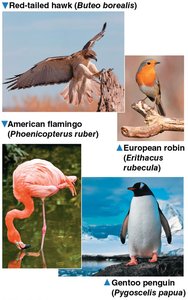
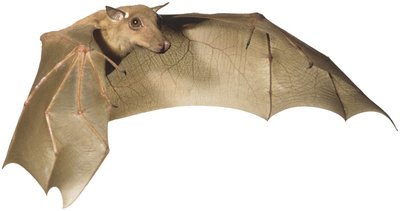
Evolution explains both the unity and diversity of life. All living organisms are modified descendants of common ancestors, and the process of evolution accounts for the adaptation of organisms to their environments.
Classification of Life
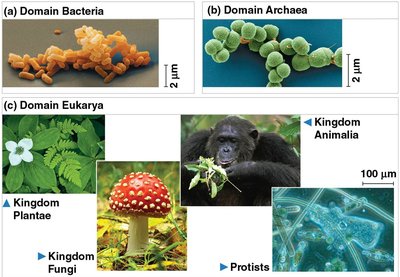
Life is classified into three domains:
Bacteria (prokaryotes)
Archaea (prokaryotes)
Eukarya (eukaryotes: includes plants, fungi, animals, and protists)
Unity in Diversity
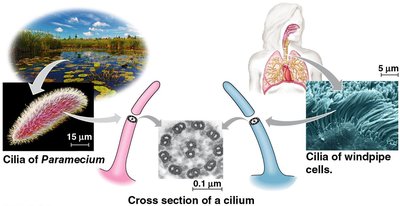
Despite the diversity of life, there is remarkable unity, such as the universal genetic code (DNA) and similar cellular structures like cilia in different organisms.
Charles Darwin and Natural Selection
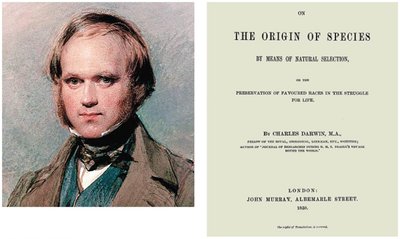
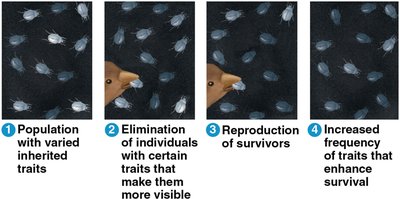
Charles Darwin proposed that species evolve through natural selection, where individuals with advantageous traits are more likely to survive and reproduce. Over time, this leads to adaptation and the emergence of new species.
The Tree of Life
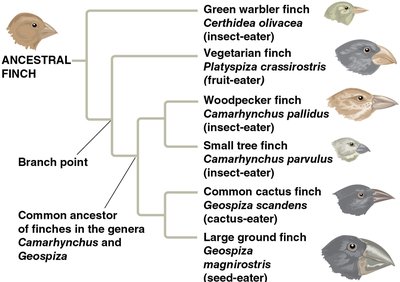
Evolutionary relationships among species are often depicted as tree-like diagrams, showing common ancestry and divergence of species. For example, the finches of the Galápagos Islands illustrate adaptive radiation from a common ancestor.
Scientific Inquiry and the Process of Science
Nature of Scientific Inquiry
Science is a process of inquiry involving observation, hypothesis formation, and testing. Scientists use both inductive and deductive reasoning to draw conclusions and test predictions.
Data Collection and Analysis
Qualitative data: Descriptive observations.
Quantitative data: Numerical measurements, often organized in tables and graphs.
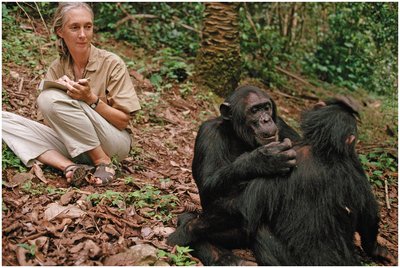
Hypotheses and Experiments
A hypothesis is a testable explanation for an observation. Experiments are designed to test hypotheses under controlled conditions, using variables and controls to ensure valid results.
Independent variable: Manipulated by the researcher.
Dependent variable: Predicted to change in response.
Theories in Science
A scientific theory is broader than a hypothesis, supported by a large body of evidence, and can generate new hypotheses.
Collaboration and Peer Review
Science advances through collaboration, communication, and peer review. Scientists build on each other's work, and findings must be repeatable and scrutinized by the scientific community.
Additional info: These notes cover all major topics from Chapter 1 of Campbell Biology, including the unifying themes of biology, the structure and function of cells, the role of DNA, the process of evolution, and the scientific method. Images included are directly relevant to the explanations provided and reinforce key concepts for student understanding.
