 Indietro
Chapter 1: Evolution, the Themes of Biology, and Scientific Inquiry – Study Guide
Guida di studio - Note intelligenti
 Appunti personalizzati basati sui tuoi materiali, ampliati con definizioni chiave, esempi e contesto.
Characteristics of Living Organisms
Defining Life
Living organisms are distinguished from non-living matter by a set of fundamental characteristics. These properties are shared by all forms of life and are essential for biological study.
Order: Organisms exhibit highly ordered structures, from cellular organization to complex body systems.
Regulation: Living things maintain stable internal conditions (homeostasis) despite external changes.
Energy Processing: Organisms obtain and use energy to power their activities, such as metabolism.
Growth and Development: Organisms grow and develop according to inherited instructions encoded in their DNA.
Reproduction: All living things reproduce, passing genetic material to offspring.
Response to the Environment: Organisms sense and respond to environmental stimuli.
Evolutionary Adaptation: Populations evolve over generations, adapting to their environments through natural selection.
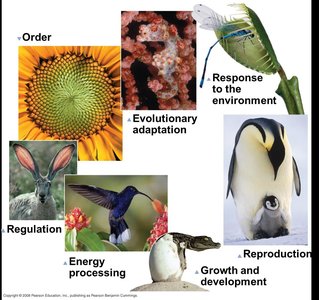
Example: Penguins regulate body temperature, plants grow toward light, and bacteria reproduce by binary fission.
The Biological Hierarchy
Levels of Organization
Biology studies life at multiple levels of organization, from the smallest atoms to the entire biosphere. Each level exhibits emergent properties—new characteristics that arise from the arrangement and interaction of parts.
Atoms → Molecules → Organelles → Cells → Tissues → Organs → Organisms → Populations → Communities → Ecosystems → Biosphere
Emergent Properties: For example, a cell can perform functions that its individual molecules cannot.
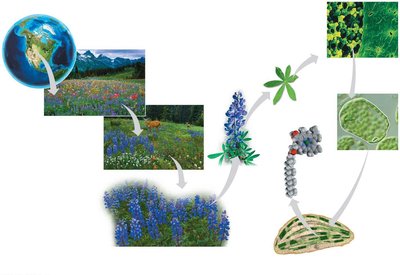
Significance: Understanding each level helps explain how life functions and interacts with the environment.
Major Themes in Biology
Organization, Interaction, Structure & Function, Cells, DNA
Organization: New properties emerge at each level in the biological hierarchy.
Interaction: Organisms interact with their environments, exchanging matter and energy.
Structure and Function: The form of biological structures is closely related to their function.
Cells: The cell is the basic unit of structure and function in living things.
DNA: Heritable information is encoded in DNA, the universal genetic language.
Interactions with the Environment
Energy Flow and Chemical Cycling
Organisms interact with their environment through the cycling of nutrients and the flow of energy. Energy enters ecosystems as sunlight, is converted by producers (plants), and flows to consumers and decomposers.
Chemical Cycling: Elements are recycled between living and nonliving parts of the ecosystem.
Energy Flow: Energy flows one-way, from sunlight to producers to consumers, and is lost as heat.
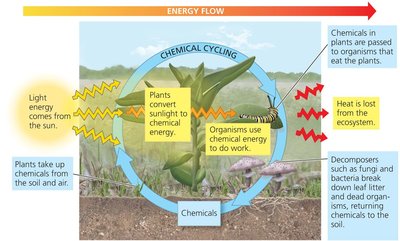
Example: Plants convert sunlight to chemical energy, which is used by animals and decomposers.
Structure and Function
Form Fits Function
Biological structures are adapted to their functions. Analyzing structure can reveal function, and vice versa.
Example: The shape of a bird's wing enables flight; the internal structure of bones provides strength and lightness.

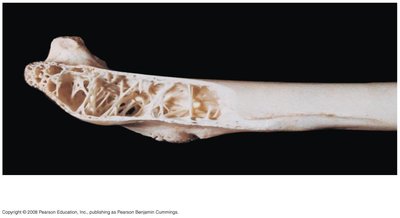
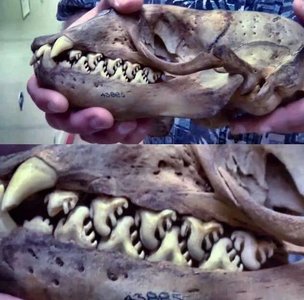
Additional info: Structure-function relationships are fundamental in anatomy, physiology, and molecular biology.
Cells: The Basic Unit of Life
Eukaryotic vs. Prokaryotic Cells
All living things are composed of cells. Cells can be classified as prokaryotic (no nucleus) or eukaryotic (with nucleus and organelles).
Prokaryotic Cells: Simpler, lack membrane-bound organelles, DNA is not enclosed in a nucleus.
Eukaryotic Cells: Complex, contain membrane-bound organelles, DNA enclosed in a nucleus.
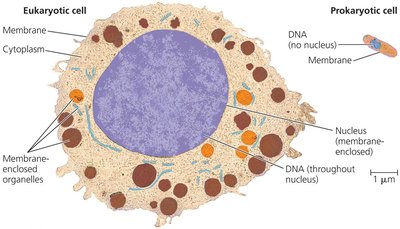
Example: Bacteria are prokaryotes; plants and animals are eukaryotes.
The Three Domains of Life
Bacteria, Archaea, Eukarya
All life is classified into three domains based on genetic and cellular differences.
Domain Bacteria: Prokaryotic, diverse, found in many environments.
Domain Archaea: Prokaryotic, often found in extreme environments.
Domain Eukarya: Eukaryotic, includes protists, fungi, plants, and animals.
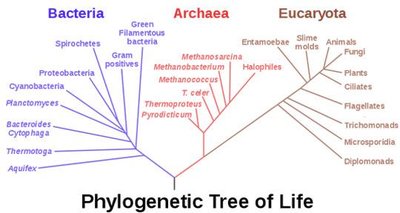
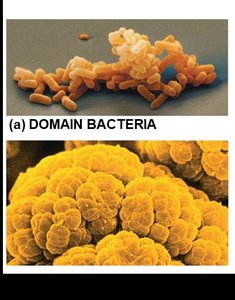
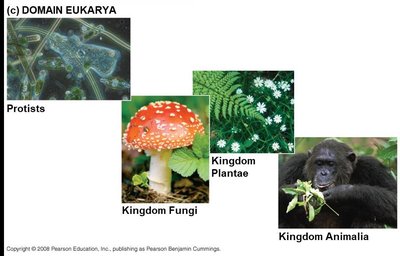
Additional info: The three-domain system replaced the older five-kingdom classification.
Unity and Diversity of Life
DNA and Cell Structure
Despite the diversity of life, unity is evident in the universal use of DNA and similarities in cell structure.
DNA: The universal genetic material, encoding instructions for life.
Cell Structure: Features such as cilia are found in diverse organisms, reflecting evolutionary conservation.
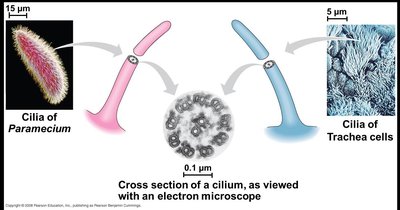
Example: Cilia are found in both single-celled organisms and human respiratory cells.
Evolution: The Core Theme of Biology
Natural Selection and Biological Diversity
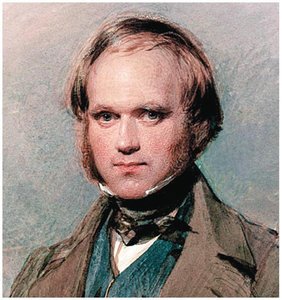
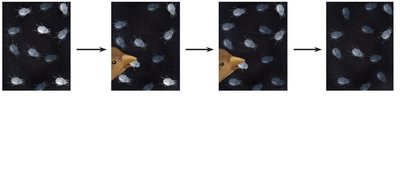
Evolution explains both the unity and diversity of life. Charles Darwin proposed that natural selection is the mechanism by which species evolve.
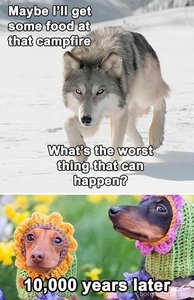
Descent with Modification: Species change over time, sharing common ancestors.
Natural Selection: Individuals with advantageous traits are more likely to survive and reproduce, increasing the frequency of those traits in the population.
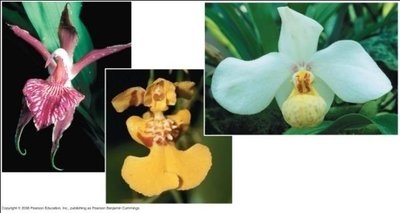
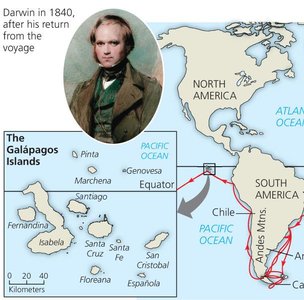
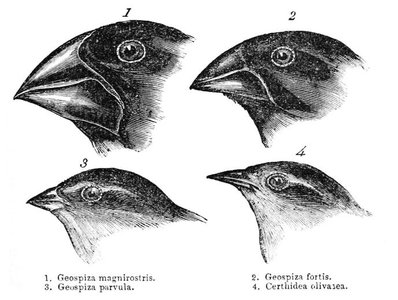
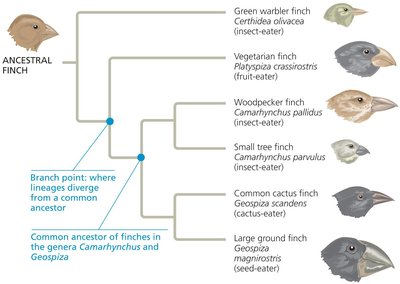
Example: The finches of the Galápagos Islands evolved different beak shapes to exploit different food sources.
Scientific Inquiry and the Process of Science
Discovery Science vs. Hypothesis-Based Science
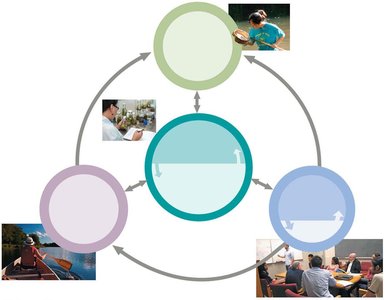
Science is a systematic process for understanding the natural world. It involves observation, hypothesis formation, experimentation, and analysis.
Discovery Science: Based on observation and description; collects data to describe phenomena.
Hypothesis-Based Science: Uses observations to propose testable explanations (hypotheses) and experiments to test predictions.

Example: Jane Goodall's observations of chimpanzees are discovery science; testing a hypothesis about chimp behavior is hypothesis-based science.
Types of Data
Quantitative vs. Qualitative Data
Data collected in scientific studies can be quantitative (numerical) or qualitative (descriptive).
Quantitative Data: Measurements, counts, and numerical values.
Qualitative Data: Descriptions, observations, and characteristics.
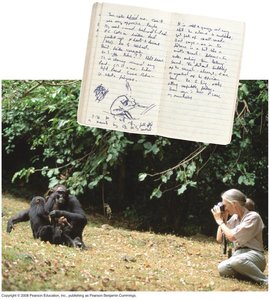
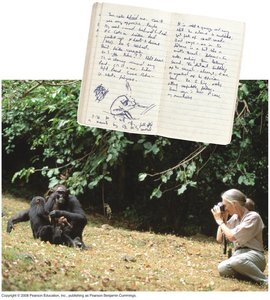
Example: Counting the number of chimpanzees (quantitative); describing their behavior (qualitative).
Hypotheses and Experiments
Formulating and Testing Hypotheses
A hypothesis is a testable explanation for an observation. Experiments are designed to test predictions derived from hypotheses.
Testable and Falsifiable: A good hypothesis can be disproven by evidence.
Controlled Experiments: Compare experimental and control groups to isolate the effect of variables.
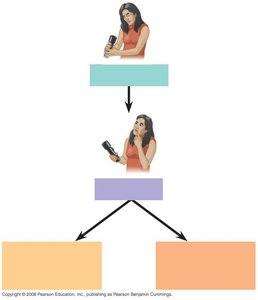
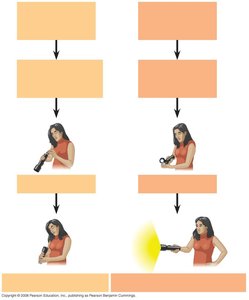
Example: If replacing the batteries fixes a flashlight, the hypothesis that the batteries were dead is supported.
Case Study: Scientific Inquiry in Action
Mouse Coat Coloration and Predation
Researchers tested the hypothesis that mouse coloration evolved as camouflage to reduce predation. Models of mice with different colors were placed in various habitats to measure predation rates.
Prediction: Mice with coloration matching their habitat suffer less predation.
Result: Camouflaged models had lower predation rates, supporting the hypothesis.
Additional info: This experiment illustrates the scientific method: observation, hypothesis, prediction, experiment, and analysis.
Limitations of Science
Scope and Repeatability
Science is limited to the study of the natural world. Observations and experiments must be repeatable, and science cannot address supernatural explanations.
Repeatability: Results must be reproducible by others.
Natural World: Science does not test supernatural claims.
Example: Questions about the human soul or ghosts are outside the scope of scientific inquiry.
Scientific Theories
Theory vs. Hypothesis
A scientific theory is broader than a hypothesis, supported by extensive evidence, and can generate new hypotheses.
Hypothesis: A specific, testable explanation.
Theory: A comprehensive explanation supported by a large body of evidence.
Example: The theory of evolution explains the diversity of life and is supported by evidence from genetics, fossils, and comparative anatomy.
Correlation vs. Causation
Understanding Relationships
Correlation does not always imply causation. Scientific experiments are designed to test causal relationships, not just associations.
Correlation: Two variables change together.
Causation: One variable directly affects another.
Example: Spurious correlations can be misleading; only controlled experiments can establish causation.
