 Indietro
Chapter 1: Evolution, the Themes of Biology, and Scientific Inquiry – Study Notes
Guida di studio - Note intelligenti
 Appunti personalizzati basati sui tuoi materiali, ampliati con definizioni chiave, esempi e contesto.
Evolution, the Themes of Biology, and Scientific Inquiry
Unifying Themes in Biology
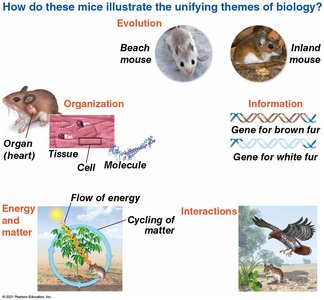
Biology is the scientific study of life, encompassing a vast scope from molecular to planetary levels. The discipline is unified by five major themes: Organization, Information, Energy and Matter, Interactions, and Evolution. These themes help us recognize and understand the characteristics and processes of living organisms.
Organization: Life is structured in a hierarchy from molecules to the biosphere. Each level exhibits emergent properties not found in the preceding level.
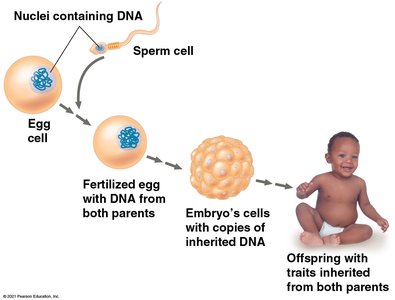
Information: Genetic information is stored in DNA and transmitted across generations, guiding development and functioning.
Energy and Matter: Life depends on the transfer and transformation of energy and cycling of matter within ecosystems.
Interactions: Biological systems rely on interactions among their components, from molecules to ecosystems.
Evolution: The diversity and unity of life are explained by evolution, the process by which organisms change over time.
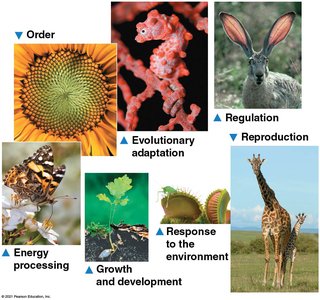
Properties of Life
Living organisms share several key properties that distinguish them from nonliving matter:
Order: Highly ordered structure characterizes living things.
Evolutionary adaptation: Organisms adapt to their environment through evolution.
Regulation: Homeostasis maintains internal conditions.
Reproduction: Organisms reproduce, passing genetic information to offspring.
Energy processing: Organisms obtain and use energy for growth and maintenance.
Growth and development: Organisms grow and develop according to inherited instructions.
Response to the environment: Organisms respond to environmental stimuli.
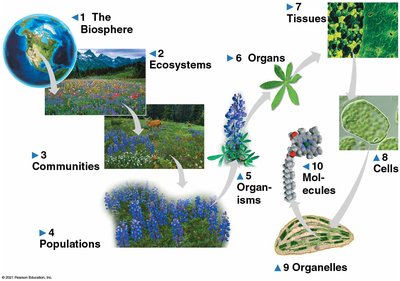
Levels of Biological Organization
Biological organization ranges from the molecular level to the biosphere. Each level is defined by unique emergent properties:
Molecules → Organelles → Cells → Tissues → Organs → Organisms → Populations → Communities → Ecosystems → Biosphere
Reductionism: Studying complex systems by breaking them into simpler components.
Systems Biology: Integrative approach analyzing interactions within biological systems.
Structure and Function
There is a close relationship between structure and function at all levels of biological organization. Understanding the structure of a biological entity provides insight into its function, and vice versa.
The Cell: Basic Unit of Life
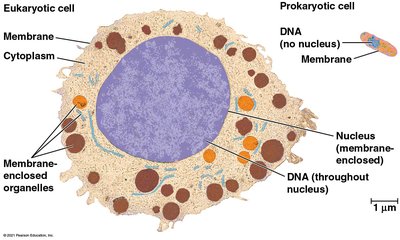
The cell is the fundamental unit of structure and function in living organisms. All cells share certain characteristics, but are classified as either prokaryotic or eukaryotic:
Prokaryotic cells: Lack a nucleus and membrane-bound organelles; found in Bacteria and Archaea.
Eukaryotic cells: Have a nucleus and membrane-bound organelles; found in Eukarya (plants, animals, fungi, protists).
Genetic Information and Gene Expression
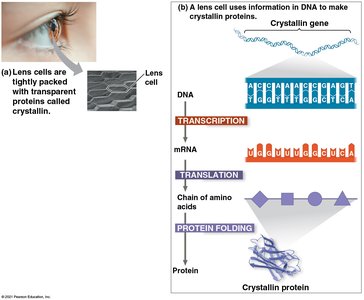
Genetic information is stored in DNA, which is organized into chromosomes. Genes are units of inheritance that encode instructions for building proteins. The process of gene expression involves transcription and translation:
DNA: Double helix composed of nucleotides (A, T, C, G).
Gene expression: DNA is transcribed into RNA, which is translated into protein.
Genomics and Proteomics
Genomics is the study of whole sets of genes and their interactions, while proteomics focuses on the entire set of proteins expressed by a cell, tissue, or organism. Advances in technology and bioinformatics have enabled large-scale analysis of genetic and protein data.
Energy and Matter in Biological Systems
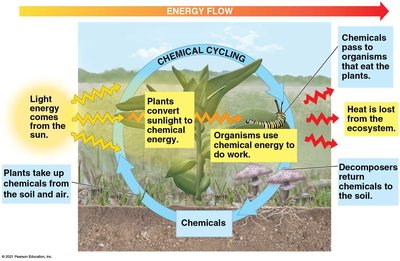
Life depends on the flow of energy and the cycling of matter. Energy enters ecosystems as sunlight, is converted by producers (plants) into chemical energy, and is transferred to consumers. Matter cycles within ecosystems, being used and recycled by organisms and decomposers.
Energy flow: Energy enters as light, is used for work, and exits as heat.
Chemical cycling: Chemicals are taken up by organisms and returned to the environment.
Interactions in Biological Systems
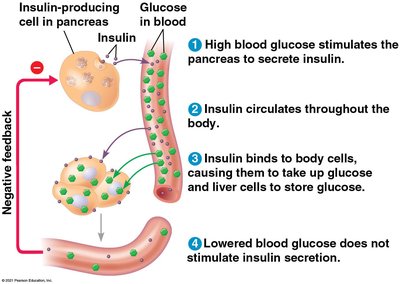
Interactions among components are essential for the functioning of biological systems. Feedback mechanisms regulate processes:
Negative feedback: The product reduces the process (e.g., insulin regulation).
Positive feedback: The product speeds up the process.
Evolution: Unity and Diversity of Life
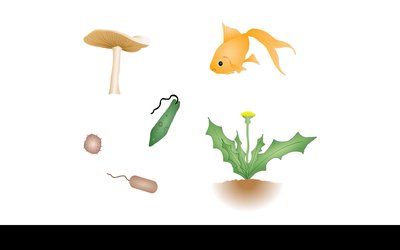
Evolution is the central theme of biology, explaining both the unity and diversity of life. All organisms are modified descendants of common ancestors. Classification organizes life into three domains: Bacteria, Archaea, and Eukarya.
Bacteria: Prokaryotic, diverse, widespread.
Archaea: Prokaryotic, often found in extreme environments.
Eukarya: Eukaryotic, includes plants, animals, fungi, and protists.
Charles Darwin and Natural Selection
Charles Darwin's theory of natural selection explains how evolution occurs. Key points include:
Individuals vary in traits, many of which are heritable.
More offspring are produced than survive, leading to competition.
Individuals best suited to their environment survive and reproduce.
Over time, advantageous traits become more common.
The Scientific Method and Inquiry
Science is a process of inquiry involving observation, hypothesis formation, and experimentation. Data can be qualitative or quantitative. Hypotheses must be testable and lead to predictions. Experiments include variables and controls.
Inductive reasoning: Generalizations from specific observations.
Deductive reasoning: Predictions from general premises.
Theory: Broader than a hypothesis, supported by extensive evidence.
Case Study: Mouse Coloration and Natural Selection
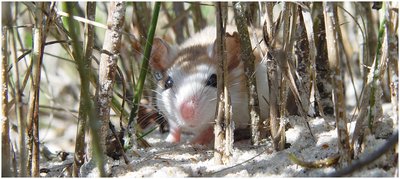
Research on mouse coloration demonstrates scientific inquiry and natural selection. Mice with coloration matching their habitat are less likely to be preyed upon, supporting the hypothesis that coloration is an adaptation.
Science, Technology, and Society
Science aims to understand natural phenomena, while technology applies scientific knowledge. Both are interdependent and impact society. Ethical issues arise from technological advances, requiring diverse viewpoints and cooperation among scientists.
Summary Table: Comparison of Prokaryotic and Eukaryotic Cells
Feature | Prokaryotic Cell | Eukaryotic Cell |
|---|---|---|
Nucleus | Absent | Present |
Membrane-bound organelles | Absent | Present |
Size | Smaller | Larger |
Domains | Bacteria, Archaea | Eukarya |
Summary Table: Unifying Themes of Biology
Theme | Description |
|---|---|
Organization | Hierarchy from molecules to biosphere |
Information | Genetic information in DNA |
Energy and Matter | Energy flow and chemical cycling |
Interactions | Regulation and feedback mechanisms |
Evolution | Unity and diversity of life |
