 Indietro
Chapter 1: Learning About Life – Foundations of Biology and the Scientific Method
Guida di studio - Note intelligenti
 Appunti personalizzati basati sui tuoi materiali, ampliati con definizioni chiave, esempi e contesto.
Learning About Life
An Inborn Urge to Learn about Life
Humans possess a natural curiosity about the living world. This curiosity drives scientific inquiry and forms the foundation of biology, the scientific study of life. Exploring life is not only relevant but essential for understanding ourselves and the world around us.
The Scientific Study of Life
Defining Biology and Science
Biology: The scientific study of life, encompassing all living organisms and their interactions.
Science: An approach to understanding the natural world based on inquiry, evidence, explanations, and answers to specific questions.
Scientists focus on structures and processes that can be observed and measured.
The Process of Science: Exploration and Inquiry
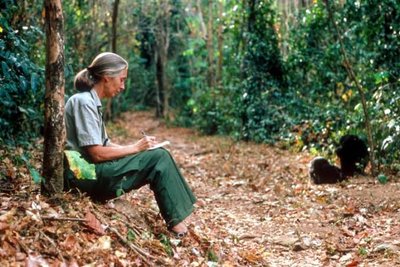
Scientific inquiry begins with observation and data collection. Scientists watch, record, and analyze evidence to answer questions about the natural world.
Observation: Gathering information through the senses or instruments.
Data: Recorded observations; the evidence upon which scientific inquiry is based.
The Process of Science: Hypotheses and Testing
Hypothesis: A proposed explanation for a set of observations; must be testable and falsifiable.
Testing can involve controlled experiments or further observation, depending on the hypothesis.
Example: Troubleshooting a Wi-Fi issue by forming a hypothesis, making predictions, conducting an experiment, and analyzing results.
Communication and Outcomes in Science
Scientists share findings through seminars, meetings, and publications.
Research is evaluated by peer review before publication.
Scientific literature is essential for building on existing knowledge.
Theory vs. Fact
Theory: A comprehensive, well-substantiated explanation supported by a large body of evidence; broader than a hypothesis.
Fact: Information considered objectively true based on current evidence; verifiable and not opinion-based.
Science values explanations that apply to a wide range of phenomena over mere accumulation of facts.
Evaluating Scientific Claims and Pseudoscience
Pseudoscience: Fields falsely presented as scientific, often relying on anecdotal evidence and lacking peer review.
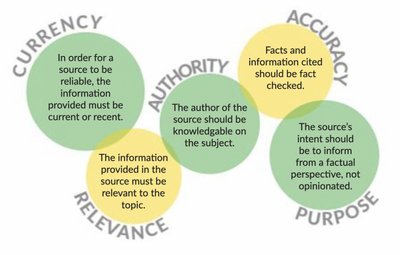
Recognizing reliable sources is crucial for distinguishing science from pseudoscience.
Controlled Experiments
Designing Controlled Experiments
A controlled experiment tests a hypothesis by changing one variable while keeping others constant.
Variables: Factors that can change in an experiment.
Control group: Does not receive the experimental treatment.
Experimental group: Receives the treatment being tested.
Independent variable: The factor manipulated by researchers.
Dependent variable: The measured response or effect.
Controlled variables: Factors kept the same across groups.
Example: Does Listening to Music Help Me Study?
Observation: Belief that studying with music improves performance.
Hypothesis: If I listen to music while studying, I will score higher on a quiz.
Prediction: Studying with music will result in more correct answers.
Experimental group: Studies with music.
Control group: Studies in silence.
Independent variable: Presence of music.
Dependent variable: Quiz score.
Controlled variables: Same study material, time, quiz, and environment.
Placebos and Double-Blind Experiments
Placebo: An inactive treatment used to control for psychological effects in experiments.
Double-blind experiment: Neither participants nor experimenters know who receives the treatment or placebo, reducing bias.
The Properties of Life
Major Properties Associated with Life
Growth
Movement
Respiration
Sensitivity
Nutrition
Excretion
Reproduction
Objects are considered alive if they display all these characteristics. Nonliving objects may show some, but not all, of these properties.
Themes in Biology
Five Unifying Themes
Relationship of Structure to Function
Information Flow
Pathways That Transform Energy and Matter
Interactions Within Biological Systems
Evolution
1. Relationship of Structure to Function
Structure and function are closely related at all levels of biological organization, from molecules to organisms.
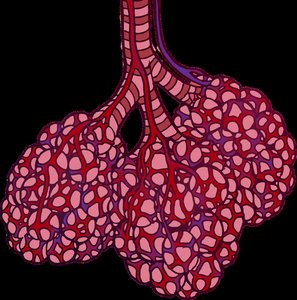
Example: The branched structure of the lungs provides a large surface area for gas exchange.
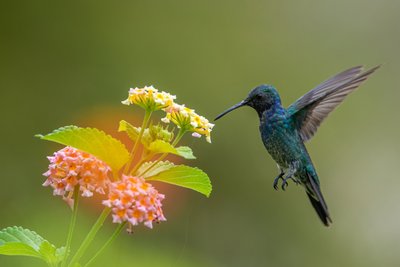
Example: The long, thin beak of a hummingbird allows it to reach nectar deep within flowers.
2. Information Flow
Information must be received, transmitted, and used for biological function. Genes, composed of DNA, are the hereditary units that store and transmit information in all living cells.
DNA is composed of four bases: Adenine (A), Thymine (T), Cytosine (C), and Guanine (G).
A pairs with T, and C pairs with G.
Information flow is essential for processes such as regulation of blood glucose by the pancreas.
3. Pathways That Transform Energy and Matter
Life requires energy, which is primarily derived from the Sun. Energy is transformed from one form to another to sustain life.
Producers (e.g., plants) capture sunlight and convert it into chemical energy through photosynthesis.
Other organisms obtain energy by consuming food and breaking chemical bonds.
Energy flows through ecosystems, entering as light and exiting as heat.
4. Interactions Within Biological Systems
Biological systems are organized at multiple levels, from molecules to the biosphere. Interactions within and between these levels lead to increased complexity and the emergence of new properties.
Unity and diversity in life are explained by common cellular processes and the universal structure of DNA.
5. Evolution
Evolution is the central, unifying concept of biology. It explains both the unity and diversity of life through the process of change over time.
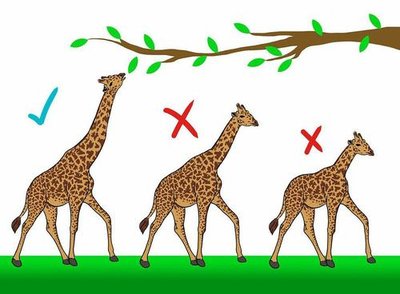
Charles Darwin's theory of evolution by natural selection provides the framework for understanding how species change and adapt.
Natural selection is the process by which individuals with advantageous traits are more likely to survive and reproduce.
Mutations introduce variation, and natural selection "edits" these changes, favoring those that enhance survival and reproduction.
Only inheritable traits (passed through genes) are subject to natural selection.
Evolutionary adaptations: Inherited traits that enhance survival in specific environments.
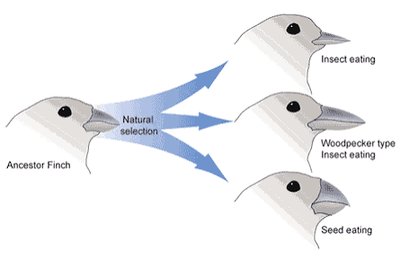
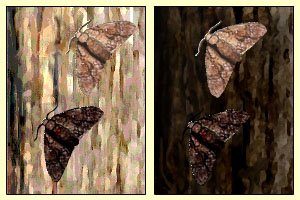
Additional info: Evolutionary examples such as Darwin's finches and the peppered moth demonstrate how environmental changes can shift the frequency of traits in populations over time.
