 Indietro
Chapter 1: Science and Biology – Foundations, Methods, and Core Themes
Guida di studio - Note intelligenti
 Appunti personalizzati basati sui tuoi materiali, ampliati con definizioni chiave, esempi e contesto.
Science and Biology: Foundations
Reasoning in Science
Scientific reasoning is essential for understanding natural phenomena and forms the basis of scientific inquiry. There are several types of reasoning used in science:
Deductive Reasoning: Applying general laws or principles to predict or explain specific phenomena. For example, if all living things require water, then a newly discovered organism must also require water.
Inductive Reasoning: Using multiple specific observations to form a general conclusion. For example, observing that all observed birds have feathers leads to the conclusion that all birds have feathers.
Strong Inference: Testing and rejecting multiple hypotheses through experimentation, which strengthens scientific conclusions.
Experiments are central to scientific reasoning, allowing scientists to eliminate impossible explanations and focus on those that remain plausible.

The Scientific Method
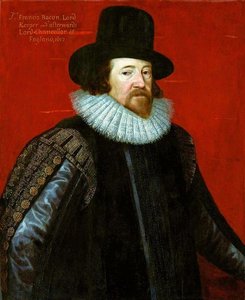
The scientific method is a systematic approach to investigating questions and solving problems in science. It was first formalized by Sir Francis Bacon in the late 1500s.
Step 1: Recognition and formulation of a problem
Step 2: Collection of data through observation and experiment
Step 3: Formulation of a hypothesis (a best guess at the solution)
Step 4: Testing the hypothesis in controlled conditions
Step 5: Analyzing results and drawing conclusions
Hypothesis, Theory, and Law
Scientific knowledge is organized into hypotheses, theories, and laws:
Hypothesis: A tentative explanation based on data collected through observations and experiments. It must be testable and falsifiable.
Theory: A hypothesis that has survived repeated challenges and accumulated substantial experimental support. Example: The theory of evolution.
Law: A statement of an observed phenomenon that does not change. Example: The law of gravity.
Hypotheses graduate to theories through rigorous testing and experimentation.
Questions Addressed by Science
Science can only address questions that are testable and falsifiable. Supernatural and religious explanations are outside the bounds of science.
Experimental Design and Hypothesis Testing
Types of Experiments
Experimental design is crucial for obtaining reliable scientific results. Types of experiments include:
Manipulative Experiment: Conditions are deliberately altered for one variable, while others are held constant.
Controlled Study: Comparing a treatment group to a control group that has not received the treatment.
Natural Experiment: Observing events that have already happened.
Blind Experiment: The researcher does not know which group has been treated until after data analysis.
Double-Blind Experiment: Neither the subject nor the researcher knows who is in the treatment group.
Hypothesis Testing and Placebo Treatments
Hypothesis testing involves formulating null and alternate hypotheses and testing them through experiments. Placebo treatments are used to measure whether a treatment is "better than nothing" by giving patients inert medications and tracking results.
Null Hypothesis (H0): There is no effect.
Alternate Hypothesis (H1): There is an effect (e.g., pollution harms organisms).

Variables in Experiments
Experiments involve two main types of variables:
Independent Variable: The variable that is manipulated or changed (X-axis).
Dependent Variable: The variable that is measured and depends on the independent variable (Y-axis).
Proper graphing of data is essential for analysis and interpretation.
Data Representation: Graphs and Charts
Types of Graphs
Graphs are used to visually represent data and reveal patterns or relationships. The three most important types of graphs are:
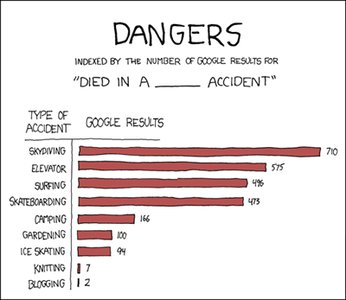
Bar or Column Graph: Useful for comparing counts, averages, or summary statistics.
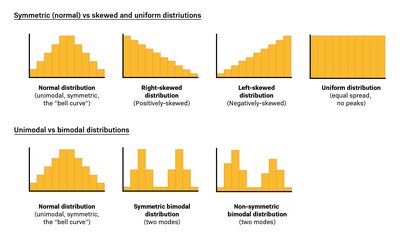
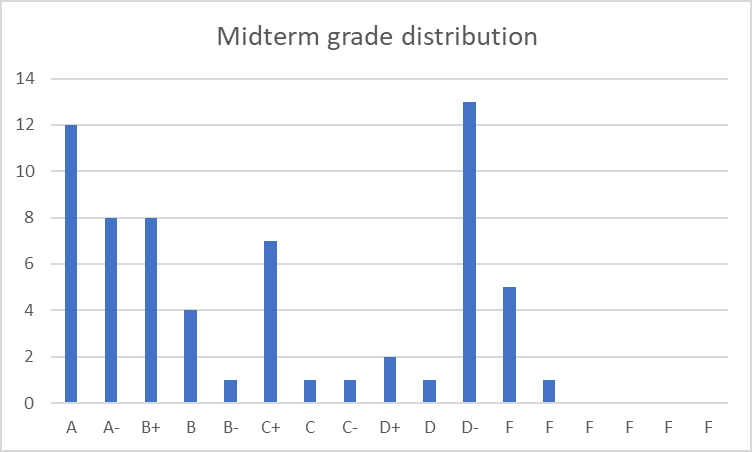
Histogram: A special bar chart where each column represents the count or frequency of outcomes within a numerical range.
Scatter Graph: Used for sets of data where dependent and independent variables can be plotted as X,Y coordinates. Dots are not connected, but a trendline may be added.
Line Graph: Used for continuous data where the order is fixed, such as time or distance.
Common Graphing Errors
Graphing individual data points instead of summary statistics
Graphing standard deviation/standard error as its own column (should use error bars)
Using a line graph when a scatter plot is called for
Peer Review and Scientific Literature
The Peer Review Process
Peer review is a critical process in scientific publishing, ensuring the accuracy and reliability of scientific literature. The process involves:
Conducting research
Analyzing data and writing a paper
Submitting to a journal
Editorial evaluation
Review by anonymous experts
Possible outcomes: publication, revision, or rejection
Peer review maintains scientific standards and credibility.
Types of Peer Reviewed Literature
Original research
Systematic reviews
Meta-analyses
Examples of top journals include Science, Nature, Cell, and New England Journal of Medicine.
Citing Sources
Proper citation of sources is essential in scientific work. APA style is commonly used.
Biology: The Study of Life
Characteristics of Life
Biology is the study of life. Living organisms share several fundamental characteristics:
Homeostasis: Regulation of the internal environment to maintain a constant state (e.g., sweating to reduce temperature).
Organization: Being structurally composed of one or more cells, the basic units of life.
Metabolism: Transformation of energy by converting chemicals and energy into cellular components (anabolism) and decomposing organic matter (catabolism).
Growth: Maintenance of a higher rate of anabolism than catabolism, resulting in increased size.
Adaptation: Ability to change over time in response to the environment, fundamental to evolution.
Response to Stimuli: Ability to respond to environmental changes (e.g., phototropism in plants).
Reproduction: Ability to produce new individuals, either asexually or sexually.

Functions Common to All Life
Nutrition
Transport/Distribution
Respiration
Excretion
Response to the environment
Reproduction
Are Viruses Alive?
Viruses exhibit some characteristics of life, such as adaptation and reproduction, but lack others, such as cellular structure and metabolism. Evidence suggests they are descended from cells, but their status as living or non-living remains debated.
Levels of Biological Organization
Hierarchy of Life
Life can be studied at different levels, from molecules to the entire biosphere. Each level exhibits emergent properties that arise from the arrangement and interaction of parts within a system.
Biosphere: The global ecosystem
Ecosystems: Communities and their physical environment
Communities: All organisms in a particular area
Populations: Groups of individuals of the same species
Organisms: Individual living entities
Organs and Organ Systems: Structures with specific functions
Tissues: Groups of cells with a common function
Cells: Basic units of life
Molecules: Chemical components of cells
Emergent Properties and Reductionism
Emergent properties result from the arrangement and interaction of parts within a system. Reductionism involves studying complex systems by breaking them down into simpler components. Systems biology complements reductionism by analyzing interactions among parts of a biological system.
Feedback Regulation
Cells coordinate various chemical pathways through feedback regulation:
Positive Feedback: Self-perpetuating processes (e.g., growing trees, invasive organisms).
Negative Feedback: Suppresses change and maintains homeostasis (e.g., body temperature regulation).
Negative feedback is the most common form of regulation in living organisms.
Evolution: The Core Theme of Biology
Definition and Mechanisms
Evolution is the central concept in biology, explaining both the unity and diversity of life. It is defined as the change in frequency of genes in a population over time. Mechanisms of evolution include:
Natural Selection: Increases or decreases heritable traits in a population based on environmental adaptation.
Genetic Drift: Random changes in gene frequencies due to demographic events.
Gene Flow: Genetic change within a population due to migration.
Sexual Selection: Effect of mate choice on gene frequency.
Origin of Species and Reproductive Isolation
Populations separated for long periods accumulate differences through evolution, leading to reproductive isolation and the origin of new species.
Evolutionary Conservation
Evolution is conservative; existing structures are often repurposed rather than replaced, allowing for both unity and diversity among organisms.
Quote: "Nothing in biology makes sense except in the light of evolution" – Theodosius Dobzhansky
Tables: Causation and Scientific Criteria
Bradford Hill Criteria and GRADE Considerations
The Bradford Hill criteria are used to assess causation in scientific studies. The table below compares these criteria with considerations in the GRADE system:
Bradford Hill Criteria | Consideration in GRADE |
|---|---|
Strength | Strength of association and imprecision in effect estimate |
Consistency | Consistency across studies; across different situations and researchers |
Temporality | Study design, specific study limitations; RCTs fulfill this criterion better than observational studies |
Biological gradient | Dose–response gradient |
Specificity | Indirectness |
Biological plausibility | Indirectness |
Coherence | Indirectness |
Experiment | Study design, randomization, properly designed and conducted observational studies |
Analogy | Existing association for critical outcomes will lead to not downgrading the quality, indirectness |
Hill's Criteria of Causation Applied to Subluxation
Hill's criteria are applied to evaluate causation in specific scientific contexts. The table below summarizes the application to subluxation:
Criteria | Result |
|---|---|
Strength | No studies found a relative risk or odds ratio linking subluxation |
Consistency | Subluxation not consistently found across studies |
Specificity | No studies linked disease with subluxation of any specificity |
Temporal sequence | No studies suggestive of a temporal sequence linking subluxation with disease |
Dose response | No studies found linking incidence of disease with magnitude of subluxation |
Experimental evidence | No consistent studies demonstrating subluxation in the animal model |
Biological plausibility | No studies offered reproducible evidence to suggest biological plausibility |
Coherence | No studies indicated a credible level of coherence |
Analogy | No studies suggestive of a casual association via a similar agent |
