 Indietro
Chapter 1: Themes in Biology & Scientific Inquiry
Guida di studio - Note intelligenti
 Appunti personalizzati basati sui tuoi materiali, ampliati con definizioni chiave, esempi e contesto.
Themes in Biology & Scientific Inquiry
What is Biology?
Biology is the scientific study of life, encompassing a vast array of living organisms and their behaviors. The discipline is characterized by ongoing inquiry into the nature of life, which cannot be captured by a single definition. Instead, life is recognized by a set of broad behavioral categories:
Order
Reproduction
Growth & Development
Response to Environment
Energy Processing
Regulation
Evolutionary Adaptation
Unifying Themes in Biology
Biology is a subject of enormous scope, but five unifying themes help organize its study:
Organization – Life is structured at many levels, from molecules to the biosphere.
Information – Genetic information is stored, copied, and transmitted.
Energy and Matter – Energy and matter are transferred and transformed.
Interactions – Organisms interact at all levels.
Evolution – The overarching theme explaining unity and diversity.
Theme: Organization
Levels of Biological Organization
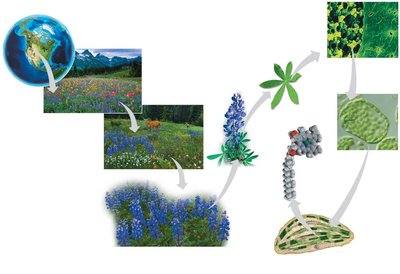
Life can be studied at different levels, each with unique properties. These levels include:
Molecules
Organelles
Cells
Tissues
Organs
Organisms
Populations
Communities
Ecosystems
Biosphere
Emergent Properties
Emergent properties arise from the arrangement and interaction of parts within a system. These properties are not present in individual components but emerge when the system is complete. For example, a functioning bicycle only works when all parts are correctly assembled.
Structure and Function
At every level of the biological hierarchy, there is a correlation between structure and function. Analyzing structure provides clues about function, and vice versa. For example, a leaf's thin, flat shape maximizes light capture, while a bird's wings are shaped for flight.
The Cell: The Fundamental Unit of Life
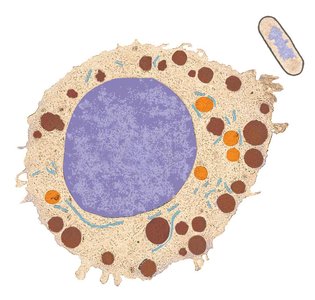
The cell is the smallest unit of organization that performs all functions required for life. Cells are enclosed by membranes that regulate material passage. There are two main cell types:
Prokaryotic cells: No membrane-bound organelles; DNA is not in a nucleus (e.g., bacteria, archaea).
Eukaryotic cells: Membrane-bound organelles; DNA is enclosed in a nucleus (e.g., plants, animals, fungi, protists).
Theme: Information
Genetic Information and Its Expression
Life's processes involve the transmission and expression of genetic information. Genes are passed to offspring and expressed as cellular products. Chromosomes contain DNA, the genetic material.
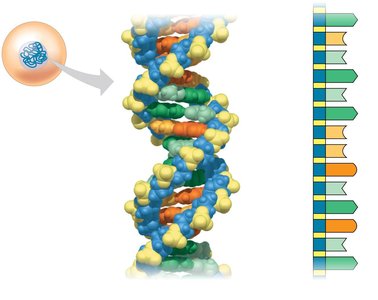
Each chromosome contains one long DNA molecule with many genes.
Genes encode information for building molecules and direct development.
DNA is a double helix made of nucleotides: A, G, C, T.
DNA is copied in mitosis and mixed in meiosis.
DNA is transcribed into RNA, which is translated into protein or used for regulation.
Genomics and Proteomics
Genomics is the study of sets of genes in one or more species. Proteomics is the study of whole sets of proteins and their properties. The entire set of proteins expressed by a cell, tissue, or organ is called a proteome.
Genomics relies on high-throughput technology and bioinformatics.
Human cells contain about 3 billion nucleotides per genome.
Theme: Energy & Matter
Energy Flow and Matter Cycling
Life depends on the input of energy, mainly from the sun, and the transformation of energy from one form to another. Plants convert sunlight to chemical energy, which is passed to consumers. Matter cycles within ecosystems, being used and recycled.
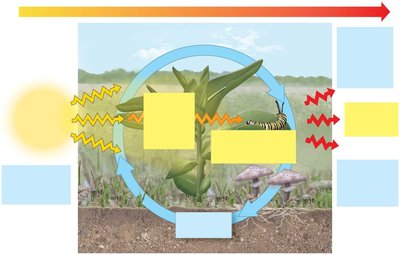
Producers (plants) convert sunlight to chemical energy.
Consumers feed on other organisms or their remains.
Decomposers return chemicals to the soil.
Theme: Interactions
Interactions Within Organisms
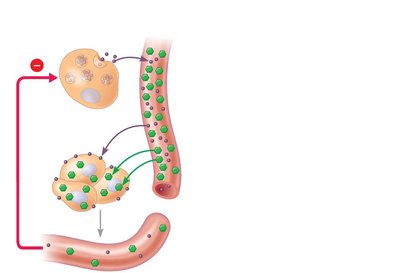
Components within organisms (organs, tissues, cells, molecules) interact through signaling, transport, and regulation. Many processes self-regulate via feedback mechanisms:
Negative feedback: Product buildup reduces or stops production.
Positive feedback: Product buildup increases production.
Interactions Within Ecosystems
Organisms interact with each other and their environment. These interactions can be beneficial (symbiotic) or harmful (parasitic, predatory). Organisms also affect and are affected by physical factors in their environment.
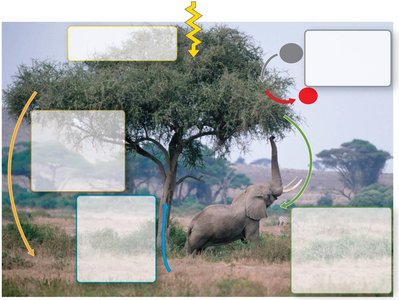
Human activities, such as fossil fuel use, impact ecosystems and climate.
Climate change affects species distribution and population sizes.
The Core Theme: Evolution
Evolution as the Unifying Principle
Evolution explains both the unity and diversity of life. It is the concept that living organisms are modified descendants of common ancestors. Evidence for evolution comes from genetics, fossil records, homology, and biogeography.
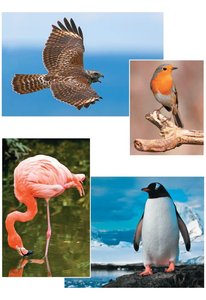
DNA is the universal genetic language.
Unity is evident in cell structure and function.
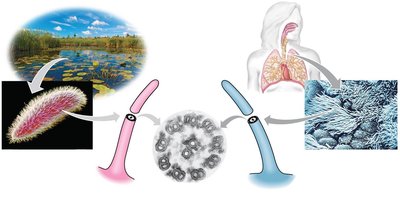
Adaptation and Natural Selection
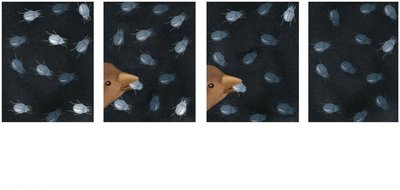
Adaptations are traits that enhance survival and reproduction in specific environments. Natural selection is the mechanism by which beneficial traits become more common in a population.
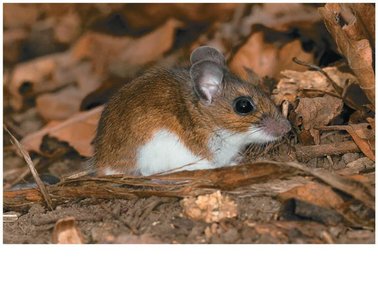
Individuals vary in their traits, many of which are heritable.
More offspring are produced than survive, leading to competition.
Individuals best suited to their environment are more likely to survive and reproduce.
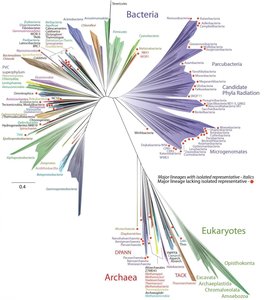
Evolutionary Relationships and the Tree of Life
Evolutionary relationships are illustrated with tree diagrams showing ancestors and descendants. For example, Galápagos finches evolved from a common ancestor.
Taxonomy: Classifying the Diversity of Life
Taxonomic Hierarchy
Taxonomy is the branch of biology that names and classifies species into increasingly broad groups. Each species is given a two-part name: genus and species.
Level | Example |
|---|---|
Species | Ursus americanus |
Genus | Ursus |
Family | Ursidae |
Order | Carnivora |
Class | Mammalia |
Phylum | Chordata |
Kingdom | Animalia |
Domain | Eukarya |
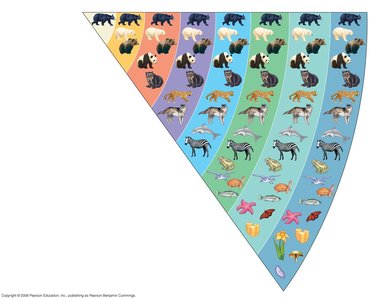
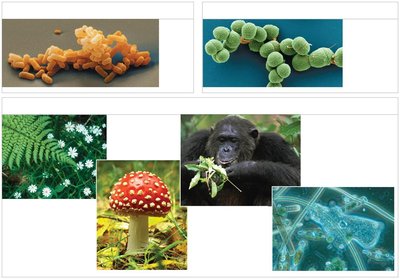
The Three Domains of Life
Organisms are divided into three domains:
Bacteria (prokaryotes)
Archaea (prokaryotes)
Eukarya (eukaryotes: Plantae, Fungi, Animalia, Protists)
Scientific Inquiry
The Process of Science
The goal of science is to understand natural phenomena through observation, hypothesis formation, and testing. Technology applies scientific knowledge for specific purposes.
Exploration, Observation, and Hypothesis Formation
Data can be qualitative (descriptions) or quantitative (numerical). Hypotheses are reasoned explanations leading to testable predictions. Reasoning can be deductive or inductive.
Testing Hypotheses and Experimental Design
Hypotheses must be testable and falsifiable. Experiments involve variables:
Independent variable: Manipulated by researchers.
Dependent variable: Predicted to be affected.
Controlled variables: Kept constant.
Control group: Independent variable is not altered.
Statistical Analysis and Repeatability
Results require statistical analysis, often shown as a p-value (probability of chance occurrence). Results must be repeatable, and experiments are often redesigned.
Scientific Community and Theories
Scientific findings are shared, checked, and repeated. Theories are broader than hypotheses, supported by more evidence, and can be modified or rejected with new data.

Summary Table: Key Themes in Biology
Theme | Description |
|---|---|
Organization | Levels from molecules to biosphere; emergent properties |
Information | Genetic transmission and expression |
Energy & Matter | Energy flow and matter cycling |
Interactions | Feedback regulation and ecosystem interactions |
Evolution | Unity and diversity explained by descent with modification |
