 Indietro
Chapter 10: Photosynthesis – Mechanisms and Significance
Guida di studio - Note intelligenti
 Appunti personalizzati basati sui tuoi materiali, ampliati con definizioni chiave, esempi e contesto.
Photosynthesis: Harnessing Sunlight to Make Carbohydrates
Overview of Photosynthesis
Photosynthesis is a fundamental biological process that converts electromagnetic energy from sunlight into chemical energy stored in carbohydrates. It requires sunlight, carbon dioxide (CO2), and water (H2), producing oxygen (O2) as a by-product. The overall reaction is essentially the reverse of cellular respiration:
Key Point 1: Photosynthesis transforms light energy into chemical energy.
Key Point 2: Oxygen is released as a by-product, while carbohydrates are synthesized.
Example: Plants, algae, and some bacteria perform photosynthesis to sustain life on Earth.
Photosynthesis: Two Linked Sets of Reactions
Light-Capturing and Calvin Cycle Reactions
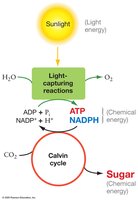
Photosynthesis consists of two interconnected sets of reactions:
Light-capturing reactions: Occur in the thylakoid membranes, where water is split to form O2. Electrons are excited by light energy and transferred to NADP+, forming NADPH.
Calvin cycle reactions: Occur in the stroma, using ATP and NADPH to reduce CO2 and produce sugars.
Example: Purple sulfur bacteria perform photosynthesis without producing oxygen, highlighting the diversity of photosynthetic mechanisms.
Photosynthesis Occurs in Chloroplasts
Structure and Function of Chloroplasts
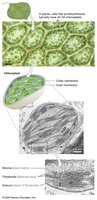
Chloroplasts are specialized organelles in plant cells where photosynthesis takes place. They are surrounded by double membranes and contain thylakoids, which are organized into stacks called grana. The stroma is the fluid-filled space surrounding the thylakoids.
Key Point 1: Thylakoid membranes house pigments that absorb light.
Key Point 2: Chlorophyll is the most common pigment, responsible for the green color of plants.
How Do Pigments Capture Light Energy?
Electromagnetic Radiation and Pigments
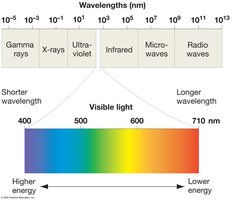
Light is a form of electromagnetic radiation, characterized by wavelength and photon energy. Pigments absorb specific wavelengths, and the energy of a photon is inversely proportional to its wavelength.
Key Point 1: Shorter wavelengths (e.g., blue light) have higher energy than longer wavelengths (e.g., red light).
Key Point 2: Visible light is the range of wavelengths that can be detected by the human eye.
Photosynthetic Pigments Absorb Light
Types and Functions of Pigments
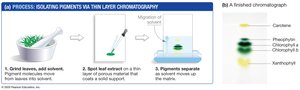
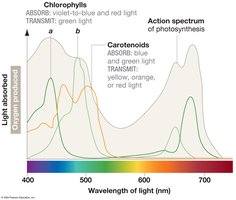
Pigments absorb only certain wavelengths of light. Thin layer chromatography is used to separate plant pigments, revealing their diversity.
Key Point 1: Chlorophylls absorb red and blue light, reflecting green.
Key Point 2: Carotenoids absorb blue and green light, reflecting yellow, orange, and red.
Absorption and Action Spectra
Effectiveness of Different Wavelengths
The action spectrum shows which wavelengths drive photosynthesis most effectively. Chlorophylls are the main photosynthetic pigments, and their absorption spectra correlate strongly with the action spectrum.
Key Point 1: Blue and red photons are most effective in driving photosynthesis.
Key Point 2: Carotenoids extend the range of light absorption and protect chlorophylls from damage.
Experimental Evidence: Wavelengths Driving Photosynthesis
Engelmann's Experiment
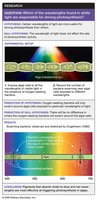
Engelmann used aerobic bacteria to determine which segments of algae released the most O2 under different wavelengths. Bacteria congregated around areas illuminated with violet-blue and red light, confirming these wavelengths are most effective for photosynthesis.
Example: This experiment demonstrated the relationship between light wavelength and photosynthetic activity.
Structure of Photosynthetic Pigments
Chlorophyll and Carotenoid Structures
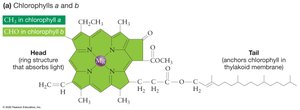
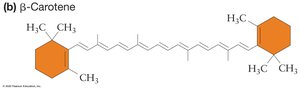
Chlorophyll a and b have a long isoprenoid tail anchoring them in the thylakoid membrane and a head with a ring structure containing magnesium, which absorbs light. Carotenoids have a distinct structure with conjugated double bonds.
Key Point 1: The head region of chlorophyll absorbs light energy.
Key Point 2: Carotenoids act as accessory pigments and antioxidants.
Excited States of Electrons in Pigments
Photon Absorption and Electron Excitation
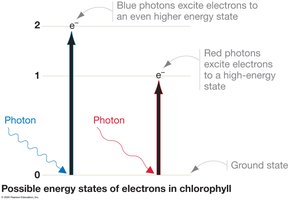
When chlorophyll absorbs photons, electrons are promoted to higher energy states. Red photons raise electrons one energy level, while blue photons raise them two levels. Most absorbed energy drives photosynthesis, while a small fraction is released as fluorescence.
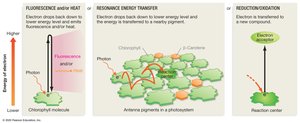
Key Point 1: Excited electrons can return to ground state, releasing energy as heat or light.
Key Point 2: Resonance energy transfer allows energy to move between pigment molecules.
Photosystems and Antenna Complexes
Organization and Function
Chlorophyll molecules form complexes called photosystems, which include antenna pigments that gather light and direct energy to the reaction center. Energy transfer occurs via resonance, and electrons are ultimately transferred to electron acceptors in redox reactions.
Key Point 1: Photosystems contain hundreds of pigment molecules.
Key Point 2: The reaction center is where electromagnetic energy is converted to chemical energy.
Photosystem II and Electron Transport Chain
Conversion of Light Energy to Chemical Energy
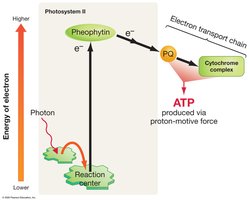
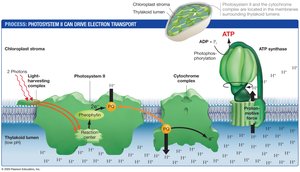
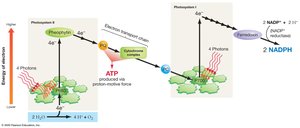
Photosystem II passes excited electrons to the electron transport chain (ETC) in the thylakoid membrane. Redox reactions in the ETC create a proton gradient, which drives ATP synthesis via ATP synthase.
Key Point 1: Plastoquinone (PQ) shuttles electrons and protons across the membrane.
Key Point 2: The proton-motive force is essential for ATP production.
Photosystem II: Water Oxidation and Oxygen Production
Oxygenic vs. Anoxygenic Photosynthesis
Photosystem II is unique in its ability to oxidize water, producing O2. Other organisms with only one photosystem perform anoxygenic photosynthesis, using alternative electron donors and not producing oxygen.
Key Point 1: Water splitting is essential for oxygenic photosynthesis.
Key Point 2: Anoxygenic photosynthesis occurs in some bacteria, such as purple sulfur bacteria.
Photosystem I: NADPH Production
Mechanism and Function
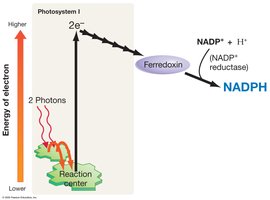
Photosystem I absorbs photons, exciting electrons that are transferred to NADP+ via ferredoxin and NADP+ reductase, forming NADPH. This process is crucial for the reduction phase of the Calvin cycle.
Key Point 1: Photosystem I produces NADPH, a key electron carrier.
Key Point 2: Electrons from Photosystem II drive ATP synthesis, while those from Photosystem I reduce NADP+.
The Z Scheme: Interaction of Photosystems II and I
Electron Flow and Energy Production
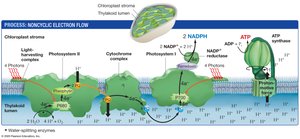
The Z scheme describes the linear flow of electrons from water through Photosystem II and I to NADP+. This process generates both ATP and NADPH, essential for the Calvin cycle.
Key Point 1: Noncyclic electron flow produces both ATP and NADPH.
Key Point 2: Cyclic electron flow produces additional ATP without NADPH or O2.
Oxygenic Photosynthesis and Earth's Evolution
Significance of Oxygen Production
Oxygen released from photosynthesis was critical for the evolution of aerobic life and the formation of the ozone layer, which protects Earth from harmful UV radiation.
Key Point 1: Oxygenic photosynthesis enabled the rise of complex life forms.
Key Point 2: Ozone formation depended on oxygen production from photosynthesis.
Carbon Dioxide Capture and the Calvin Cycle
Stomata and Gas Exchange
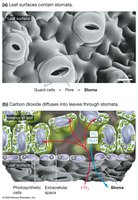
Plants are covered with a waxy cuticle that prevents water loss but also restricts gas exchange. Stomata, pores formed by guard cells, allow CO2 to enter and O2 to exit, facilitating photosynthesis.
Key Point 1: Stomata regulate gas exchange and water loss.
Key Point 2: The Calvin cycle maintains a strong CO2 concentration gradient.

The Calvin Cycle: Carbon Fixation and Reduction
Three Phases of the Calvin Cycle
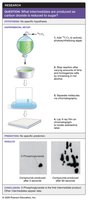
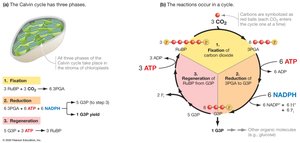
The Calvin cycle fixes carbon from CO2 into organic molecules. It consists of three phases:
Fixation: CO2 reacts with ribulose biphosphate (RuBP), producing two molecules of 3-phosphoglycerate (3PGA).
Reduction: 3PGA is phosphorylated and reduced by NADPH to form glyceraldehyde-3-phosphate (G3P).
Regeneration: G3P is used to regenerate RuBP, allowing the cycle to continue.
Rubisco: The Key Enzyme in Carbon Fixation
Structure and Function of Rubisco
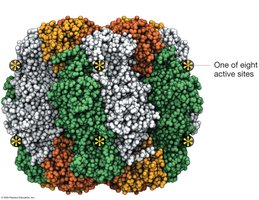
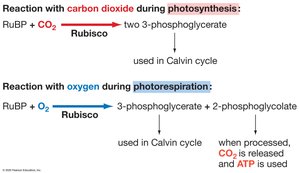
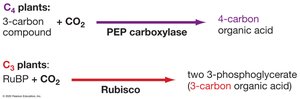
Rubisco (ribulose-1,5-biphosphate carboxylase/oxygenase) is the most abundant enzyme in photosynthetic tissues. It catalyzes the fixation of CO2 but is slow and inefficient, as it can also react with O2, leading to photorespiration.
Key Point 1: Rubisco's dual activity slows CO2 reduction.
Key Point 2: Photorespiration consumes O2 and releases CO2, reducing photosynthetic efficiency.
Mechanisms for Increasing CO2 Concentration
C4 and CAM Pathways
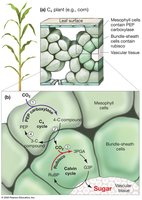
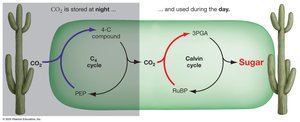
In hot and dry conditions, plants use C4 and CAM pathways to increase CO2 concentration and minimize photorespiration. C4 plants spatially separate carbon fixation and the Calvin cycle, while CAM plants temporally separate these processes.
Key Point 1: C4 pathway uses PEP carboxylase in mesophyll cells and Rubisco in bundle sheath cells.
Key Point 2: CAM pathway stores CO2 at night and uses it during the day.
Summary Table: Comparison of Photosynthetic Pathways
Pathway | Key Enzyme | Location | CO2 Fixation | Photorespiration |
|---|---|---|---|---|
C3 (Calvin Cycle) | Rubisco | Stroma | Direct fixation | High |
C4 | PEP Carboxylase & Rubisco | Mesophyll & Bundle Sheath | Spatial separation | Low |
CAM | PEP Carboxylase & Rubisco | Same cell | Temporal separation | Low |
