 Indietro
Chapter 11: Blood – Structure, Function, Disorders, and Blood Types
Guida di studio - Note intelligenti
 Appunti personalizzati basati sui tuoi materiali, ampliati con definizioni chiave, esempi e contesto.
Blood: Structure and Function
Functions of Blood
Blood is a vital fluid in the human body, serving as a transportation system, providing protection, and regulating physiological parameters.
Transportation: Blood transports oxygen, carbon dioxide, nutrients, hormones, and waste products throughout the body.
Protection: Blood defends against disease-causing agents and participates in clotting to prevent blood loss.
Regulation: Blood helps regulate pH, body temperature, and water balance.
Composition of Blood
Plasma
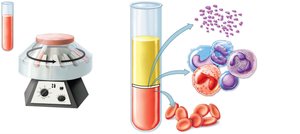
Plasma is the liquid component of blood, making up about 55% of its volume. It consists mainly of water and dissolved substances.
Water: Approximately 93% of plasma is water.
Dissolved Substances: Includes ions, dissolved gases, hormones, plasma proteins, and waste products.
Formed Elements
The formed elements are the cellular components of blood, comprising about 45% of its volume. These include red blood cells, white blood cells, and platelets.
Red Blood Cells (RBCs): Transport oxygen and carbon dioxide.
White Blood Cells (WBCs): Defend the body against disease.
Platelets: Essential for blood clotting.
Plasma Proteins
Plasma proteins play crucial roles in water balance, transport, clotting, and defense.
Albumins: Maintain blood’s water-balancing ability.
Globulins: Transport lipids and fat-soluble vitamins; some are antibodies.
Clotting Proteins: Example: fibrinogen, essential for blood clotting.
Origin of Formed Elements
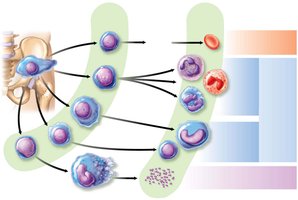
Stem cells in the red bone marrow give rise to all formed elements through differentiation and specialization.
Stem Cells: Undifferentiated cells that divide and become specialized.
Red Blood Cells: Erythrocytes, specialized for oxygen transport.
White Blood Cells: Leukocytes, specialized for defense.
Platelets: Thrombocytes, essential for clotting.
Types and Functions of Blood Cells
Blood contains several types of cells, each with distinct functions and characteristics.
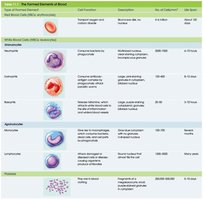
Type | Quick Description | Description | No. per µL | Life Span |
|---|---|---|---|---|
Red Blood Cells (Erythrocytes) | Transport oxygen | Biconcave, flexible, no nucleus when mature | 4-6 million | ~120 days |
Neutrophils | Phagocytic | Multi-lobed nucleus, first responders | 3,000-7,000 | 6 hours to a few days |
Eosinophils | Defend against parasites | Bilobed nucleus, lessen allergies | 100-400 | ~8-12 days |
Basophils | Release histamine | Bilobed nucleus, role in allergies | 20-50 | ~a few days |
Monocytes | Develop into macrophages | Largest, kidney-shaped nucleus | 100-700 | ~months |
Lymphocytes | Adaptive immunity | Small, round nucleus | 1,500-3,000 | ~years |
Platelets | Clotting | Cell fragments | 150,000-400,000 | ~10 days |
Red Blood Cells and Hemoglobin
Structure and Function of RBCs
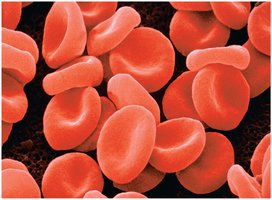
Red blood cells are specialized for oxygen transport and have a unique biconcave shape for flexibility and surface area.
No nucleus: When mature, RBCs lack a nucleus.
Contain hemoglobin: The oxygen-binding pigment.
Hemoglobin
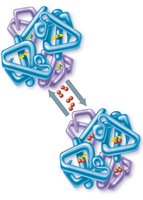
Hemoglobin is a protein in RBCs responsible for binding and transporting oxygen.
Structure: Four subunits, each with a polypeptide chain and a heme group.
Iron ion: The iron in the heme group binds to oxygen.
Oxyhemoglobin: Hemoglobin bound with oxygen.
Carboxyhemoglobin: Hemoglobin bound with carbon monoxide (CO), which is toxic.
Life Cycle of Red Blood Cells
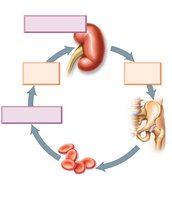
RBCs are produced in the red bone marrow, live about 120 days, and are removed by phagocytosis in the liver and spleen. Hemoglobin is degraded and iron is recycled.
Regulation: RBC production is regulated by a negative feedback mechanism involving erythropoietin (EPO).
EPO: Produced by kidneys in response to low oxygen, stimulates RBC production.
White Blood Cells (Leukocytes)
General Functions
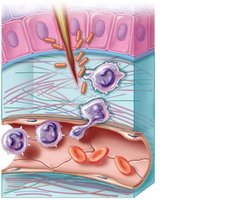
White blood cells defend the body against disease, remove wastes, and can leave the circulatory system to reach sites of infection or tissue damage.
Phagocytosis: Some WBCs engulf microbes and debris.
Mobility: WBCs can exit capillaries and move to infection sites.
Classification of WBCs
WBCs are classified based on the presence or absence of granules in their cytoplasm.
Granulocytes: Have visible granules; include neutrophils, eosinophils, and basophils.
Agranulocytes: Lack visible granules; include monocytes and lymphocytes.
Granulocytes
Neutrophils: Most abundant, first responders, phagocytic.
Eosinophils: Defend against parasitic worms, lessen allergies.
Basophils: Release histamine, involved in allergic reactions.
Agranulocytes
Monocytes: Develop into macrophages, phagocytic.
Lymphocytes: Include B and T lymphocytes, key in adaptive immunity.
B lymphocytes: Give rise to plasma cells that produce antibodies.
T lymphocytes: Kill infected or cancerous cells.
Platelets and Blood Clotting
Platelets
Platelets are cell fragments essential for blood clotting, derived from megakaryocytes in the bone marrow.
Function: Form platelet plugs and release chemicals for clot formation.
Blood Clotting Process
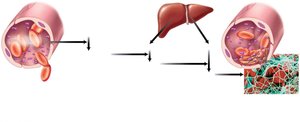
Blood clotting is a complex process involving vessel constriction, platelet plug formation, and the activation of clotting factors.
Clotting Factors: Released from injured tissue and platelets, activate a cascade leading to fibrin formation.
Fibrin: Forms a web that traps blood cells and platelets, creating a clot.
Vitamin K: Essential for synthesis of prothrombin, a key clotting factor.
Blood Cell Disorders
Anemia
Anemia is a condition where the blood’s ability to carry oxygen is reduced, due to too little hemoglobin or too few RBCs.
Iron-deficiency anemia: Most common, caused by inadequate iron intake or absorption.
Hemolytic anemia: RBC destruction exceeds production; includes sickle-cell anemia.
Pernicious anemia: Insufficient RBC production due to lack of vitamin B12 absorption.
Infectious Mononucleosis
A viral disease of lymphocytes caused by Epstein-Barr virus, spread by oral contact.
Symptoms: Fever, headache, sore throat, swollen lymph nodes.
Leukemia
Leukemia is a cancer of the white blood cells, causing abnormal cell proliferation and suppression of other blood cell production.
Symptoms: Anemia, inadequate clotting, impaired defense mechanisms.
Treatment: Radiation, chemotherapy, transfusions, bone marrow transplant.
Blood Types and Transfusion Relationships
Blood Types
Blood types are determined by antigens (proteins) on the surface of RBCs. The main types are A, B, AB, and O.
Type A: A antigen
Type B: B antigen
Type AB: Both A and B antigens
Type O: Neither A nor B antigens
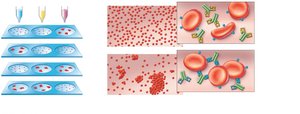
Agglutination
Agglutination (clumping) occurs when antibodies contact their specific antigen, used to determine blood type.
Transfusion Relationships
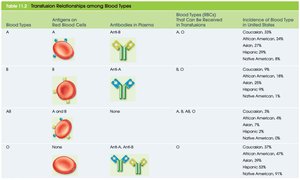
Blood transfusion compatibility depends on antigens and antibodies present in donor and recipient blood.
Blood Type | Antigens | Antibodies | Can Receive | Incidence (US) |
|---|---|---|---|---|
A | A | Anti-B | A, O | Caucasian: 41%, African American: 27%, Asian: 28%, Native American: 16% |
B | B | Anti-A | B, O | Caucasian: 10%, African American: 20%, Asian: 27%, Native American: 4% |
AB | A and B | None | A, B, AB, O | Caucasian: 4%, African American: 4%, Asian: 7%, Native American: 1% |
O | None | Anti-A, Anti-B | O | Caucasian: 45%, African American: 49%, Asian: 38%, Native American: 79% |
Rh Factor
The Rh factor is another important antigen. Rh-positive individuals have Rh antigens; Rh-negative individuals lack them.
Rh-negative: Will not form anti-Rh antibodies unless exposed to Rh antigen (e.g., transfusion or childbirth).
Hemolytic Disease of the Newborn
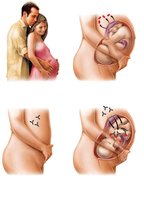
Occurs when an Rh-negative mother develops anti-Rh antibodies that cross the placenta and destroy the Rh-positive fetus’s RBCs.
RhoGAM: Serum given to Rh-negative mothers to prevent antibody formation.
Blood Clotting Disorders
Hemophilia
Hemophilia is an inherited condition characterized by excessive bleeding due to faulty genes involved in clotting factor production.
Treatment: Restore missing clotting factor.
Unnecessary Blood Clot Formation
Unnecessary clots can disrupt blood flow, leading to heart attack or stroke.
Embolus: Clot that circulates in the bloodstream.
Thrombus: Clot that lodges in a blood vessel.
Summary of Key Concepts
Blood functions in transport, protection, and regulation.
Blood is composed of plasma and formed elements (RBCs, WBCs, platelets).
Blood cell disorders include anemia, leukemia, and hemolytic disease.
Blood types and transfusion compatibility are determined by antigens and antibodies.
Blood clotting involves a cascade of events leading to fibrin formation.
