 Indietro
Chapter 14: The Molecular Basis of Inheritance – DNA Structure, Replication, and Chromatin
Guida di studio - Note intelligenti
 Appunti personalizzati basati sui tuoi materiali, ampliati con definizioni chiave, esempi e contesto.
DNA as the Genetic Material
Historical Evidence and Discovery
The identification of DNA as the genetic material was a pivotal moment in biology, supported by experiments with bacteria and viruses. Early researchers believed proteins, due to their complexity, were the genetic material, but evidence from bacteriophage studies and molecular diversity led to the acceptance of DNA.
Bacteriophages (phages) are viruses that infect bacteria, demonstrating that DNA can program cells.
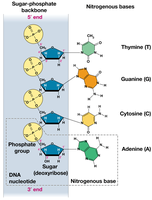
DNA is a polymer of nucleotides, each consisting of a nitrogenous base, a sugar, and a phosphate group.
Chargaff’s rules: In any species, the number of adenine (A) equals thymine (T), and guanine (G) equals cytosine (C).
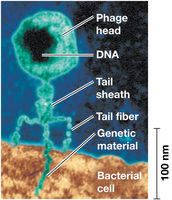
Example: The Hershey-Chase experiment used radioactive labeling to show that DNA, not protein, is the hereditary material in phages.
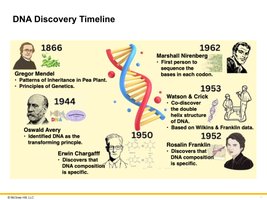
DNA Discovery Timeline
Key milestones in the discovery of DNA’s role in inheritance include the work of Mendel, Avery, Chargaff, Franklin, Watson, and Crick.
Structure of DNA
Double Helix Model
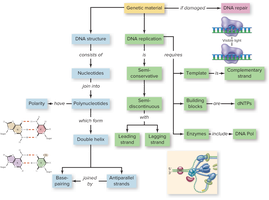
DNA is structured as a double helix, with two antiparallel strands held together by complementary base pairing. The backbone consists of alternating sugars and phosphates, while the bases are paired in the interior.
Antiparallel arrangement: The two strands run in opposite directions (5' to 3' and 3' to 5').
Base pairing: Purines (A, G) pair with pyrimidines (T, C) to maintain uniform width.
Chargaff’s rules are explained by the Watson–Crick model: A pairs with T, G pairs with C.
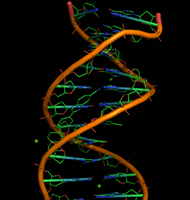
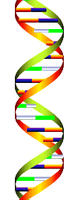
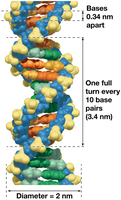
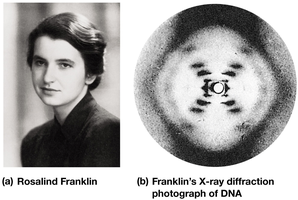
Example: X-ray crystallography images by Rosalind Franklin provided evidence for the helical structure of DNA.
DNA and RNA Structure
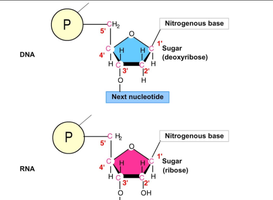
Both DNA and RNA are nucleic acids, but DNA contains deoxyribose sugar and thymine, while RNA contains ribose sugar and uracil.
DNA: Double-stranded, deoxyribose, bases A, T, G, C.
RNA: Single-stranded, ribose, bases A, U, G, C.
DNA Replication
Semiconservative Model and Meselson-Stahl Experiment
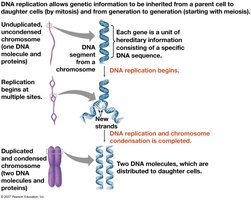
DNA replication is the process by which genetic information is copied for cell division. The semiconservative model states that each new DNA molecule consists of one old strand and one new strand.
Origins of replication: Specific sites where replication begins, forming replication bubbles.
Replication fork: Y-shaped region where DNA is unwound.
Enzymes involved: Helicase, primase, DNA polymerase, ligase, topoisomerase, single-strand binding proteins.
Example: The Meselson-Stahl experiment used isotopic labeling to confirm the semiconservative model.
Mechanism of DNA Replication
Replication proceeds in the 5' to 3' direction, with the leading strand synthesized continuously and the lagging strand synthesized in fragments (Okazaki fragments).
DNA polymerase: Adds nucleotides to the 3' end of the primer.
Okazaki fragments: Short segments of DNA synthesized on the lagging strand.
DNA ligase: Joins Okazaki fragments.
Source of energy: Nucleoside triphosphates (dNTPs) provide energy for polymerization.
Equation: DNA polymerization reaction:
Proofreading and Repair
DNA polymerases proofread newly synthesized DNA, and repair enzymes correct mismatches and damage. Nucleotide excision repair removes damaged DNA segments.
Mismatch repair: Corrects errors missed by DNA polymerase.
Nuclease: Cuts out damaged DNA.
Mutations: Permanent changes in DNA sequence, source of genetic variation.
Replicating Chromosome Ends: Telomeres and Telomerase
Linear chromosomes have telomeres at their ends, which protect genes from erosion. Telomerase extends telomeres in germ cells and is active in some cancer cells.
Telomeres: Repetitive DNA sequences at chromosome ends.
Telomerase: Enzyme that lengthens telomeres.
Telomere shortening is associated with aging and may limit cell division.
Chromatin Structure and Chromosome Packing
Levels of Chromatin Packing
Chromatin is the complex of DNA and proteins in eukaryotic cells. Packing levels range from nucleosomes to highly condensed metaphase chromosomes.
Nucleosome: DNA wrapped around histone proteins, forming "beads on a string" structure.
Histones: Proteins responsible for DNA packing and regulation of gene expression.
Chromatin: Can be loosely packed (euchromatin) or highly condensed (heterochromatin).
Example: Chromatin condensation changes during the cell cycle, affecting gene expression and chromosome structure.
Bacterial vs. Eukaryotic Chromosomes
Bacterial chromosomes are circular and supercoiled, while eukaryotic chromosomes are linear and associated with large amounts of protein.
Bacterial chromosome: Double-stranded, circular DNA, found in the nucleoid.
Eukaryotic chromosome: Linear DNA, packed with histones, organized into chromatin.
Euchromatin vs. Heterochromatin
Euchromatin is loosely packed and accessible for transcription, while heterochromatin is densely packed and less accessible.
Euchromatin: Active regions of the genome.
Heterochromatin: Inactive, highly condensed regions (centromeres, telomeres).
Chemical Modification of Histones
Histones can be chemically modified, affecting chromatin condensation and gene expression.
Acetylation, methylation, phosphorylation: Common histone modifications.
These modifications regulate access to DNA and influence transcription.
Summary Table: Bacterial DNA Replication Proteins and Functions
Protein | Function |
|---|---|
Helicase | Unwinds DNA at replication fork |
Single-strand binding protein | Stabilizes single-stranded DNA |
Topoisomerase | Relieves strain ahead of replication fork |
Primase | Synthesizes RNA primer |
DNA polymerase | Adds nucleotides to growing DNA strand |
DNA ligase | Joins Okazaki fragments |
Additional info: Chromatin packing and histone modifications are essential for regulating gene expression and maintaining genome integrity during cell division.
