 Indietro
Chapter 15: The Chromosomal Basis of Inheritance – Study Notes
Guida di studio - Note intelligenti
 Appunti personalizzati basati sui tuoi materiali, ampliati con definizioni chiave, esempi e contesto.
Chapter 15: The Chromosomal Basis of Inheritance
Concept 15.1: Mendelian Inheritance and Chromosome Theory
Mendelian inheritance is rooted in the physical behavior of chromosomes during cell division. Early geneticists observed parallels between Mendel’s theoretical hereditary units and chromosome behavior, leading to the chromosome theory of inheritance.
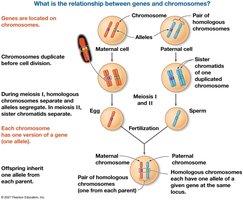
Chromosome Theory of Inheritance: Genes are located on chromosomes, and the behavior of chromosomes during meiosis accounts for inheritance patterns.
Historical Evidence: Sutton, Boveri, and Morgan provided key evidence linking genes to chromosomes.
Experimental Organism: Drosophila melanogaster (fruit fly) was chosen for its short generation time, high offspring number, and four chromosome pairs.
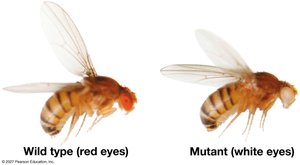
Wild Type vs. Mutant Phenotypes: Wild type refers to the normal phenotype; mutant phenotypes are alternatives, such as white eyes instead of red.
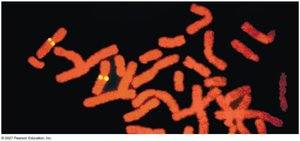
Gene-Chromosome Relationship: Genes are specific sequences on chromosomes, and each chromosome carries many genes.
Correlating Gene Behavior with Chromosome Behavior
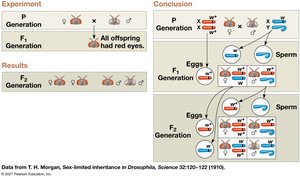
Morgan’s experiments with fruit flies demonstrated that the white-eyed mutant allele is located on the X chromosome, supporting the chromosome theory of inheritance.
Sex-linked Traits: Traits associated with sex chromosomes exhibit unique inheritance patterns.
Experimental Cross: Crossing wild-type females with mutant males produced all red-eyed offspring in the F1 generation; F2 showed a 3:1 ratio, with white eyes only in males.
Chromosomal Basis of Mendel’s Laws
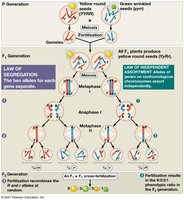
Mendel’s laws of segregation and independent assortment are explained by the behavior of chromosomes during meiosis.
Law of Segregation: Each parent passes one allele for each gene to offspring.
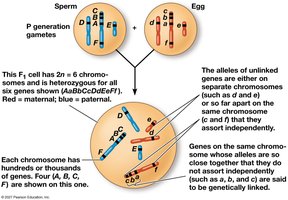
Law of Independent Assortment: Alleles of different genes assort independently if they are on different chromosomes.
Concept 15.2: Sex-Linked Genes and Patterns of Inheritance
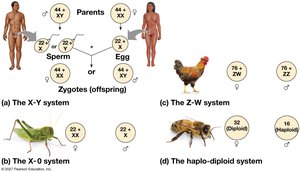
Sex-linked genes are located on sex chromosomes and exhibit distinct inheritance patterns. The X-Y system is common in mammals, but other systems exist in different organisms.
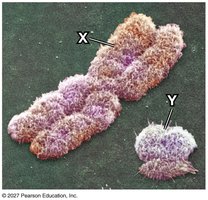
Sex Chromosomes: X and Y chromosomes determine sex in mammals; other systems include X-0, Z-W, and haplo-diploid.
S R Y Gene: Located on the Y chromosome, responsible for testis development.
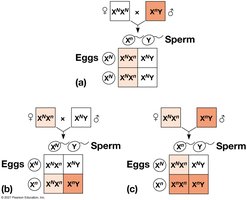
X-linked Genes: Genes on the X chromosome; males are hemizygous, females can be homozygous or heterozygous.
Inheritance Patterns: X-linked recessive traits are more common in males.
X Inactivation in Female Mammals
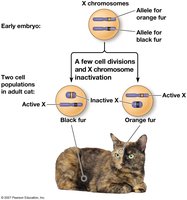
In female mammals, one X chromosome is randomly inactivated, forming a Barr body. This results in mosaic expression of X-linked genes.
Barr Body: Inactive X chromosome in female cells.
XIST Gene: Initiates X inactivation.
Mosaicism: Heterozygous females express both alleles in different cells.
Concept 15.3: Linked Genes and Genetic Recombination
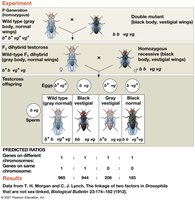
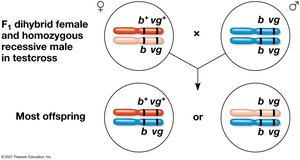
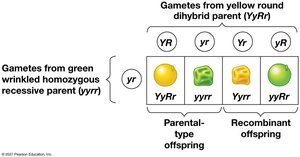
Linked genes are located near each other on the same chromosome and tend to be inherited together. Genetic recombination can separate linked genes, producing new allele combinations.
Linked Genes: Genes on the same chromosome that do not assort independently.
Genetic Recombination: Production of offspring with new combinations of traits.
Crossing Over: Physical exchange of chromosome segments during meiosis.
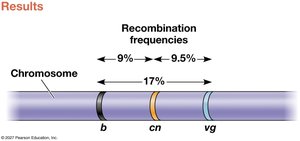
Recombination Frequency: Used to map gene distances; 1% recombination = 1 map unit.
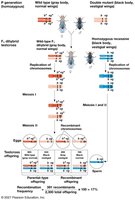
Mapping Genes Using Recombination Data
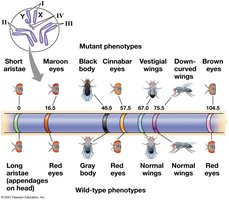
Genetic maps, or linkage maps, are constructed using recombination frequencies. Genes farther apart have higher recombination frequencies.
Linkage Map: Ordered list of genetic loci based on recombination data.
Map Units: Relative distance between genes; not absolute positions.
Linkage Groups: Genes clustered on the same chromosome.
Concept 15.4: Chromosomal Alterations and Genetic Disorders
Alterations in chromosome number or structure can cause genetic disorders. These changes are often more tolerated in plants than animals.
Nondisjunction: Failure of chromosome pairs to separate properly during meiosis.
Aneuploidy: Abnormal number of chromosomes (e.g., monosomy, trisomy).
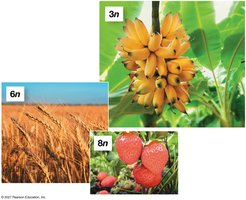
Polyploidy: More than two complete sets of chromosomes; common in plants.
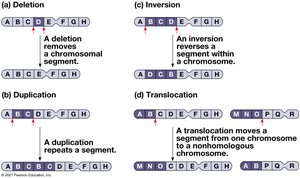
Structural Alterations: Deletion, duplication, inversion, translocation.
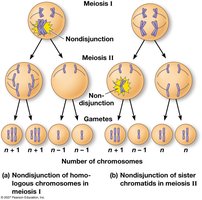
Human Conditions Due to Chromosomal Alterations
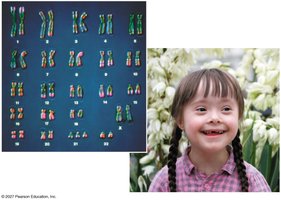
Specific syndromes result from chromosomal alterations, such as Down syndrome (trisomy 21), Klinefelter syndrome (XXY), Turner syndrome (X0), and cri du chat syndrome (deletion in chromosome 5).
Down Syndrome: Three copies of chromosome 21; increased risk with maternal age.
Klinefelter Syndrome: XXY males; mild symptoms.
Turner Syndrome: X0 females; only viable monosomy in humans.
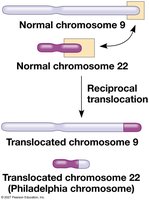
Cancer: Some cancers, like chronic myelogenous leukemia, are caused by chromosomal translocations.
Concept 15.5: Exceptions to Mendelian Inheritance
Some inheritance patterns deviate from Mendelian genetics, including genomic imprinting and inheritance of organelle genes.
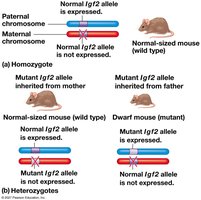
Genomic Imprinting: Phenotype depends on which parent passed the allele; involves gene silencing via methylation.
Inheritance of Organelle Genes: Genes in mitochondria and chloroplasts are inherited maternally.
Mitochondrial Disorders: Defects in mitochondrial genes can cause diseases affecting energy production.

Scientific Skills: Chi-Square Test in Genetics
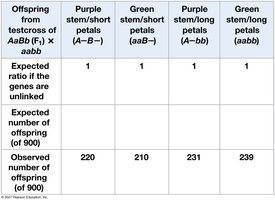
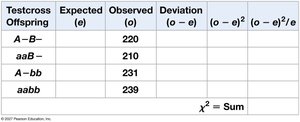
The chi-square test is used to analyze genetic data and determine if observed results match expected ratios.
Chi-Square Formula: , where o is observed and e is expected.
Application: Used to test hypotheses about genetic linkage and inheritance patterns.
Summary Table: Linked Genes
Linked genes do not assort independently and are inherited together unless separated by recombination.
Additional info:
These notes expand on brief points with academic context, definitions, and examples to ensure completeness and clarity for exam preparation.
