Indietro
Chapter 2: The Chemical Context of Life – General Biology Study Notes
Guida di studio - Note intelligenti
 Appunti personalizzati basati sui tuoi materiali, ampliati con definizioni chiave, esempi e contesto.
The Chemical Context of Life
Overview: Chemistry and Biology
Biology is a multidisciplinary science, and living organisms are subject to the basic laws of physics and chemistry. Understanding these principles is essential for comprehending biological processes. - Key Point: Biology relies on chemical principles to explain life processes. - Example: The periodic table and chemical reactions are foundational to biological understanding. 
Concept 2.1: Matter and Elements
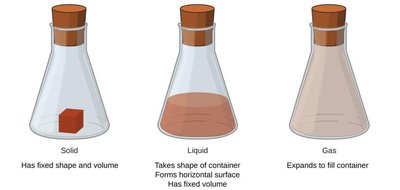
Matter is anything that takes up space and has mass. It exists in three phases: solid, liquid, or gas. - Definition: Matter is composed of elements, which are substances that cannot be broken down by chemical reactions. - Mass: The measurement of how much matter something occupies, measured in grams. - Mass vs. Weight: Mass is constant; weight depends on gravity. 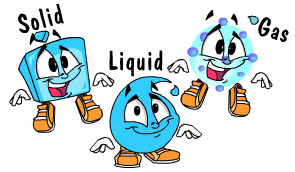
Elements and Atoms
All matter is made of elements, each comprised of atoms. - Element: A substance made of only one type of atom. - Atom: The smallest unit of matter that retains the properties of an element. - Periodic Table: Elements are organized by atomic number and properties. 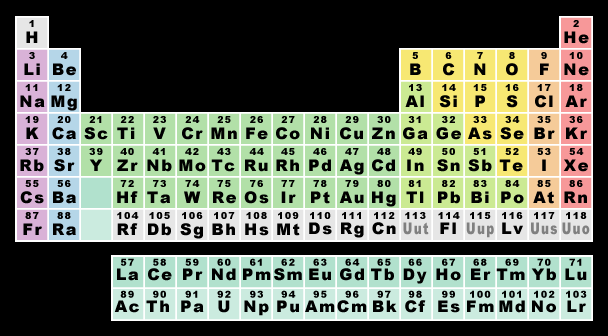
Atoms and Atomic Structure
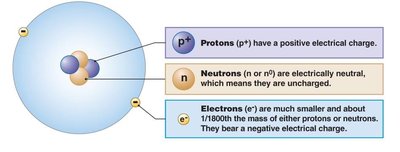
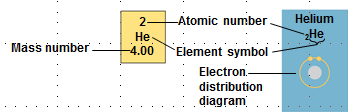
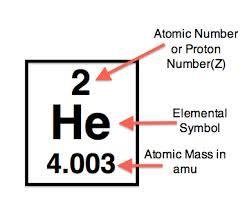
Atoms consist of subatomic particles: protons, neutrons, and electrons. - Protons: Positive charge, found in nucleus. - Neutrons: No charge, found in nucleus. - Electrons: Negative charge, found outside nucleus. - Atomic Number: Number of protons in the nucleus. - Mass Number: Number of protons plus neutrons. - Atomic Mass: Average mass of an atom, approximated by mass number. 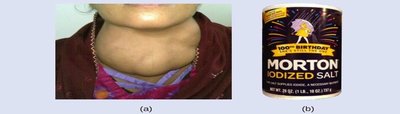
Essential Elements and Trace Elements
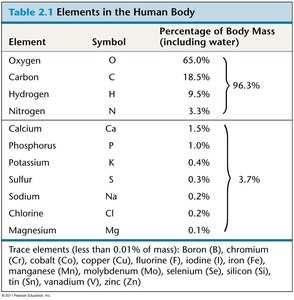
About 20–25% of the 92 naturally occurring elements are required for life. - Key Elements: Carbon (C), Hydrogen (H), Oxygen (O), and Nitrogen (N) make up 96% of living matter. - Other Elements: Calcium, phosphorus, potassium, and sulfur are also important. - Trace Elements: Required in minute quantities (e.g., iodine for thyroid function).
Element | Symbol | Percentage of Body Mass |
|---|---|---|
Oxygen | O | 65.0% |
Carbon | C | 18.5% |
Hydrogen | H | 9.5% |
Nitrogen | N | 3.3% |
Calcium | Ca | 1.5% |
Phosphorus | P | 1.0% |
Potassium | K | 0.4% |
Sulfur | S | 0.3% |
Sodium | Na | 0.2% |
Chlorine | Cl | 0.2% |
Magnesium | Mg | 0.1% |
Isotopes and Radioactivity
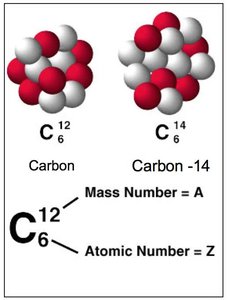
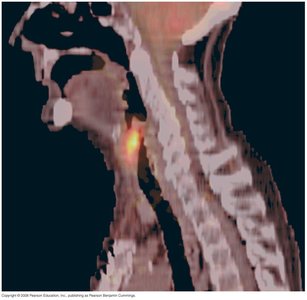
Isotopes are atoms of the same element with different numbers of neutrons. - Stable Isotope: Does not decay. - Radioactive Isotope: Unstable, decays spontaneously, emitting radiation. - Applications: Used in dating fossils, tracing metabolic processes, diagnosing medical disorders, and treating cancer. 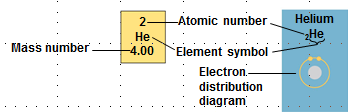
Electron Distribution and Chemical Properties
The chemical behavior of an atom is determined by the distribution of electrons in electron shells. - Valence Shell: Outermost electron shell; electrons here are called valence electrons. - Bonding Capacity: The atom’s valence. - Inert Elements: Elements with full valence shells are chemically inert (e.g., noble gases). 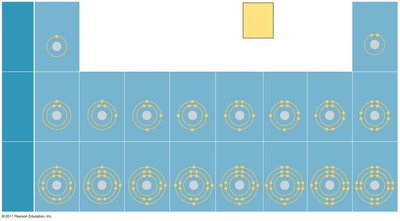
Types of Chemical Bonds
Atoms with incomplete valence shells can share or transfer valence electrons, forming chemical bonds.
Ionic Bonds
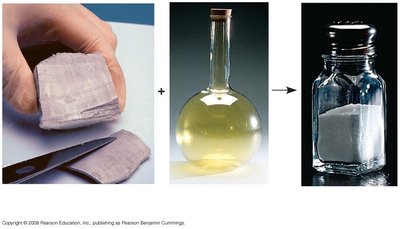
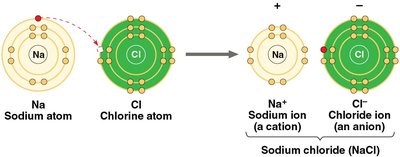
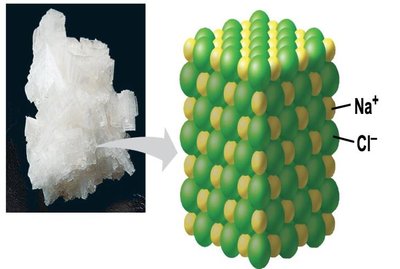
- Ionic Bond: Attraction between oppositely charged ions (cation and anion). - Formation: Electron transfer from one atom to another. - Example: Sodium chloride (NaCl) formation. 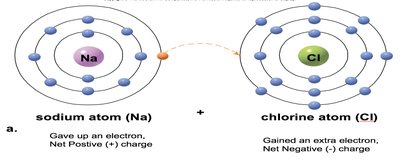
Covalent Bonds
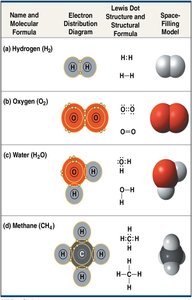
- Covalent Bond: Two atoms share a pair of valence electrons. - Single Bond: Sharing one pair of electrons (e.g., H—H). - Double Bond: Sharing two pairs of electrons (e.g., O═O). - Molecule: Two or more atoms held together by covalent bonds. 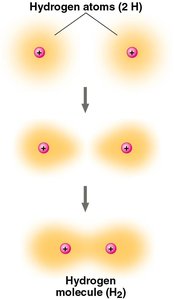
Name & Formula | Electron Distribution | Lewis Dot Structure | Space-Filling Model |
|---|---|---|---|
Hydrogen (H2) | Diagram | H—H | Model |
Oxygen (O2) | Diagram | O═O | Model |
Water (H2O) | Diagram | H—O—H | Model |
Methane (CH4) | Diagram | H—C—H | Model |
Nonpolar and Polar Covalent Bonds
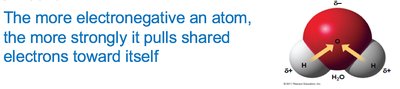
- Nonpolar Covalent Bond: Electrons are shared equally (e.g., H2). - Polar Covalent Bond: Electrons are shared unequally, resulting in partial charges (e.g., H2O). - Electronegativity: An atom’s attraction for electrons in a covalent bond; higher with more protons. 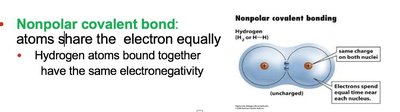
Hydrogen Bonds
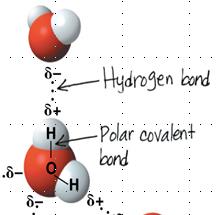
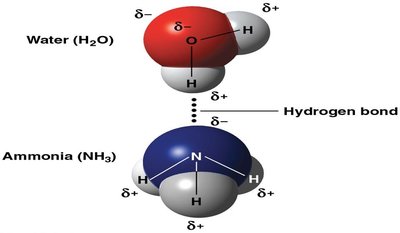
- Hydrogen Bond: Attraction between a hydrogen atom carrying a partial positive charge and an electronegative atom (usually oxygen or nitrogen). - Importance: Weak but crucial for the structure of DNA and proteins. 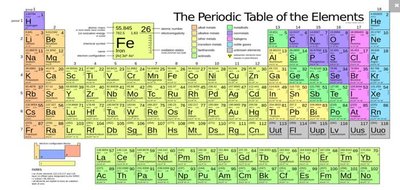
Van der Waals Interactions
- Van der Waals Forces: Weak attractions between molecules due to transient positive and negative regions. - Example: Gecko’s toe hairs adhere to surfaces via these forces.
Strength of Chemical Bonds
- Strongest Bonds: Covalent and ionic bonds. - Weaker Bonds: Hydrogen bonds and van der Waals interactions. - Biological Importance: Weak bonds help reinforce shapes of large molecules and facilitate molecular interactions.
Concept 2.4: Chemical Reactions
Chemical reactions make and break chemical bonds, rearranging matter. - Law of Conservation of Matter: Matter cannot be created or destroyed, only rearranged. - Photosynthesis: Sunlight powers the conversion of carbon dioxide and water to glucose and oxygen.
Chemical Equilibrium
All chemical reactions are reversible. - Equilibrium: Forward and reverse reactions occur at the same rate; concentrations of reactants and products remain constant.
Quick Review and Practice Questions
- What is Matter? Anything that takes up space and has mass. - 96% of life is made of: C, H, O, N. - Element: Cannot be broken down by chemical means; made of atoms. - Atomic Number: Number of protons. - Atomic Mass: Protons plus neutrons. - Isotopes: Differ in neutron number. - Types of Bonds: Ionic, covalent (nonpolar and polar), hydrogen, van der Waals.
Practice Terminology Table
Term | Definition |
|---|---|
Anion | Negatively charged ion |
Cation | Positively charged ion |
Covalent bond | Pair of electrons shared by two atoms |
Ion | Atom that gains or loses electrons |
Electrons | Capture and transfer energy |
Isotopes | Atoms with different number of neutrons |
Atomic number | Number of protons |
Atomic mass | Protons plus neutrons |
Summary
Understanding the chemical context of life is fundamental to biology. Atoms, elements, and chemical bonds form the basis of biological molecules and processes. Mastery of these concepts is essential for further study in biology.