 Indietro
Chapter 26: Phylogeny and the Tree of Life – Study Notes
Guida di studio - Note intelligenti
 Appunti personalizzati basati sui tuoi materiali, ampliati con definizioni chiave, esempi e contesto.
Phylogeny and the Tree of Life
Introduction to Phylogeny
Phylogeny is the evolutionary history of a species or group of related species. Understanding phylogeny allows biologists to reconstruct the evolutionary relationships among organisms, which is essential for classifying life and studying evolutionary processes.
Phylogeny: The evolutionary history and relationships among individuals or groups of organisms.
Systematics: The scientific discipline focused on classifying organisms and determining their evolutionary relationships.
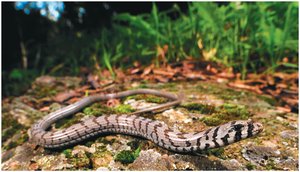
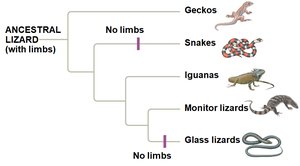
Example: Phylogenetic analysis reveals that legless lizards and snakes evolved from different lineages of legged lizards.
Taxonomy and Binomial Nomenclature
Binomial Nomenclature
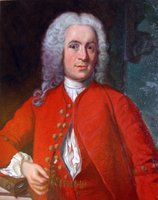
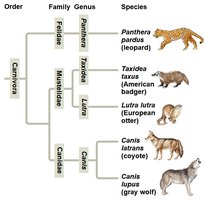
Developed by Carolus Linnaeus in the 18th century, binomial nomenclature is the formal system of naming species. Each species is given a two-part Latin name: the genus and the specific epithet.
The genus name is capitalized; the specific epithet is not.
Both parts are italicized or underlined (e.g., Homo sapiens).
This system provides a universal language for scientists worldwide.
Hierarchical Classification
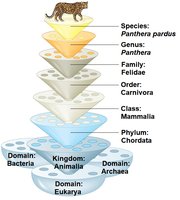
Linnaeus also introduced a hierarchical system for grouping species into increasingly broad categories. The main taxonomic ranks are:
Domain
Kingdom
Phylum
Class
Order
Family
Genus
Species
A taxon is any named group at any level of the hierarchy.
Linking Classification and Phylogeny
Phylogenetic Trees
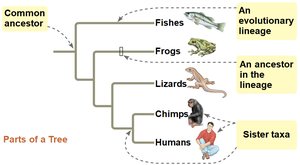
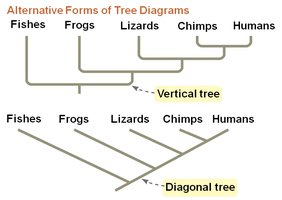
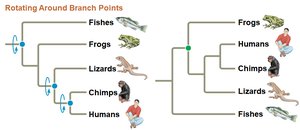
Phylogenetic trees are branching diagrams that represent hypotheses about evolutionary relationships. The tips of the branches represent taxa, and branch points (nodes) represent common ancestors.
Phylogenetic trees show patterns of descent, not phenotypic similarity.
They do not indicate the exact time of divergence or the amount of evolutionary change.
Sister taxa are groups that share an immediate common ancestor.
Inferring Phylogenies
Homology vs. Analogy
To infer phylogenies, systematists compare morphological, genetic, and biochemical data. It is crucial to distinguish between:
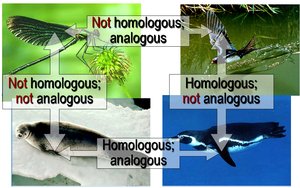
Homology: Similarity due to shared ancestry (e.g., vertebrate forelimbs).
Analogy: Similarity due to convergent evolution, not common ancestry (e.g., wings of birds and insects).
Cladistics and Phylogenetic Groupings
Cladistics and Clades
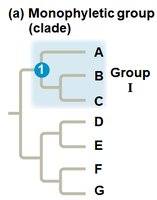
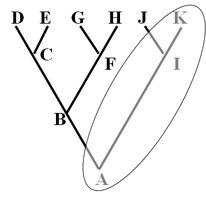
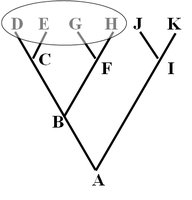
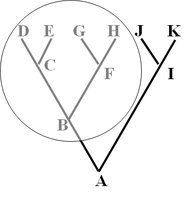
Cladistics is a method of classification based on common ancestry. A clade is a group of species that includes an ancestral species and all its descendants.
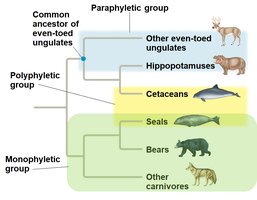
Monophyletic group (clade): Includes ancestor and all descendants.
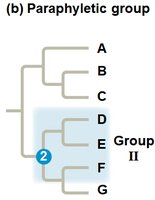
Paraphyletic group: Includes ancestor and some, but not all, descendants.
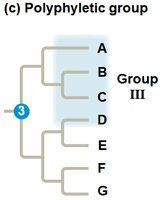
Polyphyletic group: Includes distantly related species but not their most recent common ancestor.
Shared Ancestral vs. Shared Derived Characters
Characters used in cladistics can be:
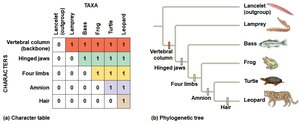
Shared ancestral character: Originated in an ancestor of the taxon (e.g., vertebral column in vertebrates).
Shared derived character: Evolutionary novelty unique to a particular clade (e.g., hair in mammals).
Outgroups in Phylogenetic Analysis
An outgroup is a species or group closely related to but not part of the group being studied (ingroup). Outgroups help distinguish between ancestral and derived characters.
Phylogenetic Tree Construction
Cladogram Construction and Practice
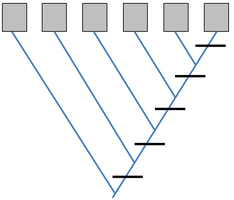
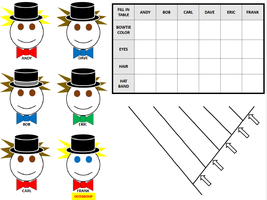
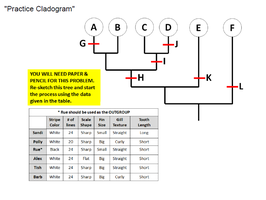
Cladograms are constructed by analyzing the presence or absence of characters among taxa. Practice exercises often involve filling in character tables and drawing trees based on shared derived characters.
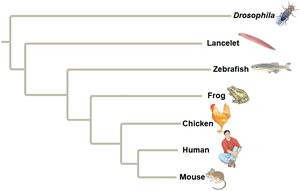
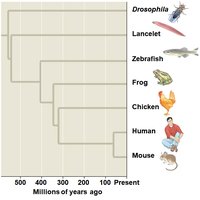
Branch Lengths in Phylogenetic Trees
Branch lengths can represent the number of genetic changes or the passage of time, depending on the tree. Longer branches indicate more genetic changes or longer time intervals.
Maximum Parsimony and Maximum Likelihood
These are principles used to select the best phylogenetic tree:
Maximum parsimony: The simplest explanation (fewest evolutionary changes) is preferred.
Maximum likelihood: The tree most likely to have produced the observed data, given specific models of DNA change.
Genomic Evidence and Molecular Clocks
Genomic Data in Phylogeny
Comparing DNA, RNA, or protein sequences helps trace evolutionary history. Some genes, like rRNA, evolve slowly and are useful for studying ancient divergences, while others, like mitochondrial DNA (mtDNA), evolve rapidly and are useful for recent events.
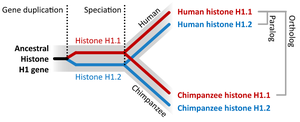
Gene Duplications: Orthologous and Paralogous Genes
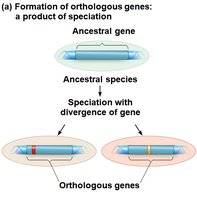
Orthologous genes: Found in different species, diverged after a speciation event.
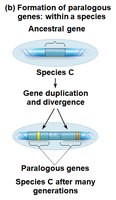
Paralogous genes: Result from gene duplication within a species and may evolve new functions.
Genome Evolution
Orthologous genes are widespread across species.
Gene number does not directly correlate with organismal complexity.
Genes in complex organisms can encode multiple proteins with diverse functions.
Molecular Clocks
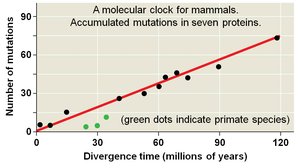
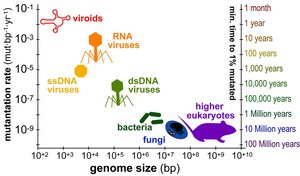
A molecular clock uses the rate of genetic mutations to estimate the timing of evolutionary events. The clock is calibrated using fossil records or known divergence times.
In orthologous genes, substitutions are proportional to time since last common ancestor.
In paralogous genes, substitutions are proportional to time since gene duplication.
Applications and Limitations of Molecular Clocks
Clock rates vary among genes and organisms.
Natural selection and non-neutral mutations can cause irregularities.
Multiple genes and calibration points improve accuracy.
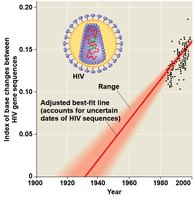
Example: Molecular clock analysis suggests HIV spread to humans in the early 20th century.
The Tree of Life and Horizontal Gene Transfer
Three-Domain System
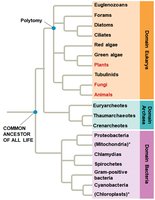
Modern classification recognizes three domains: Bacteria, Archaea, and Eukarya. This system is supported by molecular data, especially rRNA sequences.
Horizontal Gene Transfer
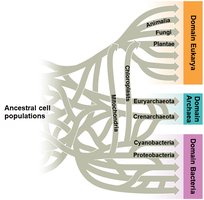
Horizontal gene transfer (HGT) is the movement of genes between different species, which can blur evolutionary relationships. HGT occurs via plasmids, viruses, and other mechanisms, and has played a significant role in the evolution of both prokaryotes and eukaryotes.
HGT can result in gene trees that differ from organismal phylogenies.
Some biologists propose representing early life as a network rather than a simple tree due to extensive HGT.
Summary Table: Types of Phylogenetic Groups
Group Type | Definition | Example |
|---|---|---|
Monophyletic | Includes ancestor and all descendants | Mammals |
Paraphyletic | Includes ancestor and some descendants | Reptiles (excluding birds) |
Polyphyletic | Includes distantly related species, not their common ancestor | Marine mammals (seals, whales) |
Additional info: These notes expand on the original lecture slides by providing definitions, examples, and context for key concepts in phylogeny, taxonomy, and molecular systematics. Practice exercises and diagrams are referenced to reinforce understanding of tree construction and evolutionary relationships.
