Indietro
Chapter 30: An Introduction to Animals – Structure, Diversity, and Evolution
Guida di studio - Note intelligenti
 Appunti personalizzati basati sui tuoi materiali, ampliati con definizioni chiave, esempi e contesto.
An Introduction to Animals
Overview of Animal Diversity
Animals are a major group of multicellular eukaryotes distinguished by their unique evolutionary history, structural complexity, and ecological roles. This chapter explores the origin, classification, and diversification of animal phyla, focusing on key innovations and evolutionary relationships.
Key Learning Objectives
Define what constitutes an animal and distinguish animals from other eukaryotes.
Describe the evolutionary relationships among major animal phyla.
Identify key innovations in animal body plans and sensory systems.
Explain the ecological roles and feeding strategies of animals.
Animal Evolution and Phylogeny
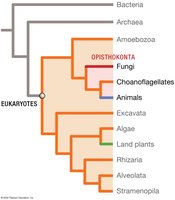
Animals and Their Closest Relatives
Animals are part of the eukaryotic supergroup Opisthokonta, which also includes fungi and choanoflagellates. Molecular and morphological evidence shows that choanoflagellates are the sister group to animals, sharing a common ancestor.
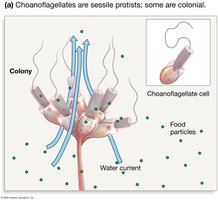
Choanoflagellates: Unicellular or colonial protists with a flagellum surrounded by a collar of microvilli.
Animals: Multicellular, heterotrophic organisms with specialized tissues.
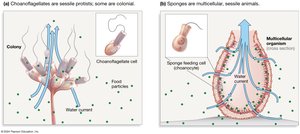
Phylogenetic relationships: Animals and choanoflagellates share structural similarities, especially in feeding cells.
Major Animal Phyla
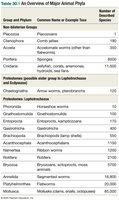
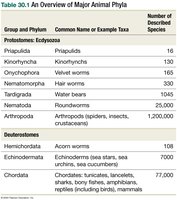
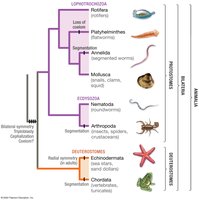
Animal phyla are classified based on body plan, symmetry, tissue layers, and developmental patterns. The Cambrian explosion marked the rapid diversification of most animal phyla.
Non-bilaterian groups: Placozoa, Ctenophora, Cnidaria, Porifera
Bilaterian groups: Protostomes (Lophotrochozoa, Ecdysozoa), Deuterostomes
Key innovations: Multicellularity, tissue differentiation, bilateral symmetry, segmentation
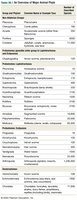
Group and Phylum | Common Name or Example Taxa | Number of Described Species |
|---|---|---|
Porifera | Sponges | 8,500 |
Cnidaria | Jellyfish, corals, anemones | 11,500 |
Platyhelminthes | Flatworms | 20,000 |
Mollusca | Snails, clams, squids | 85,000 |
Arthropoda | Insects, spiders, crustaceans | 1,200,000 |
Chordata | Vertebrates (fish, amphibians, reptiles, birds, mammals) | 77,000 |
Phylogenetic Trees and Animal Relationships
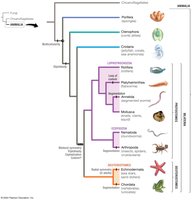
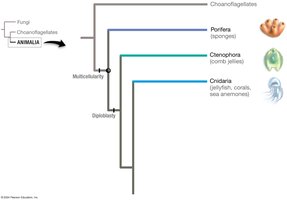
Phylogenetic trees based on DNA sequence data reveal evolutionary relationships among animal phyla. These trees help clarify the origin of multicellularity, tissue layers, and symmetry.
Multicellularity evolved in the ancestor of animals.
Diploblasty (two tissue layers) and triploblasty (three tissue layers) are key innovations.
Bilateral symmetry is a major evolutionary development.
Animal Body Plans
Cellular and Tissue Organization
Animals are distinguished by their cellular organization and tissue differentiation. Sponges (Porifera) lack true tissues, while other animals possess specialized tissue layers.
Choanoflagellates: Sessile protists, some are colonial.
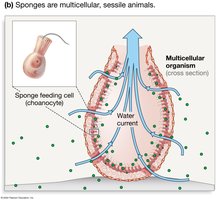
Sponges: Multicellular, sessile animals with feeding cells (choanocytes) similar to choanoflagellates.
Tissue Layers: Diploblasts and Triploblasts
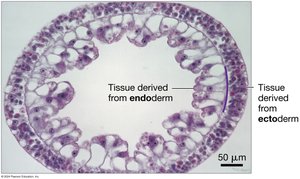
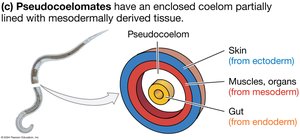
Animals are classified based on the number of embryonic tissue layers. Diploblasts have two layers (ectoderm and endoderm), while triploblasts have three (ectoderm, mesoderm, endoderm).
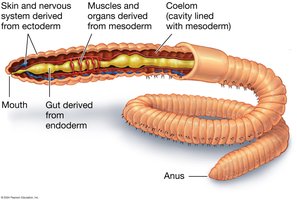
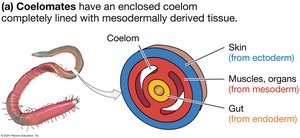
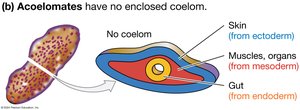
Ectoderm: Gives rise to skin and nervous system.
Endoderm: Forms the gut lining.
Mesoderm: Develops into muscles and organs (in triploblasts).
Body Symmetry
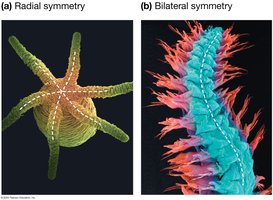
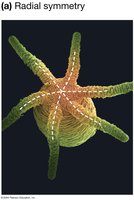
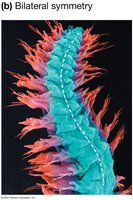
Symmetry is a fundamental aspect of animal body plans. Most animals exhibit either radial or bilateral symmetry, which influences their movement and nervous system organization.
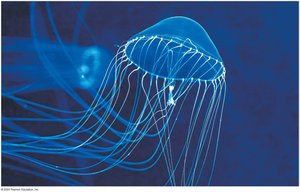
Radial symmetry: Body parts arranged around a central axis (e.g., jellyfish, starfish).
Bilateral symmetry: Body has left and right sides, allowing for directional movement and cephalization (development of a head region).
Genetic Evidence for Symmetry
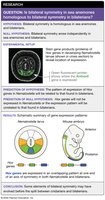
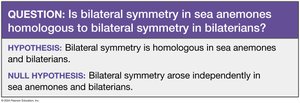
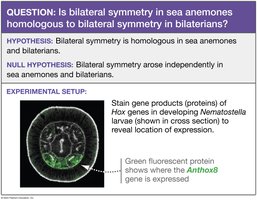
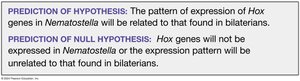
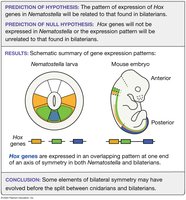
Genetic studies reveal homology in the development of bilateral symmetry between cnidarians and bilaterians. Hox genes play a crucial role in tissue segmentation and body patterning.
Hox genes: Regulate the development of body axes and segmentation.
Similar expression patterns in sea anemones and bilaterians suggest evolutionary conservation.
Association of Symmetry with Nervous System
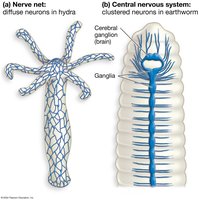
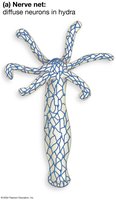
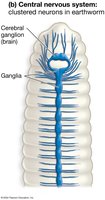
Body symmetry is closely linked to the organization of the nervous system. Radially symmetric animals typically have a nerve net, while bilaterally symmetric animals possess a central nervous system.
Nerve net: Diffuse network of neurons (e.g., hydra).
Central nervous system: Clustered neurons forming ganglia and a brain (e.g., earthworm).
Tube-within-a-Tube Body Plan
Bilaterians often exhibit a tube-within-a-tube body plan, with a digestive tract running from mouth to anus and a body cavity (coelom) surrounding it.
Coelom: Fluid-filled cavity lined with mesoderm, providing space for organ development and movement.
Body plan: Allows for specialization of internal organs and efficient digestion.
Coelom Types
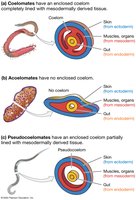
Animals are further classified based on the presence and structure of the coelom.
Coelomates: Have a true coelom completely lined with mesoderm.
Acoelomates: Lack a coelom.
Pseudocoelomates: Have a coelom partially lined with mesoderm.
Diversification of Sensory Organs
Types of Sensory Organs
Animals have evolved a wide variety of sensory organs to detect environmental stimuli, aiding in survival and reproduction.
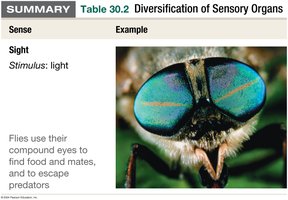
Sight: Compound eyes in flies detect light.
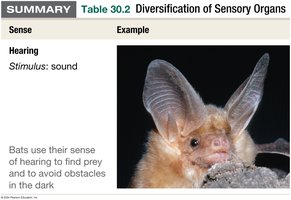
Hearing: Bats use hearing to locate prey and navigate.
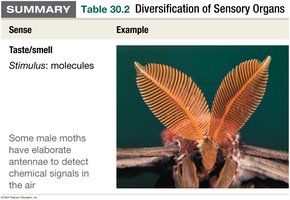
Taste/Smell: Moths use antennae to detect chemical signals.
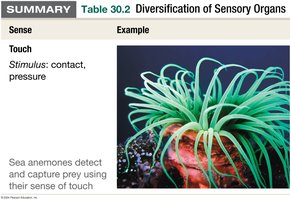
Touch: Sea anemones sense contact and pressure.
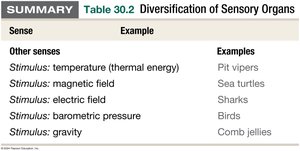
Other senses: Temperature, magnetic field, electric field, barometric pressure, gravity.
Sense | Example |
|---|---|
Sight (light) | Flies use compound eyes |
Hearing (sound) | Bats use hearing |
Taste/Smell (molecules) | Moths use antennae |
Touch (contact, pressure) | Sea anemones detect prey |
Other senses | Pit vipers (temperature), Sea turtles (magnetic field), Sharks (electric field), Birds (barometric pressure), Comb jellies (gravity) |
Diversification of Ecological Roles
Ecological Roles of Animals
Animals occupy diverse ecological niches, playing critical roles in food webs and ecosystem functioning.
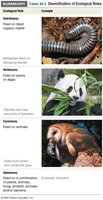
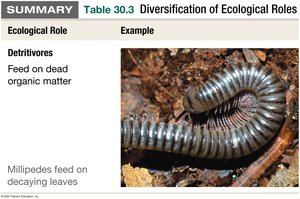
Detritivores: Feed on dead organic matter (e.g., millipedes).
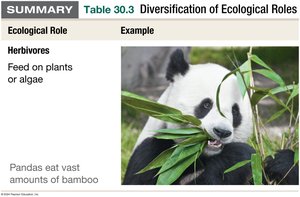
Herbivores: Feed on plants or algae (e.g., pandas).
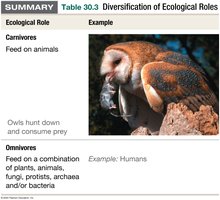
Carnivores: Feed on animals (e.g., owls).
Omnivores: Feed on a combination of plants, animals, fungi, protists, archaea, or bacteria (e.g., humans).
Ecological Role | Example |
|---|---|
Detritivores | Millipedes feed on decaying leaves |
Herbivores | Pandas eat bamboo |
Carnivores | Owls hunt prey |
Omnivores | Humans |
Diversification of Feeding Strategies
Feeding Strategies in Animals
Animals have evolved various feeding strategies to exploit different food sources.
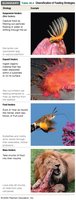
Suspension feeders: Capture food particles from water (e.g., clams).
Deposit feeders: Consume organic matter from sediments (e.g., earthworms).
Fluid feeders: Suck or absorb fluids (e.g., butterflies).
Mass feeders: Ingest large chunks of food (e.g., lions).
Feeding Strategy | Example |
|---|---|
Suspension feeders | Clams filter food from water |
Deposit feeders | Earthworms eat soil |
Fluid feeders | Butterflies feed on nectar |
Mass feeders | Lions eat meat |