 Indietro
Chapter 31: Fungi – Structure, Function, and Ecological Roles
Guida di studio - Note intelligenti
 Appunti personalizzati basati sui tuoi materiali, ampliati con definizioni chiave, esempi e contesto.
Fungi: Structure, Function, and Ecological Roles
Introduction to Fungi
Fungi are a diverse kingdom of eukaryotic organisms that play essential roles in ecosystems, primarily as decomposers. Their unique structures are closely tied to their ecological functions, including nutrient cycling and symbiotic relationships.
Fungal Structure and Function
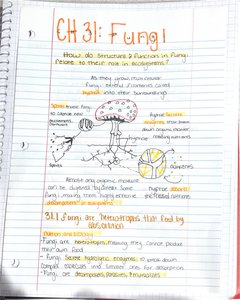
Hyphae: Thread-like filaments that make up the body of the fungus. They provide a large surface area for absorption of nutrients.
Mycelium: A network of hyphae that forms the main growing structure of the fungus, often hidden in soil or decaying material.
Fruiting Body: The reproductive structure (e.g., mushroom) that produces spores for dispersal.
Cell Wall: Composed mainly of chitin, providing rigidity and protection.
Fungi as Heterotrophs
All fungi are heterotrophs, meaning they obtain food by absorbing nutrients from external sources. They secrete enzymes to break down complex molecules into simpler compounds that can be absorbed.
Decomposers: Break down dead organic matter, recycling nutrients in ecosystems.
Parasites: Absorb nutrients from living hosts, sometimes causing disease.
Mutualists: Form beneficial relationships with other organisms (e.g., mycorrhizae with plants, lichens with algae/cyanobacteria).
Ecological Roles of Fungi
Decomposition: Fungi decompose organic material, releasing carbon, nitrogen, and other elements back into the environment.
Symbiosis: Fungi form mutualistic relationships, such as mycorrhizae (fungus-root associations) and lichens.
Pathogenic Fungi: Some fungi cause diseases in plants and animals (e.g., athlete's foot, ringworm, rusts, and smuts in crops).
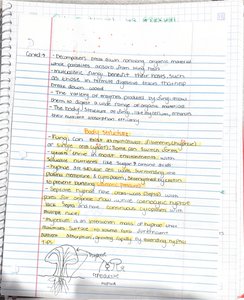
Fungal Body Structure
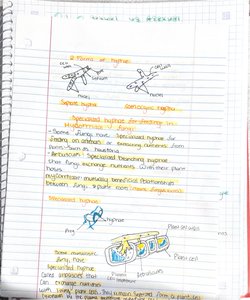
Hyphae Types: Septate hyphae (with cross-walls called septa) and coenocytic hyphae (without septa, multinucleate).
Specialized Hyphae: Some hyphae are adapted for trapping prey or forming symbiotic relationships (e.g., haustoria in parasitic fungi).
Forms and Functions of Hyphae
Spore Hyphae: Involved in reproduction and dispersal.
Genetic Hyphae: Involved in genetic exchange during sexual reproduction.
Mycorrhizal Hyphae: Specialized for mutualistic relationships with plant roots, enhancing nutrient uptake for plants.
Haustoria: Specialized hyphae for extracting nutrients from host cells in parasitic relationships.
Fungal Reproduction
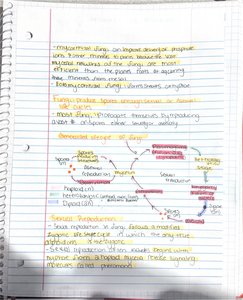
Fungi reproduce both sexually and asexually, often involving the production of spores.
Asexual Reproduction: Most fungi reproduce asexually by producing spores through mitosis. These spores germinate to form new mycelia.
Sexual Reproduction: Involves the fusion of hyphae from two different mating types, leading to genetic recombination. The process includes plasmogamy (fusion of cytoplasm), karyogamy (fusion of nuclei), and meiosis.
Summary Table: Fungal Structure and Function
Structure | Function |
|---|---|
Hyphae | Absorption of nutrients, growth, and forming mycelium |
Mycelium | Main body for nutrient absorption and substrate colonization |
Fruiting Body | Production and dispersal of spores |
Cell Wall (Chitin) | Structural support and protection |
Specialized Hyphae (e.g., haustoria) | Parasitism, mutualism, or prey capture |
Key Terms
Hyphae: Filamentous structures forming the body of fungi.
Mycelium: Mass of hyphae; main vegetative part of fungus.
Chitin: Polysaccharide forming fungal cell walls.
Mycorrhizae: Symbiotic association between fungi and plant roots.
Haustoria: Specialized hyphae for nutrient absorption from hosts.
Plasmogamy: Fusion of cytoplasm from two parent mycelia.
Karyogamy: Fusion of nuclei from two parent cells.
Additional info:
Fungi are essential for nutrient cycling and ecosystem health.
Some fungi are used in food production (e.g., yeast in bread, fermentation) and medicine (e.g., antibiotics like penicillin).
