 Indietro
Chapter 4: Carbon and the Molecular Diversity of Life – Study Notes
Guida di studio - Note intelligenti
 Appunti personalizzati basati sui tuoi materiali, ampliati con definizioni chiave, esempi e contesto.
Carbon and the Molecular Diversity of Life
Introduction
Carbon is the central element in organic chemistry and biology due to its unique ability to form four covalent bonds, resulting in a vast diversity of molecular structures. This chapter explores the chemical properties of carbon, the types of molecules it forms, and the functional groups that contribute to molecular diversity and biological function.
Concept 4.2: Carbon Atoms Can Form Diverse Molecules by Bonding to Four Other Atoms
Atomic Structure and Electron Configuration
The characteristics of an atom, including the number and types of bonds it can form, are determined by its electron configuration. The valence shell is the outermost electron shell, and the number of electrons in this shell determines the atom's bonding capacity.
Valence electrons: Electrons in the outermost shell available for bonding.
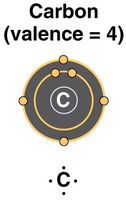
Maximum number of electrons in the valence shell for carbon: 4.
Organic molecules: Compounds containing carbon, typically bonded to hydrogen, oxygen, and nitrogen.
Carbon's importance: Its tetravalence allows it to act as the backbone for complex biological molecules.
Formation of Covalent Bonds
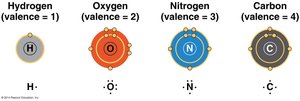
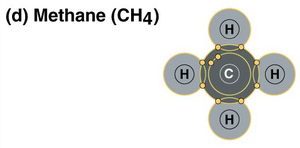
Carbon forms covalent bonds with a variety of elements, most commonly hydrogen, oxygen, and nitrogen. The number of bonds an atom forms is determined by the number of electrons needed to fill its valence shell (valence).
Valence of carbon: 4 (can form four covalent bonds).
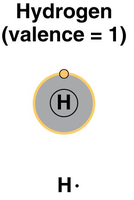
Valence of hydrogen: 1.
Valence of oxygen: 2.
Valence of nitrogen: 3.
Major Elements in Biological Molecules
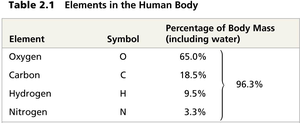
The most common elements in living organisms are oxygen, carbon, hydrogen, and nitrogen, making up over 96% of body mass.
Element | Symbol | Percentage of Body Mass (including water) |
|---|---|---|
Oxygen | O | 65.0% |
Carbon | C | 18.5% |
Hydrogen | H | 9.5% |
Nitrogen | N | 3.3% |
Carbon Skeletons and Hydrocarbons
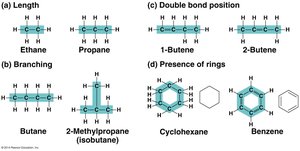
Carbon atoms can bond to each other to form the skeletons of most organic molecules. Hydrocarbons are molecules consisting only of carbon and hydrogen. The diversity of organic molecules arises from variations in the carbon skeletons.
Ways hydrocarbons can vary:
Length
Branching
Double bond position
Ring structure
Isomers: Structural Diversity in Organic Molecules
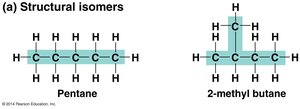
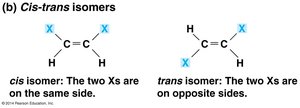
Isomers are compounds with the same molecular formula but different structures and properties. There are three main types:
Structural isomers: Differ in the covalent arrangements of their atoms.
Cis-trans (geometric) isomers: Have the same covalent bonds but differ in spatial arrangements due to inflexible double bonds.
Enantiomers: Mirror images of each other, differing in spatial arrangement around an asymmetric carbon.
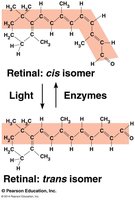
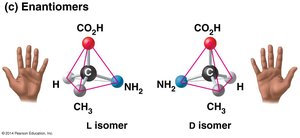
Biological Importance of Isomers
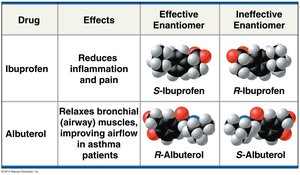
Isomers can have dramatically different biological activities. For example, only one enantiomer of a drug may be biologically active.
Drug | Effects | Effective Enantiomer | Ineffective Enantiomer |
|---|---|---|---|
Ibuprofen | Reduces inflammation and pain | S-ibuprofen | R-ibuprofen |
Albuterol | Relaxes bronchial muscles, improving airflow in asthma patients | R-albuterol | S-albuterol |
Concept 4.3: A Few Chemical Groups Are Key to Molecular Function
Functional Groups
Functional groups are specific groups of atoms attached to the carbon skeleton that are directly involved in chemical reactions. They confer unique properties to molecules, such as polarity, reactivity, and charge.
Functional groups replace hydrogen atoms on the carbon skeleton.
They are responsible for the characteristic chemical reactions of those molecules.
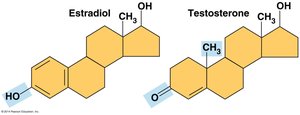
The Seven Key Functional Groups
There are seven major functional groups important in the chemistry of life:
Chemical Group | Compound Name | Examples |
|---|---|---|
Hydroxyl (–OH) | Alcohol | Ethanol |
Carbonyl (>C=O) | Ketone, Aldehyde | Acetone, Propanal |
Carboxyl (–COOH) | Carboxylic acid, Organic acid | Acetic acid |
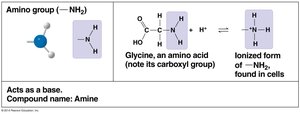
Amino (–NH2) | Amine | Glycine |
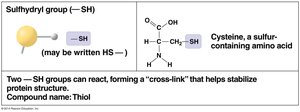
Sulfhydryl (–SH) | Thiol | Cysteine |
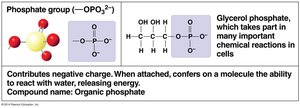
Phosphate (–OPO32–) | Organic phosphate | Glycerol phosphate |
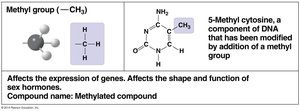
Methyl (–CH3) | Methylated compound | 5-Methyl cytosine |
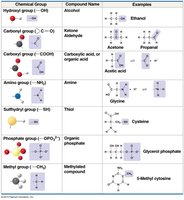
Examples of Functional Groups in Biological Molecules
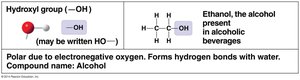
Hydroxyl group (–OH): Polar, forms hydrogen bonds with water, found in alcohols.
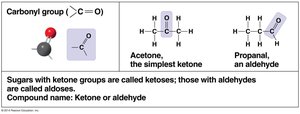
Carbonyl group (>C=O): Found in sugars, can be a ketone or aldehyde.
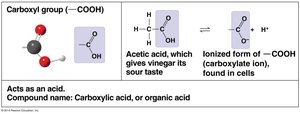
Carboxyl group (–COOH): Acts as an acid, found in amino acids and fatty acids.
Amino group (–NH2): Acts as a base, found in amino acids.
Sulfhydryl group (–SH): Forms disulfide bonds, stabilizing protein structure.
Phosphate group (–OPO32–): Contributes negative charge, involved in energy transfer (e.g., ATP).
Methyl group (–CH3): Affects gene expression and molecular shape.
Adenosine Triphosphate (ATP): The Energy Currency of the Cell
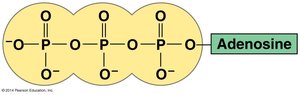
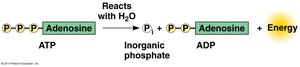
ATP is a molecule that stores and transfers energy within cells. It consists of adenosine attached to three phosphate groups. The hydrolysis of ATP releases energy used for cellular work.
ATP structure: Adenosine + three phosphate groups.
ATP hydrolysis: ATP + H2O → ADP + Pi + energy
Additional info: The diversity of organic molecules is foundational to the complexity of life. Functional groups not only determine the chemical reactivity of molecules but also their interactions with other biomolecules, influencing processes such as enzyme activity, gene expression, and cellular signaling.
