 Indietro
Chapter 5: An Introduction to Carbohydrates
Guida di studio - Note intelligenti
 Appunti personalizzati basati sui tuoi materiali, ampliati con definizioni chiave, esempi e contesto.
Carbohydrates: Structure, Function, and Importance
Introduction to Carbohydrates
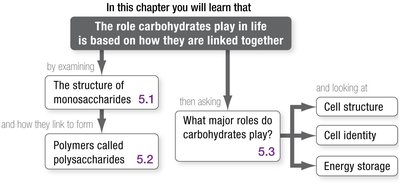
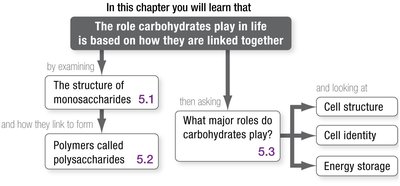
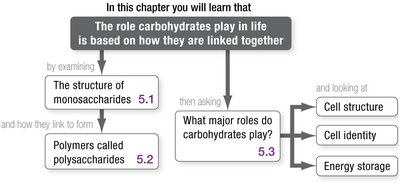
Carbohydrates are essential biomolecules that play critical roles in cell structure, cell identity, and energy storage. They are composed of carbon, hydrogen, and oxygen, typically following the general formula (CH2O)n. Carbohydrates are classified based on the number of monomer units present:
Monosaccharides: Single sugar units
Oligosaccharides: Short chains of monosaccharides
Polysaccharides: Long chains of monosaccharides
Monosaccharide Structure and Classification
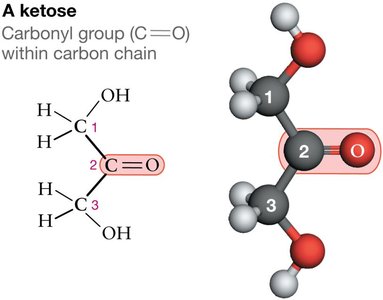
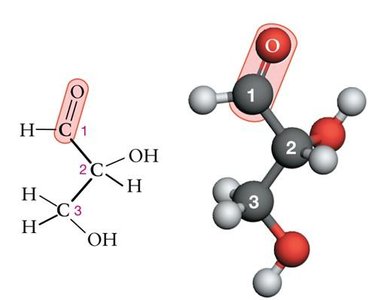
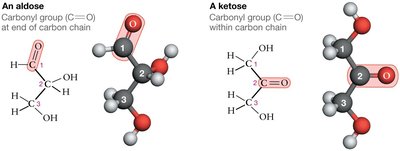
Monosaccharides are the simplest carbohydrates and serve as building blocks for more complex sugars. They contain at least three carbon atoms, a carbonyl group (C=O), and two or more hydroxyl groups (–OH). Monosaccharides can be classified by:
Location of the carbonyl group:
Aldose: Carbonyl group at the end of the carbon chain
Ketose: Carbonyl group within the carbon chain
Number of carbon atoms:
3C: Triose
4C: Tetrose
5C: Pentose
6C: Hexose
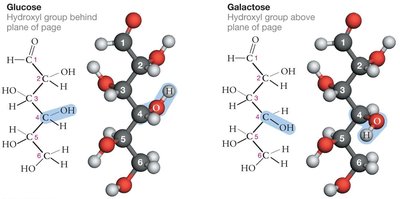
Isomers are molecules with the same molecular formula but different structural arrangements. For example, glucose and galactose are both hexoses but differ in the orientation of their hydroxyl groups.
Monosaccharide Forms: Linear and Ring Structures
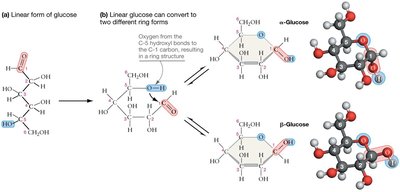
Monosaccharides can exist in both linear and ring forms. In aqueous solutions, the ring form is predominant due to the reaction between the carbonyl and a hydroxyl group within the molecule. Glucose, for example, can form either α- or β-glucose rings, which differ in the orientation of the hydroxyl group on the first carbon.
Glycosidic Linkages and Polysaccharide Formation
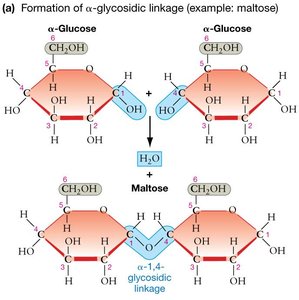
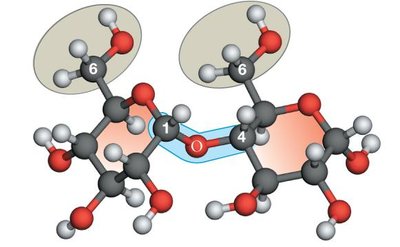
Monosaccharides polymerize through glycosidic linkages, which are covalent bonds formed via a condensation reaction between two hydroxyl groups. The resulting disaccharide can be further extended to form oligosaccharides and polysaccharides. The type of glycosidic linkage (e.g., α-1,4 or β-1,4) determines the structure and function of the polysaccharide.
Storage Polysaccharides: Starch and Glycogen
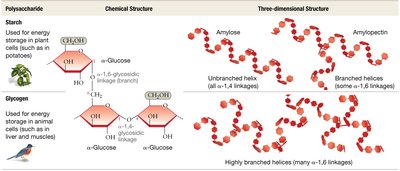
Starch (in plants) and glycogen (in animals) are polysaccharides that serve as energy storage molecules. Both are composed of α-glucose monomers but differ in their branching patterns:
Starch: Mixture of unbranched (amylose) and branched (amylopectin) helices
Glycogen: Highly branched helices, allowing rapid release of glucose
Polysaccharide | Chemical Structure | Three-dimensional Structure |
|---|---|---|
Starch | α-glucose, α-1,4 and α-1,6 linkages | Unbranched and branched helices |
Glycogen | α-glucose, α-1,4 and many α-1,6 linkages | Highly branched helices |
Structural Polysaccharides: Cellulose, Chitin, and Peptidoglycan
Some polysaccharides provide structural support:
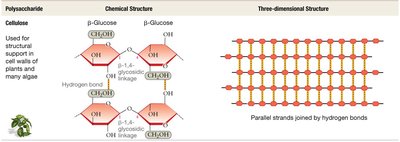
Cellulose: Found in plant cell walls; composed of β-glucose monomers joined by β-1,4-glycosidic linkages, forming parallel strands joined by hydrogen bonds.
Chitin: Found in fungal cell walls and exoskeletons of arthropods; composed of N-acetylglucosamine (NAG) monomers.
Peptidoglycan: Found in bacterial cell walls; composed of alternating N-acetylglucosamine (NAG) and N-acetylmuramic acid (NAM) monomers, cross-linked by peptide bonds.
Polysaccharide | Chemical Structure | Three-dimensional Structure |
|---|---|---|
Cellulose | β-glucose, β-1,4 linkages | Parallel strands joined by hydrogen bonds |
Chitin | β-NAG, β-1,4 linkages | Parallel strands joined by hydrogen bonds |
Peptidoglycan | β-NAM and β-NAG, β-1,4 linkages | Parallel strands joined by peptide bonds |
Carbohydrates as Structural Support and Dietary Fiber
Structural polysaccharides such as cellulose, chitin, and peptidoglycan form long strands that may organize into fibers or sheets, providing strength and elasticity to cells and organisms. The β-1,4-glycosidic linkages in these molecules are resistant to hydrolysis, making them ideal for structural roles. In the human diet, cellulose acts as dietary fiber, which is important for digestive health.
Carbohydrates and Cell Identity
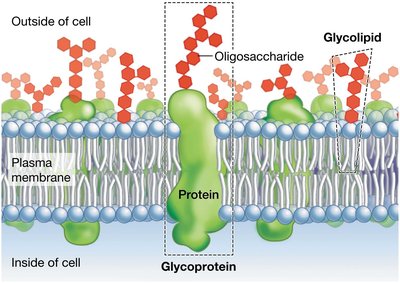
Carbohydrates are crucial for cell recognition and signaling. They are displayed on the outer surface of cells as part of glycoproteins (proteins with attached carbohydrates) and glycolipids (lipids with attached carbohydrates). These molecules are involved in:
Cell–cell recognition: Identifying cells as "self"
Cell–cell signaling: Communication between cells
Examples include the ABO blood group antigens and the recruitment of leukocytes to infection sites.
Carbohydrates and Energy Storage
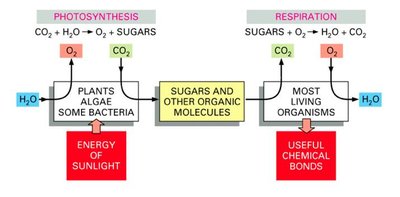
Carbohydrates store and provide chemical energy. In photosynthesis, plants capture energy from sunlight and store it in the bonds of carbohydrates:
When energy is needed, cells break down glucose through cellular respiration to produce ATP:
The energy stored in ATP is used to drive cellular processes such as polymerization and muscle contraction. Photosynthesis and cellular respiration are complementary processes in the global carbon cycle.
Summary Table: Major Types of Carbohydrates
Type | Example | Main Function |
|---|---|---|
Monosaccharide | Glucose | Energy source, building block |
Disaccharide | Maltose, Sucrose | Energy transport |
Polysaccharide | Starch, Glycogen, Cellulose | Energy storage, structural support |
Additional info: Carbohydrates are also important in nutrition, as indicated by their presence on food labels and their contribution to dietary fiber and caloric intake.
