 Indietro
Chapter 5: An Introduction to Carbohydrates – Structure, Function, and Biological Roles
Guida di studio - Note intelligenti
 Appunti personalizzati basati sui tuoi materiali, ampliati con definizioni chiave, esempi e contesto.
An Introduction to Carbohydrates
Overview of Carbohydrates
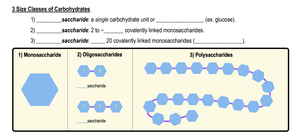
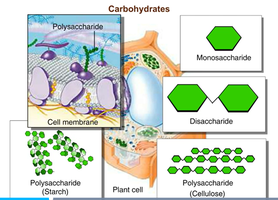
Carbohydrates are essential biomolecules that play critical roles in cell structure, cell identity, and energy storage. They are classified based on their size and complexity into monosaccharides, oligosaccharides, and polysaccharides.
Monosaccharides: Simple sugars, such as glucose, that serve as monomers for larger carbohydrates.
Oligosaccharides: Short chains of monosaccharide units (typically 2–20).
Polysaccharides: Long chains of monosaccharide units, forming complex carbohydrates.
Carbohydrate Structure and Molecular Formula
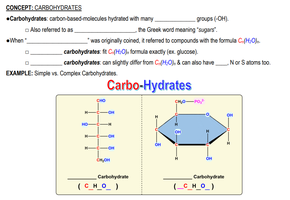
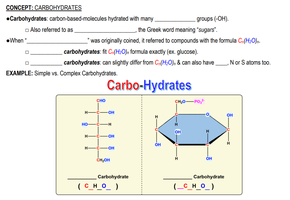
Carbohydrates generally have the molecular formula , where "n" can range from 3 to over a thousand. They contain a carbonyl group (C=O) and multiple carbon-hydrogen bonds.
Not all compounds with this formula are carbohydrates (e.g., formaldehyde).
Carbohydrates are hydrated carbon-based molecules with many hydroxyl groups (–OH).
Classification and Structural Variations of Carbohydrates
Monosaccharides: Structure and Diversity
Monosaccharides are the simplest carbohydrates and vary in several ways:
Location of the carbonyl group: At the end (aldose) or in the middle (ketose).
Number of carbon atoms: Triose (3), pentose (5), hexose (6).
Spatial arrangement of atoms: Different arrangement of hydroxyl groups.
Linear and ring forms: Sugars cyclize in aqueous solutions, forming α and β anomers.
Disaccharides and Glycosidic Linkages
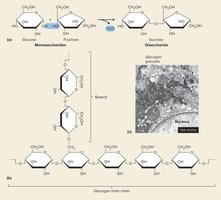
Disaccharides are formed by condensation reactions between two monosaccharides, creating a covalent bond called a glycosidic linkage. These linkages can be broken by hydrolysis reactions.
Common disaccharides include sucrose (glucose + fructose), lactose (glucose + galactose), and maltose (glucose + glucose).
Glycosidic linkages can form between any two hydroxyl groups, leading to structural diversity.
Polysaccharides: Structure and Function
Storage Polysaccharides
Polysaccharides such as starch (in plants) and glycogen (in animals) serve as energy storage molecules.
Starch: Composed of amylose (unbranched, α-1,4 linkages) and amylopectin (branched, α-1,6 linkages).
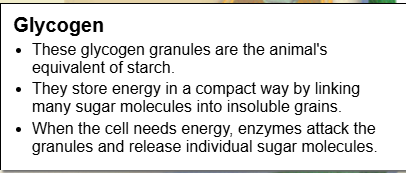
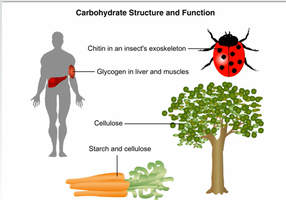
Glycogen: Highly branched α-glucose polymer, stored in liver and muscle cells.
Both are easily hydrolyzed by enzymes to release glucose for energy.
Structural Polysaccharides
Polysaccharides also provide structural support:
Cellulose: Major component of plant cell walls, composed of β-1,4 linkages; forms linear strands with hydrogen bonds.
Chitin: Found in fungal cell walls and exoskeletons of insects/crustaceans; composed of N-acetylglucosamine monomers.
Peptidoglycan: Structural polymer in bacterial cell walls, with peptide bonds between strands.
Functions of Carbohydrates in Cells
Energy Storage and Release
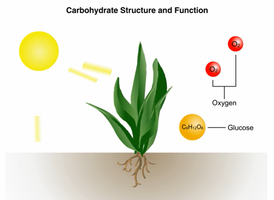
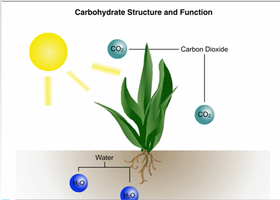
Carbohydrates store and provide chemical energy. In photosynthesis, plants convert sunlight into chemical energy stored in carbohydrate bonds.
Energy is released by hydrolysis of storage polysaccharides (starch, glycogen).
Glucose is used to generate ATP, the cell’s energy currency.
Structural Support
Carbohydrates such as cellulose, chitin, and peptidoglycan form fibers and sheets that provide strength and elasticity to cells and organisms.
β-glycosidic linkages are not easily hydrolyzed, making these fibers resistant to digestion.
Dietary fiber is important for digestive health.
Cellular Identity and Signaling
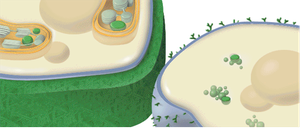
Carbohydrates are key molecules in cell–cell recognition and signaling.
Glycoproteins: Proteins with attached carbohydrates, important for cell identity.
Glycolipids: Lipids with attached carbohydrates, involved in cell signaling.
Carbohydrates display information on the cell surface, distinguishing "self" from "non-self" and facilitating communication.
Biological Examples and Applications
Dietary Sources of Carbohydrates
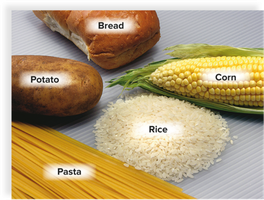
Common foods rich in carbohydrates include bread, potatoes, corn, rice, and pasta. These foods provide energy through their starch content.
Starch is the primary storage carbohydrate in plants.
Glycogen is the primary storage carbohydrate in animals.
Summary Table: Types and Functions of Carbohydrates
Type | Structure | Function | Example |
|---|---|---|---|
Monosaccharide | Single sugar unit | Energy source, building block | Glucose |
Disaccharide | Two sugar units | Transport, energy | Sucrose, lactose |
Polysaccharide | Many sugar units | Storage, structure | Starch, glycogen, cellulose |
Key Terms and Concepts
Monosaccharide: Simple sugar, basic unit of carbohydrates.
Disaccharide: Two monosaccharides linked by a glycosidic bond.
Polysaccharide: Polymer of many monosaccharides.
Glycosidic linkage: Covalent bond joining two sugar molecules.
Cellulose: Structural polysaccharide in plants.
Starch: Storage polysaccharide in plants.
Glycogen: Storage polysaccharide in animals.
Chitin: Structural polysaccharide in fungi and animals.
Peptidoglycan: Structural polysaccharide in bacteria.
Glycoprotein: Protein with attached carbohydrate, important for cell identity.
Glycolipid: Lipid with attached carbohydrate, important for cell signaling.
Conclusion
Carbohydrates are versatile biomolecules with diverse roles in energy storage, structural support, and cellular communication. Their structural variations underpin their functional diversity in biological systems.
