 Indietro
Chapter 5: The Working Cell – Membrane Structure and Function
Guida di studio - Note intelligenti
 Appunti personalizzati basati sui tuoi materiali, ampliati con definizioni chiave, esempi e contesto.
Chapter 5: The Working Cell
Membrane Structure and Function
The plasma membrane is a dynamic structure that separates the interior of the cell from its external environment. It is primarily composed of phospholipids and proteins, which together regulate the movement of substances into and out of the cell.
Phospholipids and the Lipid Bilayer
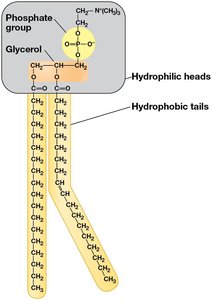
Phospholipids are the major component of cell membranes. Each molecule consists of a glycerol backbone, two fatty acid tails (hydrophobic), and a phosphate group (hydrophilic).
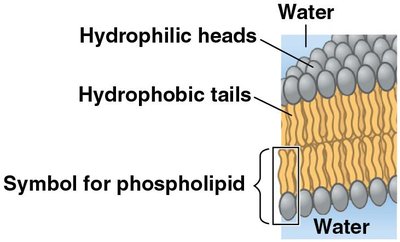
Phospholipids spontaneously arrange themselves into a bilayer in aqueous environments, with hydrophobic tails facing inward and hydrophilic heads facing outward toward water.
This arrangement forms the phospholipid bilayer, which acts as a semi-permeable barrier.
Fluid Mosaic Model
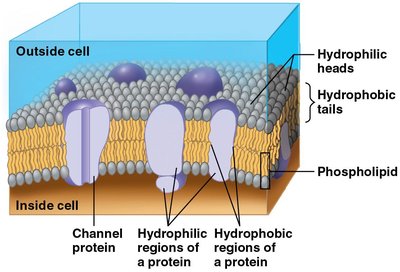
The fluid mosaic model describes the plasma membrane as a mosaic of lipids and proteins that can move laterally within the layer, giving the membrane flexibility and fluidity.
Proteins are interspersed throughout the bilayer, contributing to its mosaic nature.
Membrane Proteins
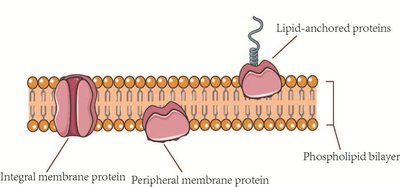
Integral proteins are embedded within the lipid bilayer and have both hydrophobic and hydrophilic regions.
Peripheral proteins are attached to the inner or outer surface of the membrane and do not penetrate the bilayer.
Membrane proteins serve various functions, including transport, signal transduction, cell recognition, and structural support.
Cholesterol in Membranes
Cholesterol is present in animal cell membranes and is essential for maintaining membrane fluidity and stability.
Selective Permeability
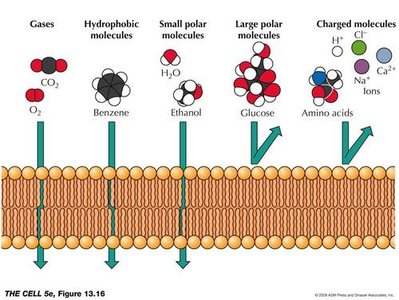
The plasma membrane is selectively permeable, allowing some substances to cross more easily than others.
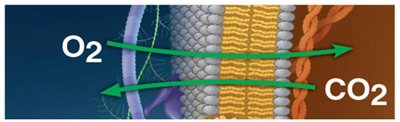
Small, nonpolar molecules (e.g., O2, CO2) can diffuse directly through the lipid bilayer, while large or charged molecules require transport proteins.
Passive Transport
Passive transport is the movement of substances across the cell membrane without the use of cellular energy (ATP). It relies on the natural motion of particles and includes diffusion, osmosis, and facilitated diffusion.
Diffusion
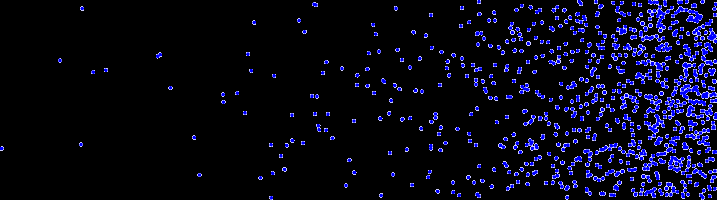
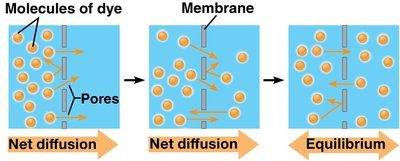
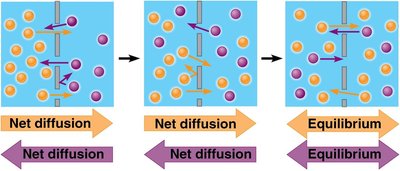
Diffusion is the movement of particles from an area of higher concentration to an area of lower concentration, down their concentration gradient.
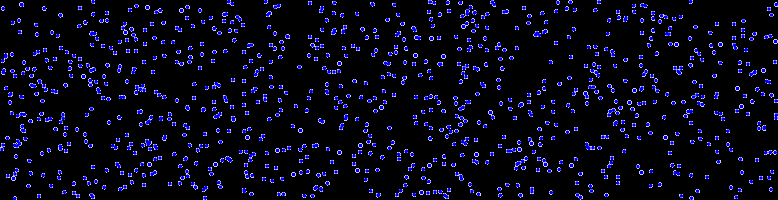
This process continues until equilibrium is reached, where the concentration of particles is equal on both sides of the membrane.
Osmosis
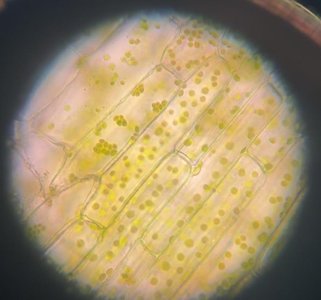
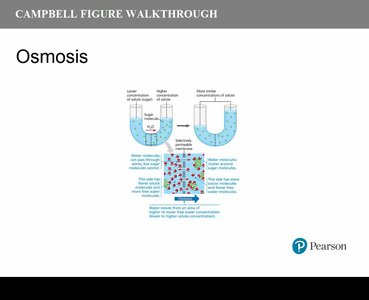
Osmosis is the diffusion of water across a selectively permeable membrane.
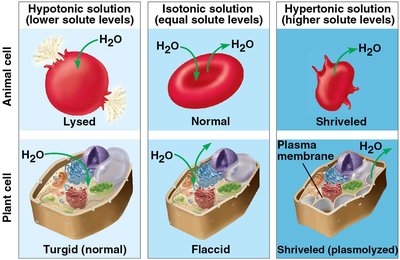
Water moves from an area of lower solute concentration (hypotonic) to an area of higher solute concentration (hypertonic) until equilibrium is reached (isotonic).
Tonicity describes the ability of a solution to cause a cell to gain or lose water:
Isotonic: Equal solute concentration inside and outside the cell; no net water movement.
Hypertonic: Higher solute concentration outside the cell; cell loses water and shrivels.
Hypotonic: Lower solute concentration outside the cell; cell gains water and may burst (animal cells) or become turgid (plant cells).
Facilitated Diffusion
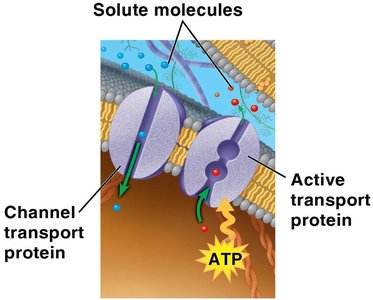
Facilitated diffusion is the passive movement of molecules across the membrane via specific transport proteins.
This process is used for substances that cannot diffuse directly through the lipid bilayer, such as ions and large polar molecules.
Active Transport
Active transport is the movement of substances against their concentration gradient, requiring energy input from the cell (usually in the form of ATP).
Transport proteins (often called pumps) bind to the substance and use energy to change shape and move the substance across the membrane.
Examples include the sodium-potassium pump and calcium pumps.
Bulk Transport: Exocytosis and Endocytosis
Large molecules and particles are transported across the membrane via vesicles in processes called exocytosis and endocytosis.
Exocytosis: The process by which cells export materials in vesicles that fuse with the plasma membrane, releasing their contents outside the cell.
Endocytosis: The process by which cells take in materials by engulfing them in vesicles formed from the plasma membrane.
Phagocytosis ('cell eating'): The cell engulfs large particles or cells.
Receptor-mediated endocytosis: Specific molecules are taken in after they bind to receptors on the cell surface.
Summary Table: Types of Membrane Transport
Type of Transport | Energy Required? | Direction (relative to gradient) | Examples |
|---|---|---|---|
Simple Diffusion | No | Down gradient | O2, CO2 |
Osmosis | No | Down gradient | Water |
Facilitated Diffusion | No | Down gradient | Glucose, ions |
Active Transport | Yes (ATP) | Against gradient | Na+/K+ pump |
Exocytosis/Endocytosis | Yes (ATP) | Bulk transport | Proteins, polysaccharides |
Key Terms and Concepts
Phospholipid bilayer: Double layer of phospholipids forming the core of all cell membranes.
Selective permeability: Property of membranes that allows some substances to pass more easily than others.
Diffusion: Movement of molecules from high to low concentration.
Osmosis: Diffusion of water across a membrane.
Tonicity: The ability of a solution to cause a cell to gain or lose water.
Facilitated diffusion: Passive transport with the help of transport proteins.
Active transport: Movement of substances against their concentration gradient using energy.
Exocytosis: Export of materials via vesicles.
Endocytosis: Import of materials via vesicles.
Phagocytosis: "Cell eating"; engulfing large particles.
Receptor-mediated endocytosis: Specific uptake of molecules after receptor binding.
