 Indietro
Chapter 5: The Working Cell – Membrane Structure, Function, and Cellular Energy
Guida di studio - Note intelligenti
 Appunti personalizzati basati sui tuoi materiali, ampliati con definizioni chiave, esempi e contesto.
Membrane Structure and Function
The Fluid Mosaic Model
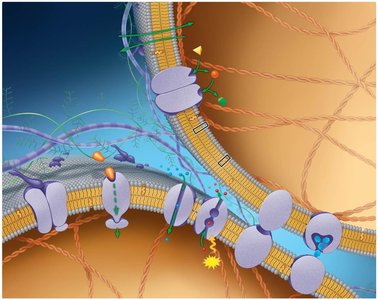
The plasma membrane is essential for cell survival and function, acting as a selective barrier and a site for various cellular processes. Biologists describe its structure using the fluid mosaic model, which depicts a membrane as a mosaic of diverse protein molecules embedded in a fluid phospholipid bilayer. This arrangement allows for flexibility and a range of functions.
Phospholipid bilayer: Provides the basic structure, with hydrophobic tails facing inward and hydrophilic heads facing outward.
Membrane proteins: Perform functions such as transport, enzymatic activity, attachment, signal reception, cell junction formation, and cell recognition.
Selective permeability: The membrane allows certain substances to cross more easily than others.
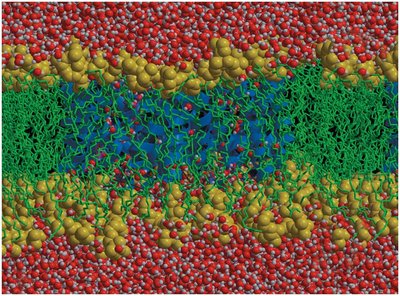
Example: Oxygen and carbon dioxide, being small and nonpolar, diffuse easily across the membrane, while ions and polar molecules require transport proteins.
Functions of Membrane Proteins
Membrane proteins are specialized for distinct roles:
Transport proteins: Facilitate movement of specific ions or molecules across the membrane.
Enzymes: Catalyze sequential reactions, often grouped together.
Attachment proteins: Anchor the membrane to the cytoskeleton and extracellular matrix, providing structural support.
Receptor proteins: Bind signaling molecules and relay messages inside the cell.
Junction proteins: Form intercellular junctions, connecting adjacent cells.
Glycoproteins: Serve as identification tags recognized by other cells.
Evolutionary Significance of Membranes
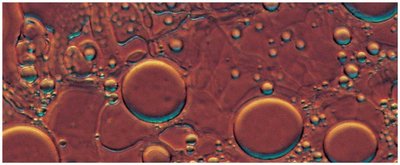
The spontaneous formation of phospholipid membranes was a critical step in the origin of life. Phospholipids self-assemble into bilayers, creating enclosed environments necessary for cellular processes.
Membrane-enclosed collections: Allowed for compartmentalization and the evolution of the first cells.
Transport Across Membranes
Passive Transport: Diffusion
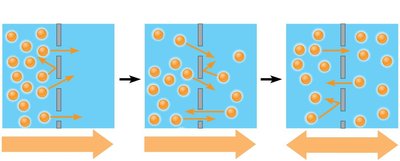
Diffusion is the movement of particles from an area of higher concentration to lower concentration, down their concentration gradient. This process does not require energy and is termed passive transport.
Dynamic equilibrium: Achieved when concentrations are equal on both sides of the membrane.
Example: Oxygen enters cells and carbon dioxide exits via diffusion.
Osmosis: Diffusion of Water
Osmosis is the diffusion of water across a selectively permeable membrane. Water moves from areas of lower solute concentration to higher solute concentration until equilibrium is reached.
Selective permeability: Membranes allow water but not solute to cross.
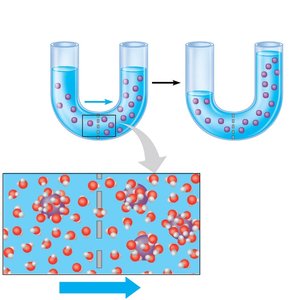
Water Balance and Tonicity
Tonicity describes the ability of a solution to cause a cell to gain or lose water. The effects depend on the relative concentrations of solutes inside and outside the cell:
Hypotonic: Lower solute concentration outside; cells swell.
Isotonic: Equal solute concentration; cells remain normal.
Hypertonic: Higher solute concentration outside; cells shrink.
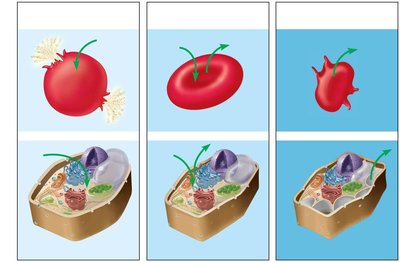
Osmoregulation: Cells regulate water balance to survive in varying environments. Plant cell walls provide structural support, preventing bursting in hypotonic solutions.
Facilitated Diffusion
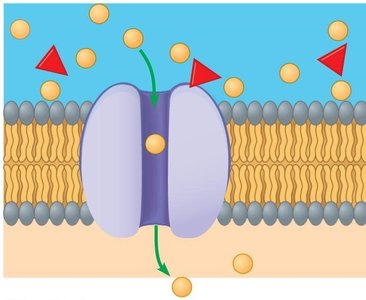
Polar or charged substances require transport proteins for facilitated diffusion, which is still passive and relies on concentration gradients. Aquaporins are specialized channels for rapid water transport.
Hydrophilic tunnels: Allow passage of ions and molecules.
Shape-changing proteins: Bind and release specific substances.
Active Transport
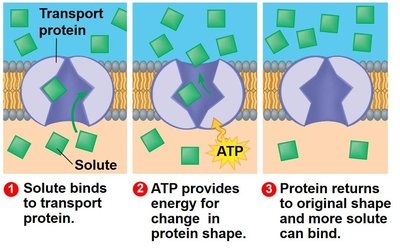
Active transport requires energy (usually from ATP) to move solutes against their concentration gradient. The process involves binding, energy input, and shape change in the transport protein.
Example: Sodium-potassium pump in animal cells.
Bulk Transport: Exocytosis and Endocytosis
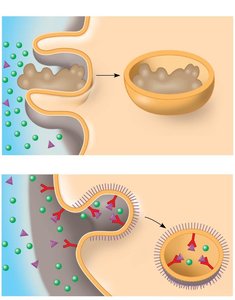
Cells move large molecules via exocytosis (export) and endocytosis (import). Endocytosis includes phagocytosis (engulfing particles) and receptor-mediated endocytosis (specific uptake).
Vesicle formation: Material is packaged in vesicles that fuse with the membrane.
Energy and the Cell
Forms of Energy
Cells perform work by transforming energy. Key forms include:
Kinetic energy: Energy of motion (e.g., thermal energy, light).
Potential energy: Stored energy due to position or structure (e.g., chemical energy in bonds).
Chemical energy: Potential energy available for release in chemical reactions.
Heat: Transfer of thermal energy.
Thermodynamics in Biology
Two laws govern energy transformations:
First law: Energy cannot be created or destroyed, only transformed (law of conservation).
Second law: Energy conversions increase disorder (entropy) in the universe.
Exergonic and Endergonic Reactions
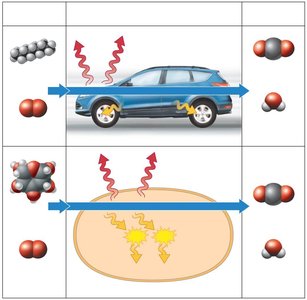
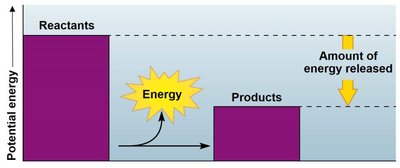
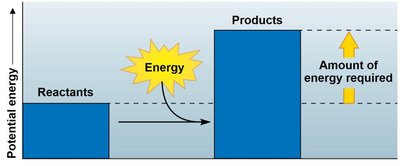
Chemical reactions either release (exergonic) or require (endergonic) energy.
Exergonic: Release energy (e.g., cellular respiration).
Endergonic: Require energy input (e.g., photosynthesis).
Metabolism: The sum of all chemical reactions in a cell.
Metabolic pathway: Series of reactions building or breaking down molecules.
ATP and Energy Coupling
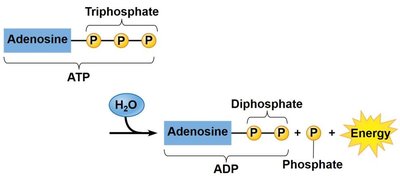
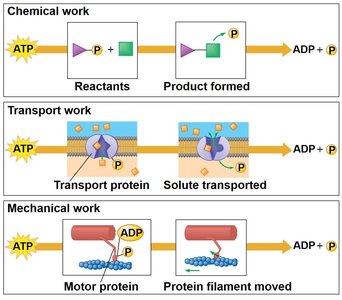
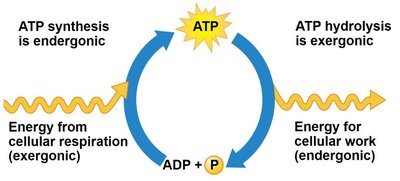
ATP (adenosine triphosphate) is the cell's energy currency. Energy released from exergonic reactions is used to drive endergonic reactions via ATP.
Phosphorylation: Transfer of a phosphate group from ATP to another molecule, energizing it.
ATP cycle: ATP is continuously regenerated from ADP and phosphate using energy from cellular respiration.
How Enzymes Function
Enzymes and Activation Energy
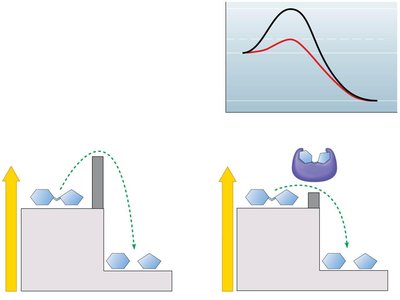
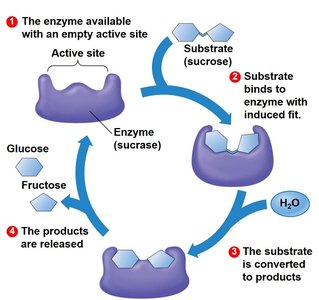
Enzymes are biological catalysts that speed up chemical reactions by lowering the activation energy barrier. They are usually proteins and are not consumed in the reaction.
Activation energy: The energy required to start a reaction.
Enzyme action: Allows reactions to proceed at lower temperatures, protecting cells from damage.
Enzyme Specificity and Catalytic Cycle
Each enzyme is specific to its substrate, which fits into the enzyme's active site. The catalytic cycle involves substrate binding, conversion to products, and release.
Optimal conditions: Enzymes function best at specific temperatures and pH.
Cofactors: Nonprotein helpers (inorganic ions or organic coenzymes) required for enzyme activity.
Enzyme Inhibition
Enzyme activity can be regulated by inhibitors:
Competitive inhibitors: Block substrate binding at the active site.
Noncompetitive inhibitors: Bind elsewhere, changing the enzyme's shape and preventing substrate binding.
Feedback inhibition: The product of a pathway inhibits an earlier enzyme, regulating metabolism.
Enzyme Inhibitors in Medicine and Industry
Many drugs, pesticides, and poisons act as enzyme inhibitors. Examples include ibuprofen (pain relief), antibiotics, and protease inhibitors (HIV treatment).
Application: Enzyme inhibitors are used therapeutically and as pesticides.
Summary Table: Types of Membrane Transport
Type | Energy Required? | Direction | Example |
|---|---|---|---|
Passive Diffusion | No | Down gradient | O2, CO2 |
Facilitated Diffusion | No | Down gradient | Glucose, ions |
Osmosis | No | Water down gradient | Water movement |
Active Transport | Yes (ATP) | Against gradient | Na+/K+ pump |
Exocytosis | Yes | Out of cell | Protein secretion |
Endocytosis | Yes | Into cell | Phagocytosis |
Key Terms and Concepts
Fluid mosaic model
Selective permeability
Diffusion
Osmosis
Tonicity
Facilitated diffusion
Active transport
Exocytosis
Endocytosis
Energy coupling
ATP
Enzyme
Activation energy
Competitive inhibitor
Noncompetitive inhibitor
Feedback inhibition
Key Equations
ATP Hydrolysis:
Energy Coupling:
Additional info:
Some details, such as the specific mechanism of aquaporins and the ATP cycle, were expanded for clarity and completeness. The summary table was inferred to provide a concise comparison of transport types.
