 Indietro
lecture: 11 An Introduction to Metabolism – Study Notes
Guida di studio - Note intelligenti
 Appunti personalizzati basati sui tuoi materiali, ampliati con definizioni chiave, esempi e contesto.
An Introduction to Metabolism
The Energy of Life
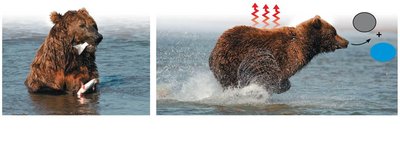
Cells function as miniature chemical factories, constantly carrying out thousands of reactions to extract energy from nutrients and perform work. Metabolism encompasses all chemical reactions within an organism, including energy conversion processes such as bioluminescence.
Metabolism: The sum of all chemical reactions in an organism.
Energy extraction: Cells extract energy from sugars and other fuels.
Bioluminescence: Some organisms convert energy to light.
Free Energy and Thermodynamics
Free energy (ΔG) is the energy available to do work under constant temperature and pressure. The laws of thermodynamics govern energy transformations in biological systems.
ΔG (Free Energy): Only processes with negative ΔG are spontaneous and can perform work.
Equilibrium: Maximum stability; reactions at equilibrium do no work.
Spontaneous processes: Move toward equilibrium and release free energy.
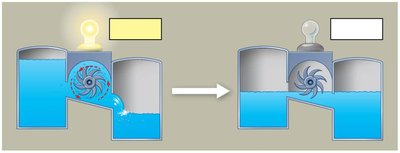
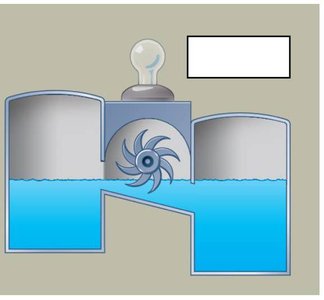
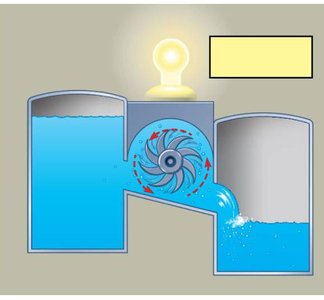
Relationship of Free Energy, Stability, and Work Capacity
Systems with higher free energy are less stable and have greater work capacity. Spontaneous changes decrease free energy, increase stability, and release energy that can be harnessed for work.
More free energy: Less stable, greater work capacity.
Less free energy: More stable, less work capacity.
Spontaneous change: Free energy decreases (ΔG < 0), system becomes more stable.
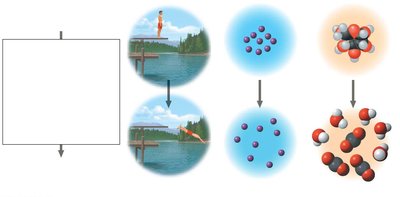
Laws of Thermodynamics
Biological systems obey the laws of thermodynamics, which describe energy conservation and entropy.
First Law: Energy cannot be created or destroyed, only transferred or transformed (principle of conservation of energy).
Second Law: Every energy transfer increases the entropy (disorder) of the universe; some energy is lost as heat.
Energy, Entropy, and Life
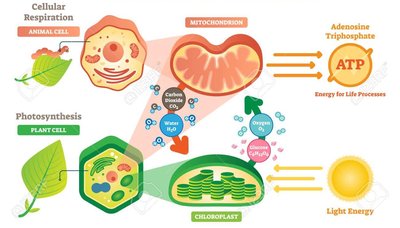
Despite the tendency toward equilibrium and entropy, living cells maintain a constant flow of materials and energy, keeping metabolism away from equilibrium.
Open systems: Cells are open systems, not at equilibrium.
Metabolism: Never at equilibrium; constant flow of energy and materials.
Metabolic Pathways
Organization of Metabolic Pathways
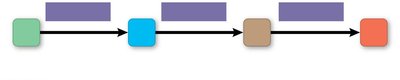
Metabolic pathways consist of a series of chemical reactions, each catalyzed by a specific enzyme, transforming a starting molecule into a final product.
Metabolic pathway: Begins with a specific molecule, ends with a product.
Enzymes: Catalyze each step in the pathway.
Catabolic vs. Anabolic Pathways
Metabolic pathways are classified as catabolic or anabolic based on their function and energy flow.
Catabolic pathways: Break down complex molecules into simpler ones, releasing energy (e.g., cellular respiration).
Anabolic pathways: Build complex molecules from simpler ones, consuming energy (e.g., protein synthesis).
Bioenergetics: Study of energy flow through living organisms.

Exergonic and Endergonic Reactions
Exergonic vs. Endergonic Reactions
Biological reactions are classified based on their energy changes and spontaneity.
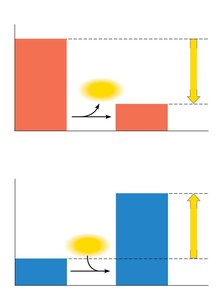
Exergonic reactions: Net release of free energy; spontaneous (ΔG < 0).
Endergonic reactions: Absorb free energy; nonspontaneous (ΔG > 0).
ATP: The Energy Currency of the Cell
Structure and Hydrolysis of ATP
ATP (adenosine triphosphate) is the primary energy carrier in cells. Hydrolysis of ATP releases energy by breaking the terminal phosphate bond, driving cellular work.
ATP structure: Ribose, adenine, and three phosphate groups.
Hydrolysis: ATP + H2O → ADP + Pi + energy
Energy release: Comes from the change to a state of lower free energy.
ATP Coupling and Cellular Work
ATP hydrolysis powers mechanical, transport, and chemical work in cells by coupling exergonic and endergonic reactions.
Coupled reactions: Exergonic ATP hydrolysis drives endergonic processes.
Types of work: Mechanical (movement), transport (pumping substances), chemical (building molecules).
Regeneration of ATP
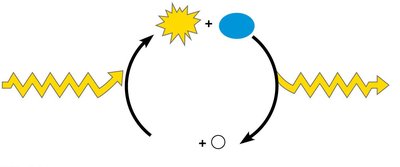
ATP is regenerated from ADP and inorganic phosphate using energy from catabolic reactions, making it a renewable resource.
ATP cycle: ADP + Pi → ATP (energy from catabolism)
Energy for cellular work: ATP hydrolysis provides energy for endergonic processes.
Enzymes and Activation Energy
Activation Energy Barrier
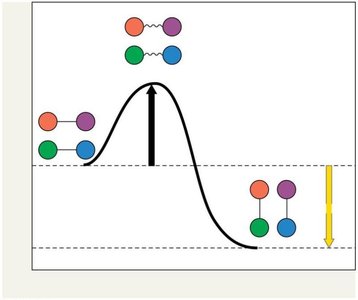
Every chemical reaction requires an initial input of energy, called activation energy (EA), to break bonds and form new ones.
Activation energy (EA): The energy required to start a reaction.
Supplied as thermal energy: Reactants absorb energy from surroundings.
How Enzymes Speed Up Reactions
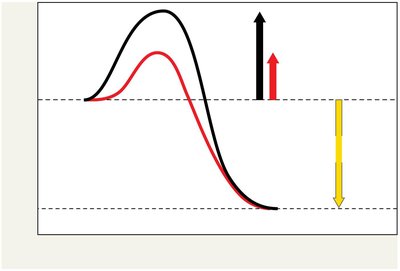
Enzymes are biological catalysts that lower the activation energy barrier, speeding up reactions without being consumed. They do not change the overall free energy (ΔG) of the reaction.
Catalyst: Speeds up reaction, not consumed.
Enzyme: Protein catalyst; lowers EA.
ΔG unaffected: Enzymes do not alter the free energy change.
Substrate Specificity and Induced Fit
Enzymes are highly specific for their substrates, binding them at the active site. The induced fit model describes how the enzyme changes shape to better catalyze the reaction.
Substrate: The reactant an enzyme acts on.
Active site: Region where substrate binds.
Induced fit: Enzyme changes shape for optimal catalysis.
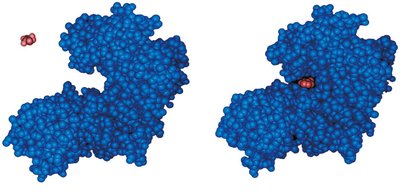
Catalysis in the Enzyme’s Active Site
The active site of an enzyme lowers activation energy by orienting substrates, straining bonds, providing a favorable environment, or forming temporary covalent bonds.
Orientation: Positions substrates correctly.
Strain: Stresses substrate bonds.
Microenvironment: Provides optimal conditions.
Covalent bonding: Forms temporary bonds with substrate.
Effects of Local Conditions on Enzyme Activity
Enzyme activity is influenced by environmental factors such as temperature and pH, as well as chemicals that affect enzyme function.
Temperature: Each enzyme has an optimal temperature.
pH: Each enzyme has an optimal pH.
Chemicals: Can enhance or inhibit activity.
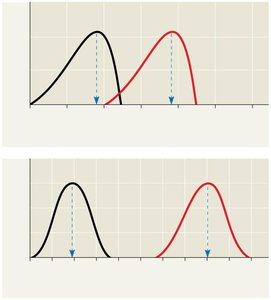
Enzyme Inhibition and Regulation
Enzyme Inhibitors
Enzyme inhibitors reduce enzyme activity by binding to the enzyme. Competitive inhibitors bind to the active site, while noncompetitive inhibitors bind elsewhere, altering the enzyme’s shape.
Competitive inhibitors: Compete with substrate for active site.
Noncompetitive inhibitors: Bind elsewhere, change enzyme shape.
Examples: Toxins, poisons, pesticides, antibiotics.
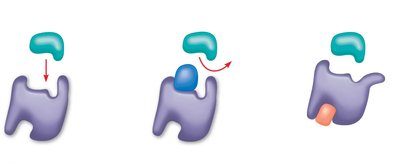
Regulation of Enzyme Activity
Cells regulate metabolism by controlling enzyme activity, either by gene expression or by direct regulation of enzymes.
Gene regulation: Switches genes encoding enzymes on or off.
Enzyme regulation: Modifies enzyme activity directly.
Allosteric Regulation of Enzymes
Allosteric regulation involves regulatory molecules binding to an enzyme at a site other than the active site, affecting its function. This can either inhibit or activate the enzyme.
Allosteric regulation: Regulatory molecule binds at a non-active site.
Activator: Stabilizes active form.
Inhibitor: Stabilizes inactive form.
Cooperativity: Binding of one substrate enhances activity at other sites.
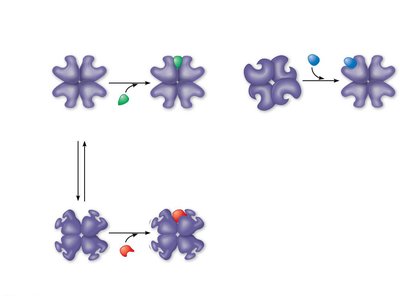
Summary Table: Catabolic vs. Anabolic, Exergonic vs. Endergonic, and ΔG
Pathway/Reaction | Energy Flow | ΔG | Example |
|---|---|---|---|
Catabolic | Releases energy | ΔG < 0 (exergonic) | Cellular respiration |
Anabolic | Consumes energy | ΔG > 0 (endergonic) | Protein synthesis |
Exergonic | Energy released | ΔG < 0 | ATP hydrolysis |
Endergonic | Energy required | ΔG > 0 | Glutamine synthesis |
Key Equations
Free energy change:
ATP hydrolysis:
Test Yourself
What is the relationship between catabolic/anabolic, exergonic/endergonic, and ΔG?
How do the laws of thermodynamics affect cellular metabolism?
What is ATP and how is it used in cells?
What are enzymes and how do they function?
How can enzyme activity be altered or regulated?
How do different inhibitors and regulators work?
