 Indietro
Chapter 6: An Introduction to Metabolism – Study Guide
Guida di studio - Note intelligenti
 Appunti personalizzati basati sui tuoi materiali, ampliati con definizioni chiave, esempi e contesto.
Chapter 6: An Introduction to Metabolism
Overview of Metabolism
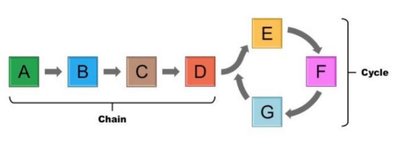
Metabolism encompasses all chemical reactions that occur within living organisms, enabling them to transform matter and energy. These reactions are organized into metabolic pathways, which can be either linear chains or cycles. Metabolism is divided into two main types: catabolic pathways that break down molecules and release energy, and anabolic pathways that build molecules and require energy input.
Catabolic reactions: Break down complex molecules into simpler ones, releasing energy.
Anabolic reactions: Build complex molecules from simpler ones, requiring energy input.
Metabolic pathways: Series of reactions, each catalyzed by a specific enzyme, converting substrates to products.
Chain vs. Cycle: Chains proceed linearly, while cycles repeat a series of reactions.
Example: Glycolysis (catabolic) and gluconeogenesis (anabolic).
Forms of Energy and Thermodynamics
Energy exists in various forms, including potential energy (stored energy), kinetic energy (energy of motion), and thermal energy (energy due to temperature). The flow and transformation of energy in biological systems are governed by the laws of thermodynamics:
First Law of Thermodynamics: Energy can be transferred or transformed but cannot be created or destroyed.
Second Law of Thermodynamics: Every energy transfer increases the entropy (disorder) of the universe.
Spontaneous processes: Occur without energy input and are associated with increased entropy.
Nonspontaneous processes: Require energy input and are associated with decreased entropy.
Biological order and disorder: Cells create order by building complex molecules (decreasing entropy), but also contribute to disorder when breaking down molecules (increasing entropy).
Free Energy and Spontaneity
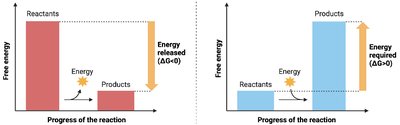
The change in free energy (ΔG) of a reaction determines whether it occurs spontaneously. Spontaneous reactions have a negative ΔG and increase entropy, while nonspontaneous reactions have a positive ΔG and require energy input.
Exergonic reactions: Release energy, have negative ΔG, and are spontaneous.
Endergonic reactions: Require energy input, have positive ΔG, and are nonspontaneous.
Example: Cellular respiration is exergonic and increases entropy; photosynthesis is endergonic and decreases entropy.
ATP: The Energy Currency of the Cell
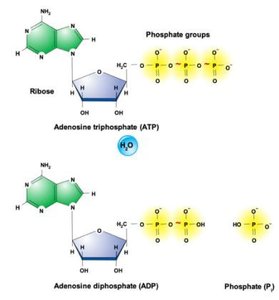
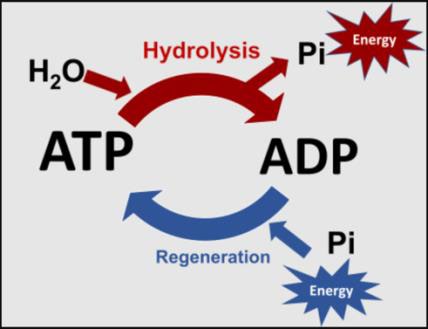
Adenosine triphosphate (ATP) powers cellular work by coupling exergonic reactions to endergonic reactions. ATP consists of a ribose sugar, adenine base, and three phosphate groups. Hydrolysis of ATP releases energy used for cellular work, converting ATP to ADP and inorganic phosphate (Pi).
ATP hydrolysis: ATP + H2O → ADP + Pi; ΔG = -7.3 kcal/mol (exergonic, spontaneous).
ATP synthesis: ADP + Pi → ATP; ΔG = +7.3 kcal/mol (endergonic, requires energy).
Energy coupling: Endergonic reactions are driven by coupling with ATP hydrolysis.
Cellular work: Includes chemical work (driving endergonic reactions), transport work (pumping substances across membranes), and mechanical work (movement of cilia, chromosomes).
Enzymes and Activation Energy
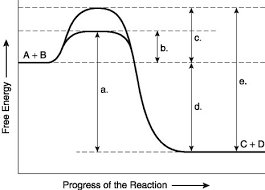
Enzymes are biological catalysts that speed up metabolic reactions by lowering the activation energy barrier. Activation energy is the energy required to initiate a reaction. Enzymes facilitate the formation of the transition state, making reactions more likely to occur.
Activation energy: The energy needed to reach the transition state.
Enzyme function: Lower activation energy, increase reaction rate, do not change ΔG.
Transition state: The intermediate state during a reaction where reactants are converted to products.
Factors Affecting Enzyme Activity
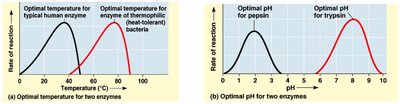
Enzyme activity is influenced by temperature, pH, and the presence of cofactors or inhibitors. Each enzyme has optimal conditions for activity:
Temperature optimum: The temperature at which enzyme activity is highest.
pH optimum: The pH at which enzyme activity is highest.
Cofactors: Inorganic molecules that support enzyme activity.
Coenzymes: Organic cofactors.
Competitive inhibitors: Bind to the active site, blocking substrate binding.
Noncompetitive inhibitors: Bind elsewhere, altering enzyme shape and reducing activity.
Regulation of Enzyme Activity
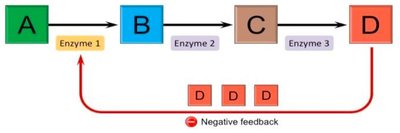
Cells regulate metabolism by controlling enzyme activity. Allosteric regulation involves binding regulators to sites other than the active site, affecting enzyme function. Feedback inhibition occurs when the end product of a pathway inhibits an earlier enzyme, preventing overproduction.
Allosteric regulation: Enhances or diminishes enzyme activity by binding to allosteric sites.
Feedback inhibition: End product inhibits an earlier step, maintaining metabolic balance.
Organization: Enzymes are localized within specific cellular compartments for efficient regulation.
Summary Table: Exergonic vs. Endergonic Reactions
Type of Reaction | ΔG | Spontaneity | Energy Flow | Example |
|---|---|---|---|---|
Exergonic | Negative | Spontaneous | Energy released | Cellular respiration |
Endergonic | Positive | Nonspontaneous | Energy required | Photosynthesis |
Additional info:
Enzyme evolution is driven by gene mutations, leading to diverse enzyme functions across species.
Cells are open systems, constantly exchanging energy and materials with their environment.
