 Indietro
Chapter 8: An Introduction to Metabolism – General Biology Study Notes
Guida di studio - Note intelligenti
 Appunti personalizzati basati sui tuoi materiali, ampliati con definizioni chiave, esempi e contesto.
Chapter 8: An Introduction to Metabolism
Big Idea: Metabolism in Cells
Metabolism encompasses all chemical reactions within cells, including those that generate or consume energy. These reactions are essential for maintaining life, growth, and cellular function.
Concept 8.1: An Organism’s Metabolism Transforms Matter and Energy
Metabolic Pathways
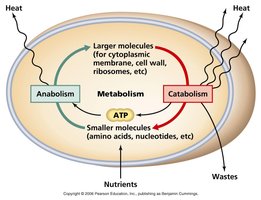
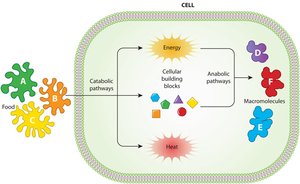
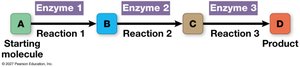
Metabolic pathways are series of chemical reactions in which a specific molecule is modified stepwise to produce a final product. Each step is catalyzed by a specific enzyme.
Catabolic pathways break down complex molecules into simpler ones, releasing energy (e.g., cellular respiration).
Anabolic pathways build complex molecules from simpler ones, consuming energy (e.g., protein synthesis).
Enzymes are biological catalysts that speed up reactions without being consumed.
Forms of Energy
Energy is the capacity to cause change and is used to do work in biological systems.
Kinetic energy: Energy of motion.
Potential energy: Energy stored due to position or structure.
Chemical energy: Potential energy available for release in a chemical reaction.
Open Systems and Thermodynamics
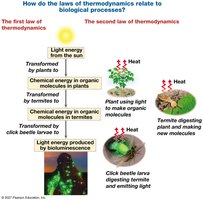
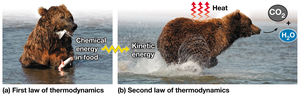
Organisms are open systems, exchanging energy and matter with their surroundings. The laws of thermodynamics govern these exchanges.
First Law: Energy can be transferred and transformed, but not created or destroyed.
Second Law: Every energy transfer increases the entropy (disorder) of the universe.
Concept 8.2: Free-Energy Change and Spontaneity of Reactions
Gibbs Free Energy ()
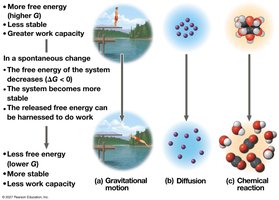
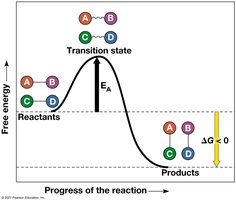
Free energy is the portion of a system’s energy that can perform work at constant temperature and pressure. The change in free energy () determines whether a reaction is spontaneous.
Spontaneous reactions: (energetically favorable)
Nonspontaneous reactions: (require energy input)
Free Energy, Stability, and Equilibrium
Systems move toward equilibrium, a state of maximum stability. Only processes moving toward equilibrium are spontaneous and can perform work.
Exergonic and Endergonic Reactions
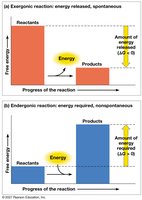
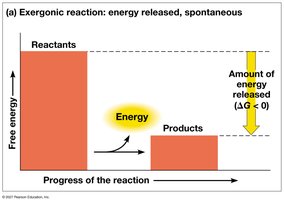
Reactions are classified by their free-energy changes:
Exergonic: Net release of free energy; spontaneous ().
Endergonic: Absorbs free energy; nonspontaneous ().
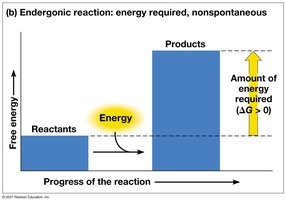
Concept 8.3: ATP Powers Cellular Work by Coupling Reactions
Structure and Function of ATP
ATP (adenosine triphosphate) is a nucleotide composed of ribose, adenine, and three phosphate groups. It is the cell’s primary energy currency.
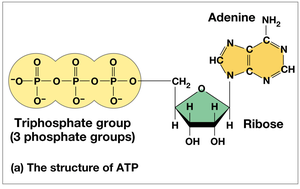
ATP Hydrolysis
Energy is released when ATP’s terminal phosphate is removed by hydrolysis. This energy is used to drive cellular work.
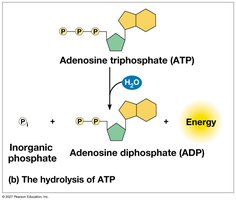
Coupling Exergonic and Endergonic Reactions
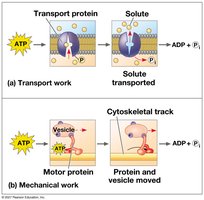
ATP hydrolysis powers endergonic reactions by transferring a phosphate group (phosphorylation), making the overall process exergonic.
Chemical work: Driving endergonic reactions.
Transport work: Pumping substances across membranes.
Mechanical work: Moving cellular structures.
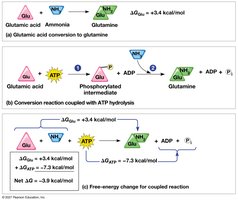
The ATP Cycle
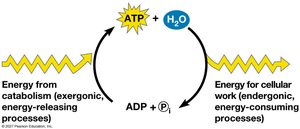
ATP is regenerated from ADP and inorganic phosphate using energy from catabolic reactions. This cycle couples energy-yielding and energy-consuming processes.
Concept 8.4: Enzymes Speed Up Metabolic Reactions by Lowering Energy Barriers
Role of Enzymes
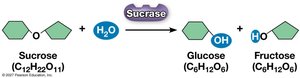
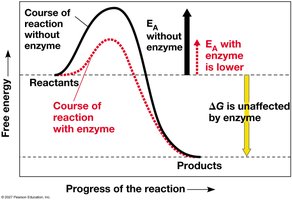
Enzymes are proteins that act as catalysts, speeding up reactions by lowering the activation energy barrier.
Enzyme Specificity and Induced Fit
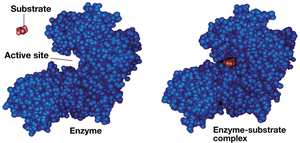
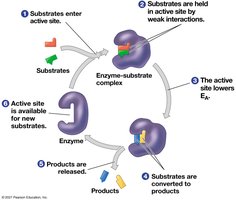
Enzymes are highly specific for their substrates, binding at the active site. The induced-fit model describes how the enzyme changes shape to better fit the substrate.
Factors Affecting Enzyme Activity
Substrate concentration: Higher concentration increases reaction rate until saturation.
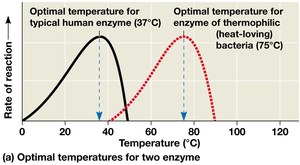
Temperature: Each enzyme has an optimal temperature; too high denatures the enzyme.
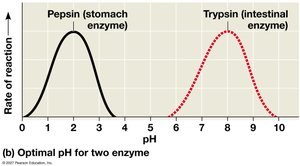
pH: Each enzyme has an optimal pH.
Cofactors: Nonprotein helpers (inorganic or organic).
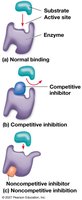
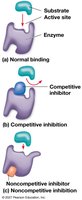
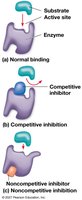
Inhibitors: Chemicals that reduce enzyme activity (competitive or noncompetitive).
Concept 8.5: Regulation of Enzyme Activity Helps Control Metabolism
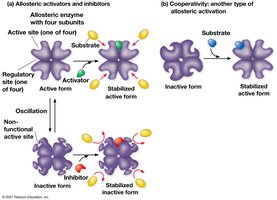
Allosteric Regulation
Allosteric regulation involves binding of regulatory molecules at sites other than the active site, affecting enzyme activity. This can either activate or inhibit the enzyme.
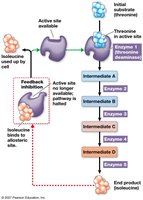
Feedback Inhibition
Feedback inhibition occurs when the end product of a metabolic pathway inhibits an earlier enzyme, preventing overproduction and conserving resources.
Summary Table: Types of Enzyme Regulation
Type | Mechanism | Effect |
|---|---|---|
Allosteric Regulation | Regulatory molecule binds to enzyme at non-active site | Activates or inhibits enzyme |
Feedback Inhibition | End product inhibits pathway enzyme | Prevents overproduction |
Competitive Inhibition | Inhibitor binds active site | Blocks substrate |
Noncompetitive Inhibition | Inhibitor binds elsewhere | Changes enzyme shape |
Additional info: These notes expand on brief points with academic context, definitions, and examples to ensure completeness and clarity for exam preparation.
