 Indietro
Chapter 8: An Introduction to Metabolism – Study Notes
Guida di studio - Note intelligenti
 Appunti personalizzati basati sui tuoi materiali, ampliati con definizioni chiave, esempi e contesto.
Metabolism: Transformations of Matter & Energy
Overview of Metabolism
Metabolism encompasses all chemical reactions occurring within a cell, enabling the transformation of matter and energy necessary for life. These reactions are organized into metabolic pathways, each catalyzed by specific enzymes and highly regulated to maintain cellular function.
Metabolic Pathways: Series of enzyme-catalyzed reactions converting substrates to products.
Catabolic Pathways: Break down complex molecules, releasing energy (e.g., cellular respiration).
Anabolic Pathways: Build complex molecules from simpler ones, consuming energy (e.g., protein synthesis).
Intermediates: Molecules formed between the initial substrate and final product.
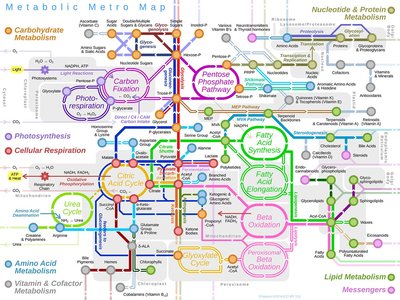

Additional info: Catabolic and anabolic pathways are interconnected; energy released from catabolic reactions (often in the form of ATP) powers anabolic reactions.
Energy in Biological Systems
Types of Energy
Energy is the capacity to do work and is essential for movement, growth, reproduction, and maintaining homeostasis. It exists in two primary forms:
Kinetic Energy: Energy of motion (e.g., muscle contraction, heat, light).
Potential Energy: Stored energy due to position or structure (e.g., chemical bonds, gravitational energy).

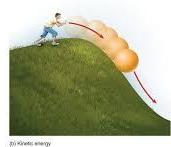
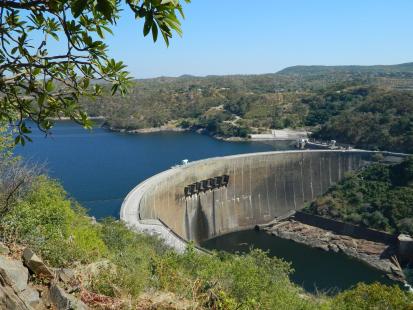

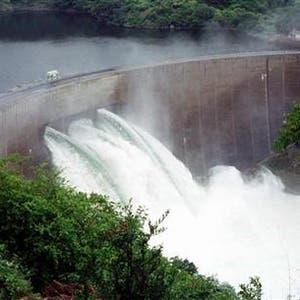
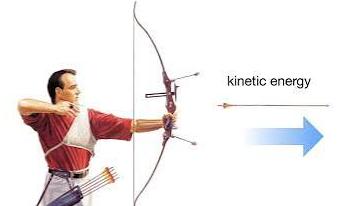
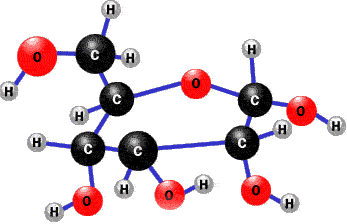
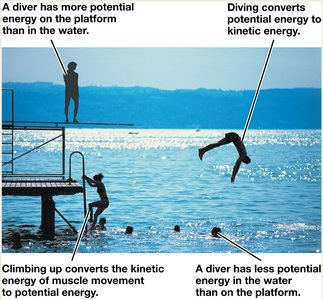
Objects in motion can switch between potential and kinetic energy. As kinetic energy increases, potential energy decreases, and vice versa.
Energy Transformations & Thermodynamics
Laws of Thermodynamics
Biological systems obey the laws of thermodynamics, which govern energy transformations:
First Law: Energy can be transferred and transformed, but cannot be created or destroyed.
Second Law: Energy conversions are not 100% efficient; some energy becomes unavailable to do work, increasing entropy (randomness/disorder).
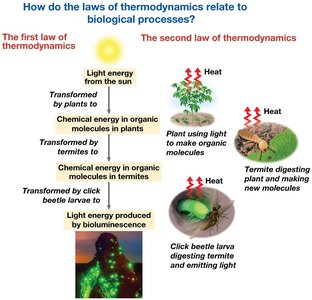
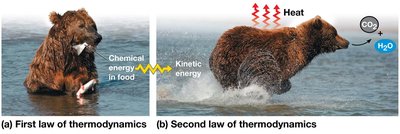
Entropy is a measure of disorder. Spontaneous processes increase entropy and are energetically favorable (catabolic reactions), while nonspontaneous processes decrease entropy and require energy input (anabolic reactions).
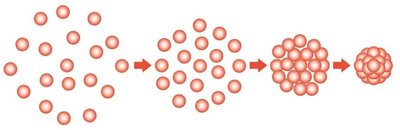
Additional info: Living systems maintain low entropy by constantly exchanging energy and matter with their environment.
Free Energy, Stability, & Equilibrium
Free Energy (G)
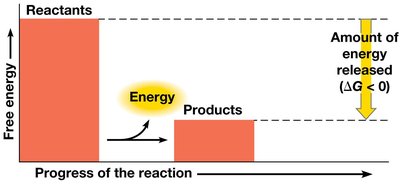
Free energy (G) is the portion of a system's energy available to do work. Changes in free energy (ΔG) determine whether a reaction is spontaneous:
ΔG < 0: Spontaneous, exergonic, catabolic (energy released).
ΔG > 0: Nonspontaneous, endergonic, anabolic (energy consumed).
ΔG = 0: Equilibrium; no net work can be done.
Equation:
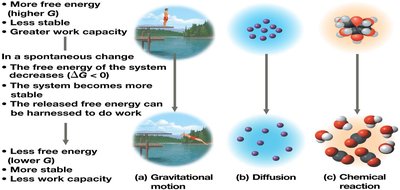
Cells are open systems; they never reach equilibrium because nutrients enter and wastes exit, allowing continuous metabolic activity.
ATP: The Energy Currency of the Cell
ATP Structure & Function
ATP (adenosine triphosphate) powers cellular work by coupling exergonic reactions (energy-releasing) to endergonic reactions (energy-consuming). Hydrolysis of ATP releases energy:
ATP Hydrolysis:
ΔG for ATP hydrolysis: kcal/mol
Cellular Work: Chemical (synthesis), transport (active transport), mechanical (muscle contraction, motor proteins).
ATP is a renewable resource, regenerated by phosphorylation of ADP using energy from catabolic pathways.
Enzymes: Biological Catalysts
Enzyme Structure & Function
Enzymes are proteins (or ribozymes) that speed up chemical reactions by lowering the activation energy (Ea) required for substrates to reach the transition state. They are highly specific, binding substrates at their active sites.
Enzyme-Substrate Complex: Temporary association between enzyme and substrate.
Induced Fit: Enzyme changes shape to better fit the substrate.
Activation Energy: Energy needed to initiate a reaction.
Enzymes lower Ea by orienting substrates, inducing strain, or adding charges, making reactions proceed faster.
Regulation of Enzyme Activity
Factors Affecting Enzyme Activity
Enzyme activity is influenced by environmental factors (temperature, pH), cofactors (inorganic ions), coenzymes (organic molecules), and inhibitors.
Irreversible Inhibitors: Bind covalently, permanently disabling the enzyme.
Reversible Inhibitors: Bind non-covalently; can be competitive (active site) or noncompetitive (other site).
Allosteric Regulation: Enzymes with multiple subunits can be regulated by activators or inhibitors binding to regulatory sites, stabilizing active or inactive forms.
Feedback inhibition occurs when the end product of a pathway inhibits an earlier enzyme, preventing overproduction.
Summary Table: Catabolic vs. Anabolic Pathways
Pathway Type | Direction | ΔG | Energy | Example |
|---|---|---|---|---|
Catabolic | Complex → Simple | < 0 (negative) | Released | Cellular Respiration |
Anabolic | Simple → Complex | > 0 (positive) | Consumed | Protein Synthesis |
Additional info: Metabolic pathways are tightly regulated to ensure cellular efficiency and homeostasis.
