 Indietro
Chapter 8: Energy and Enzymes – An Introduction to Metabolism
Guida di studio - Note intelligenti
 Appunti personalizzati basati sui tuoi materiali, ampliati con definizioni chiave, esempi e contesto.
Energy and Enzymes: Foundations of Cellular Metabolism
Overview of Energy and Enzymes
Energy and enzymes are essential for cellular activity, enabling cells to respond to internal and external signals. Enzymes direct which reactions occur and when, facilitating the acquisition and use of energy. Metabolic pathways are ordered series of chemical reactions that build up or break down molecules, crucial for life processes.
8.1 What Happens to Energy in Chemical Reactions?
Types of Energy
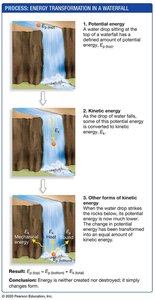
Kinetic Energy: The energy of motion. In biological systems, thermal energy is a form of kinetic energy, representing the movement of molecules.
Potential Energy: The energy stored in position or configuration. Chemical energy, stored in chemical bonds, is a key form of potential energy in cells.
Energy can be transformed from one type to another, but is never created or destroyed.
Chemical Bonds and Potential Energy
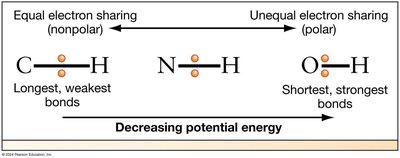
The amount of potential energy in a covalent bond depends on the position of shared electrons relative to the nuclei of bonded atoms.
Longer, weaker bonds with equally shared electrons have high potential energy; shorter, stronger bonds with unequally shared electrons have low potential energy.
Energy Transformations in Chemical Reactions
During chemical reactions, products often have shorter, stronger covalent bonds than reactants, resulting in a decrease in potential energy.
The difference in energy is transformed into kinetic energy, often as thermal energy or light.
Thermodynamics in Biology
First Law of Thermodynamics: Energy is conserved; it cannot be created or destroyed, only transferred or transformed.
Enthalpy (H): The total energy in a molecule, including potential energy in bonds and the effect of kinetic energy on surrounding pressure and volume.
Exothermic and Endothermic Reactions
Exothermic reactions: Release heat; products have less potential energy than reactants ( is negative).
Endothermic reactions: Absorb heat; products have more potential energy than reactants ( is positive).
Entropy and the Second Law of Thermodynamics
Entropy (S): A measure of disorder in a system. When products are less ordered than reactants, entropy increases ( is positive).
Second Law of Thermodynamics: The total entropy of a system always increases in a spontaneous process.

Gibbs Free Energy and Spontaneity
Gibbs free energy (G) determines whether a reaction is spontaneous (exergonic) or requires energy input (endergonic).
The standard free-energy change equation is:
Where is temperature in Kelvin.
At equilibrium, .
Temperature and Concentration Affect Reaction Rates
Even spontaneous reactions may proceed slowly if activation energy is high.
Higher concentrations and temperatures increase the rate of chemical reactions by increasing the frequency and energy of molecular collisions.

8.2 Nonspontaneous Reactions May Be Driven Using Chemical Energy
Energetic Coupling
Energetic coupling allows the energy released from exergonic reactions to drive endergonic reactions. In cells, this occurs via transfer of electrons (redox reactions) or phosphate groups.

Redox Reactions
Oxidation: Loss of electrons (exergonic).
Reduction: Gain of electrons (endergonic).
Redox reactions always occur together and represent energetic coupling of two half-reactions.

Electron Carriers
Electrons are often transferred with protons (as hydrogen atoms).
FAD (flavin adenine dinucleotide) accepts two electrons and two protons to form FADH2.
NAD+ (nicotinamide adenine dinucleotide) accepts two electrons and one proton to form NADH.
These carriers have "reducing power" and readily donate electrons to other molecules.

ATP: The Energy Currency of the Cell
Structure and Function of ATP
ATP (adenosine triphosphate) provides energy for most cellular activities and is a ribonucleotide used in RNA synthesis.
ATP contains three negatively charged phosphate groups, whose repulsion stores high potential energy.

ATP Hydrolysis
Hydrolysis of ATP releases free energy by breaking the bond between the outermost phosphate group and its neighbor, forming ADP.
This reaction is highly exergonic, releasing about 7.3 kcal/mol of energy.

ATP and Phosphorylation
Cells use the energy from ATP hydrolysis for cellular activities, not as heat.
Phosphorylation (addition of a phosphate group) increases the potential energy of target molecules, creating activated intermediates.
Phosphorylation couples exergonic and endergonic reactions.

8.3 How Enzymes Work
Activation Energy and Transition State
Activation energy is the kinetic energy required to strain chemical bonds so they can react to form products.
The transition state is the high-energy intermediate between breaking old bonds and forming new ones.

Enzyme Function and Specificity
Enzymes are biological catalysts that bring reactants (substrates) together in precise orientations, making reactions more likely.
Substrates bind to the enzyme's active site, often causing a conformational change called induced fit.
Lowering Activation Energy
Enzymes stabilize the transition state, decreasing the activation energy required for the reaction to proceed.
Enzyme catalysis involves three steps:
Initiation: Substrates are precisely oriented as they bind to the active site.
Transition state facilitation: Interactions between substrate and active site R-groups lower activation energy.
Termination: Reaction products are released from the enzyme.
Enzyme Kinetics and Saturation
At low substrate concentrations, reaction rate increases linearly with substrate concentration.
At high substrate concentrations, the reaction rate plateaus due to enzyme saturation (all active sites are occupied).
This is known as saturation kinetics.
Enzyme Helpers
Cofactors: Inorganic ions that reversibly interact with enzymes.
Coenzymes: Organic molecules (e.g., NADH) that interact with enzymes.
Prosthetic groups: Non-amino acid atoms or molecules permanently attached to proteins.
8.4 What Factors Affect Enzyme Function?
Environmental Effects on Enzyme Activity
Enzyme structure is critical to function and is sensitive to changes in temperature, pH, interactions with other molecules, and modifications of primary structure.
Temperature affects enzyme folding, movement, and kinetic energy.
pH affects enzyme shape, reactivity, and the charge on acidic and basic groups.
Each enzyme has an optimal temperature and pH for activity.

Regulation of Enzyme Activity
Regulatory molecules can activate or inactivate enzymes by changing their structure or ability to bind substrates.
Competitive inhibition: A molecule competes with the substrate for the active site.
Allosteric regulation: A molecule binds at a site other than the active site, causing a conformational change that can activate or deactivate the enzyme.

Covalent Modifications
Regulation may involve covalent modifications, such as phosphorylation, which can be reversible or irreversible.
Phosphorylation is the most common reversible modification, changing enzyme shape and activity.

8.5 Enzymes Can Work Together in Metabolic Pathways
Metabolic Pathways and Regulation
Metabolic pathways are series of reactions, each catalyzed by a different enzyme, that build or break down biological molecules.
Feedback inhibition: The final product of a pathway inhibits an enzyme earlier in the pathway, preventing overproduction and conserving resources.

Evolution of Metabolic Pathways
Enzymes evolved to synthesize essential building blocks of life.
Retro-evolution and patchwork evolution describe how new metabolic pathways arise through recruitment and modification of existing enzymes.
Bioremediation uses engineered pathways to clean up pollutants.
Catabolic and Anabolic Pathways
Catabolic pathways: Break down molecules to release energy and provide building blocks.
Anabolic pathways: Use energy and building blocks to synthesize molecules.
