 Indietro
Chapter 8
Guida di studio - Note intelligenti
 Appunti personalizzati basati sui tuoi materiali, ampliati con definizioni chiave, esempi e contesto.
Energy and Enzymes: An Introduction to Metabolism
Chapter Overview
This chapter explores how enzymes use energy to drive the chemistry of life, focusing on the nature of energy in chemical reactions, how chemical energy drives nonspontaneous reactions, and the mechanisms by which enzymes speed up reaction rates and function within metabolic pathways.
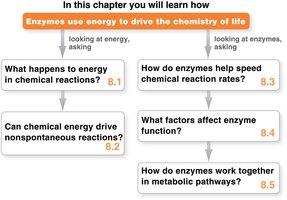
Section 8.1: What Happens to Energy in Chemical Reactions?
Types of Energy
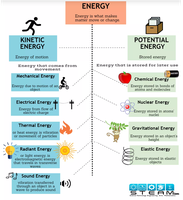
Energy is fundamental to all biological processes and exists in two main forms: kinetic energy and potential energy.
Kinetic energy: The energy of motion. Example: thermal energy is the energy of molecules moving. KT tape
Potential energy: The energy stored in position or configuration. Example: chemical energy is stored in chemical bonds. PC pipe
Energy Transformations in Chemical Reactions
Chemical reactions involve the transformation of energy from one form to another. The First Law of Thermodynamics states that energy is conserved; it cannot be created or destroyed, only transferred or transformed.
Potential energy in bonds is referred to as chemical energy.
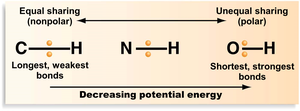
The configuration and position of shared electrons in bonds determine the potential energy.
Weaker bonds with equally shared electrons have high potential energy; stronger bonds with unequally shared electrons have low potential energy.
Energy Changes in Reactions
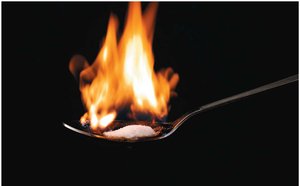
When products of a reaction have shorter, stronger covalent bon ds than the reactants, the potential energy decreases and the change in energy is released as thermal energy or light.
Stronger, shorter, more polar bonds = less potential energy - much harder to break
Weaker bonds with equally shared electrons = high potential energy
Enthalpy (H) and Entropy (S)
Enthalpy (H) is the total energy in a molecule, including potential energy and the effect on surrounding pressure and volume. Changes in enthalpy () are based on differences in potential energy:
: Products have lower potential energy (exothermic) - release energy
: Products have higher potential energy (endothermic) - absorb energy
Entropy (S) is the amount of disorder in a system. The Second Law of Thermodynamics states that total entropy always increases in a system.
When products are less ordered than reactants, entropy increases ().

Gibbs Free Energy
The spontaneity of a reaction is determined by Gibbs free energy ():
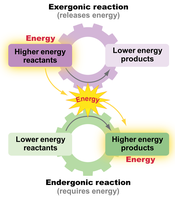
If , the reaction is exergonic (spontaneous, releases energy).
If , the reaction is endergonic (nonspontaneous, requires energy).

Section 8.2: Nonspontaneous Reactions and Energetic Coupling
Energetic Coupling
Nonspontaneous (endergonic) reactions can be driven by coupling them to spontaneous (exergonic) reactions. This is often achieved through redox reactions and ATP hydrolysis.
Redox Reactions
Reduction–oxidation (redox) reactions involve the transfer of electrons, which also transfers energy. These reactions always occur together:
Oxidation: Loss of electrons, releases energy, exergonic
Reduction: Gain of electrons, requires energy, endergonic
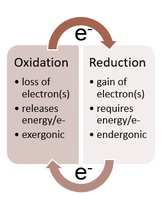 OIL RIG = Oxidation Is Lost, Reduction Is Gain
ATP: The Energy Currency of Cells
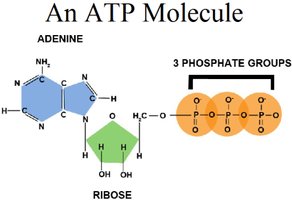
Adenosine triphosphate (ATP) stores energy in its phosphate bonds. The hydrolysis of ATP releases free energy, which can be used to drive endergonic reactions by phosphorylation.
ATP hydrolysis:
Phosphorylation: Adding a phosphate group to a substrate, often changing its shape and activity.

Section 8.3: How Enzymes Work
Enzyme Function
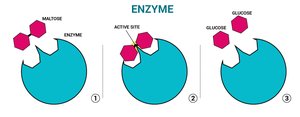
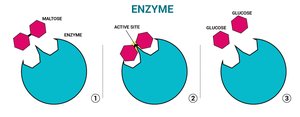
Most biological reactions occur rapidly only in the presence of enzymes, which are protein catalysts. Enzymes bring reactants together in precise orientations and lower the activation energy required for reactions to proceed.
Enzymes are specific for a single type of reaction.
They help reactants collide in the correct orientation and with sufficient kinetic energy.

Enzyme Mechanism: Induced Fit and Transition State
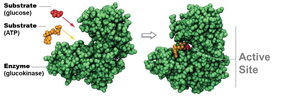
Substrates bind to the enzyme's active site, often causing a conformational change known as induced fit. This reorients substrates and binds them tighter, facilitating the formation of the transition state.
Activation energy () is required to reach the transition state.
Enzymes stabilize the transition state and lower the activation energy.
Factors Affecting Enzyme Activity
Enzyme activity depends on temperature, concentration, and the presence of regulatory molecules.
Cofactors: Inorganic ions (e.g., Zn2+, Mg2+, Fe2+) that interact with enzymes.
Coenzymes: Organic molecules (e.g., NADH, FADH2) that assist enzyme function.
Prosthetic groups: Non-amino acid atoms or molecules permanently attached to proteins.
Enzyme Regulation
Competitive inhibition: A molecule competes with the substrate for the active site.
Allosteric regulation: A molecule binds at a location other than the active site, causing a change in enzyme shape and activity.
Phosphorylation and Dephosphorylation
Kinase: An enzyme that attaches a phosphate group from ATP to a protein, turning the protein on.
Phosphatase: An enzyme that removes a phosphate group from a protein, turning the protein off.
Metabolic Pathways
Anabolic and Catabolic Pathways
Metabolic pathways are series of enzyme-catalyzed reactions. They can be classified as:
Anabolic pathways: Build complex molecules from simpler ones (require energy).
Catabolic pathways: Break down complex molecules into simpler ones (release energy).
Type | Function | Energy |
|---|---|---|
Anabolic | Builds molecules | Requires energy |
Catabolic | Breaks down molecules | Releases energy |
Summary: Energy transformations and enzyme catalysis are central to metabolism. Enzymes lower activation energy, regulate reaction rates, and are essential for both anabolic and catabolic pathways in living systems.
