 Indietro
Chapter 8: Introduction to Metabolism – Energy, Enzymes, and Regulation
Guida di studio - Note intelligenti
 Appunti personalizzati basati sui tuoi materiali, ampliati con definizioni chiave, esempi e contesto.
Introduction to Metabolism
Metabolism encompasses all chemical reactions within a living organism, enabling it to maintain life, grow, and respond to environmental changes. These reactions are organized into metabolic pathways, each catalyzed by specific enzymes, and are tightly regulated to balance energy supply and demand.
What is Energy?
Types of Energy
Kinetic Energy: The energy of motion. Examples include heat (thermal energy), which is the random movement of molecules.
Potential Energy: Stored energy due to position or structure. Chemical energy is a form of potential energy stored in molecular bonds, crucial for biological processes.
Example: Gasoline in a car contains chemical energy (potential), which is converted to kinetic energy (movement) and heat during combustion.
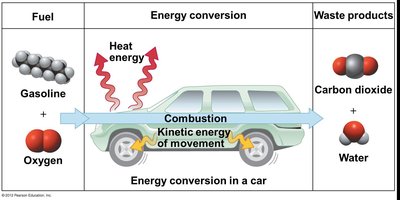
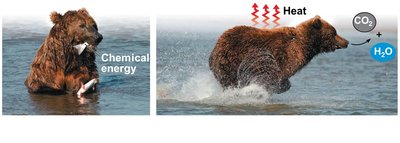
Similarly, animals convert chemical energy from food into kinetic energy and heat.
Thermodynamics in Biology
First Law of Thermodynamics
Energy cannot be created or destroyed, only transformed from one form to another.
Second Law of Thermodynamics
Every energy transfer increases the entropy (disorder) of the universe.
Some energy is always lost as heat during transformations.
Bioenergetics
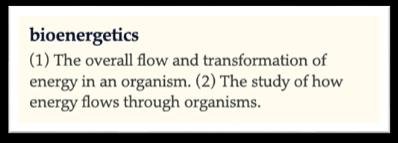
Bioenergetics is the study of how energy flows through living organisms, focusing on the transformation and utilization of energy.
Metabolic Pathways
Metabolic pathways are sequences of chemical reactions, each catalyzed by a specific enzyme, that convert a starting molecule into a final product.

Anabolic pathways: Build complex molecules from simpler ones, requiring energy input.
Catabolic pathways: Break down complex molecules, releasing energy.
Free Energy and Chemical Reactions
Free Energy Change (ΔG)
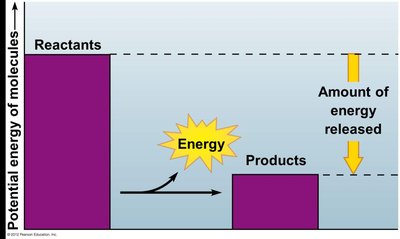
Exergonic reactions: Release free energy; products have less energy than reactants. These reactions are spontaneous.
Endergonic reactions: Require an input of energy; products have more energy than reactants. These reactions are non-spontaneous.
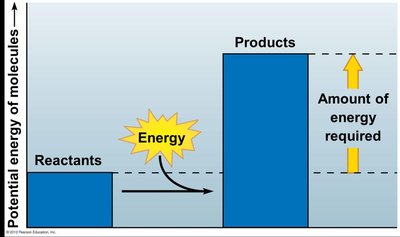
Equilibrium and Metabolism
Reactions in a closed system eventually reach equilibrium, where no net work can be done. Living systems maintain metabolic pathways far from equilibrium, allowing continuous work and life processes.
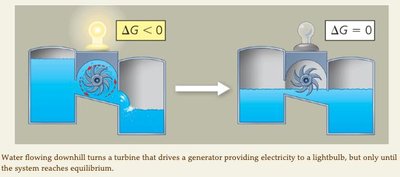
ATP: The Energy Currency of the Cell
ATP (Adenosine Triphosphate) is the primary energy carrier in cells. It consists of adenine, ribose, and three phosphate groups.
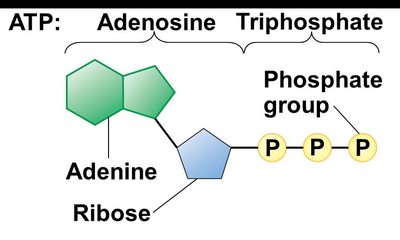
ATP Hydrolysis
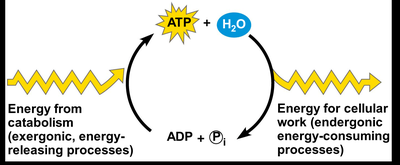
Hydrolysis of ATP releases energy by breaking a high-energy phosphate bond, forming ADP and inorganic phosphate (Pi).
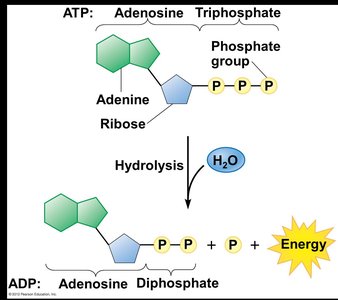
This reaction is exergonic and powers many cellular processes by energy coupling—linking exergonic ATP hydrolysis to endergonic reactions.
The ATP Cycle
ATP is regenerated from ADP and Pi using energy from catabolic (exergonic) reactions, maintaining a continuous supply for cellular work.
Enzymes and Activation Energy
Enzymes are biological catalysts that speed up chemical reactions by lowering the activation energy barrier, allowing reactions to occur more rapidly and at lower temperatures.
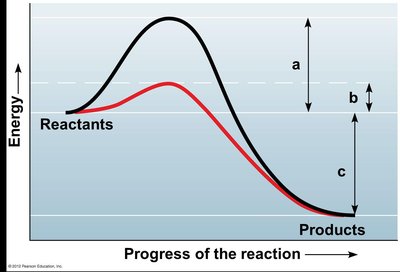
Activation energy (EA): The initial energy input required to start a reaction.
Enzymes do not change the overall ΔG of a reaction.
Enzyme Structure and Function
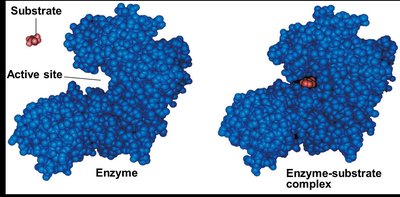
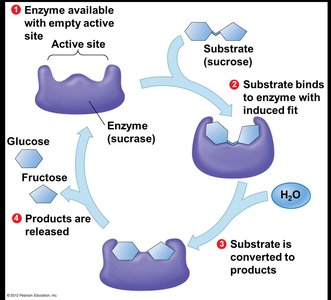
Substrate: The reactant that an enzyme acts upon.
Active site: The region on the enzyme where the substrate binds.
Induced fit: The enzyme changes shape slightly to fit the substrate more snugly, facilitating catalysis.
Factors Affecting Enzyme Activity
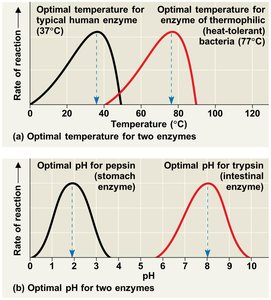
Temperature: Each enzyme has an optimal temperature; too high or too low can denature the enzyme or reduce activity.
pH: Each enzyme has an optimal pH; deviations can alter enzyme structure and function.
Cofactors and Coenzymes
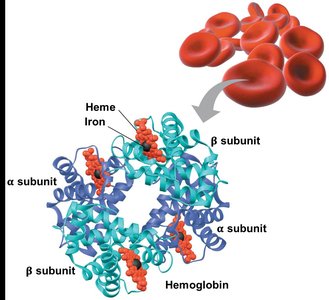
Cofactors: Non-protein helpers (often metal ions) required for enzyme activity.
Coenzymes: Organic cofactors (often vitamins) that assist enzymes.
Enzyme Inhibition and Regulation
Types of Inhibition
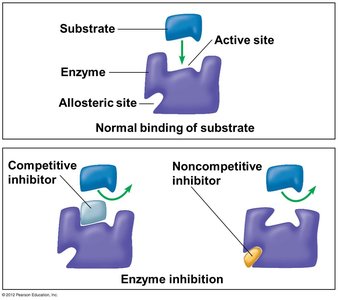
Competitive inhibitors: Bind to the active site, blocking substrate access.
Noncompetitive inhibitors: Bind elsewhere on the enzyme, changing its shape and reducing activity.
Allosteric Regulation
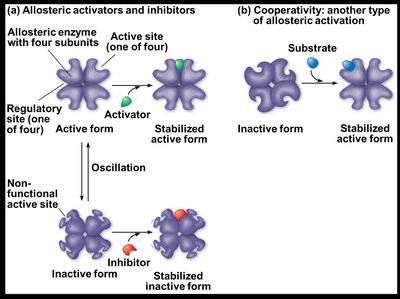
Enzymes with multiple subunits can be regulated by activators or inhibitors binding to sites other than the active site (allosteric sites).
Allosteric activators stabilize the active form; inhibitors stabilize the inactive form.
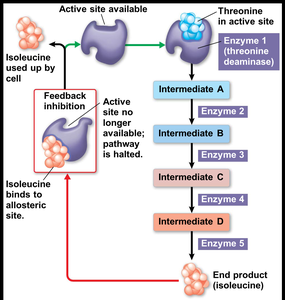
Feedback Inhibition
In metabolic pathways, the end product can inhibit an earlier enzyme, preventing overproduction and conserving resources.
Application: Enzyme Inhibition in Agriculture
Glyphosate (Roundup)
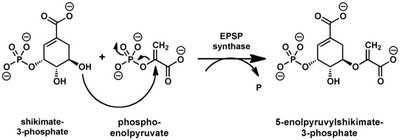
Glyphosate is a broad-spectrum herbicide that acts as a competitive inhibitor of the enzyme EPSPS, blocking the synthesis of aromatic amino acids in plants.
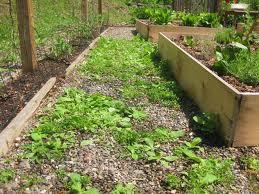
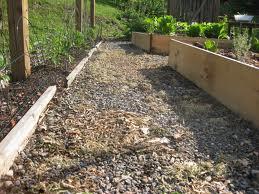
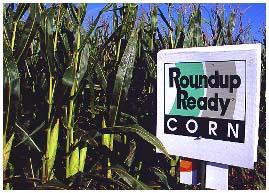
"Roundup Ready" crops are genetically engineered to resist glyphosate, allowing farmers to control weeds without harming the crop.

Resistance Mechanisms
Weeds can develop resistance to glyphosate through mutations in the EPSPS gene or by increasing the number of EPSPS gene copies, reducing the herbicide's effectiveness.
Summary Table: Types of Enzyme Inhibition
Type of Inhibition | Binding Site | Effect on Enzyme | Example |
|---|---|---|---|
Competitive | Active site | Blocks substrate binding | Glyphosate inhibiting EPSPS |
Noncompetitive | Allosteric site | Changes enzyme shape | Heavy metals inhibiting enzymes |
Feedback | Allosteric site (by end product) | Pathway shut down when product accumulates | Isoleucine inhibiting threonine deaminase |
Key Equations
ATP Hydrolysis:
Free Energy Change: Where is the change in free energy, is the change in enthalpy, is temperature in Kelvin, and is the change in entropy.
Additional info: This guide expands on the provided notes with definitions, examples, and academic context to ensure a comprehensive understanding of metabolism, energy, and enzyme regulation for General Biology students.
