 Indietro
Chapter 8: Introduction to Metabolism – Energy and Enzyme Regulation
Guida di studio - Note intelligenti
 Appunti personalizzati basati sui tuoi materiali, ampliati con definizioni chiave, esempi e contesto.
Overview: The Energy of Life
Metabolism and Cellular Energy
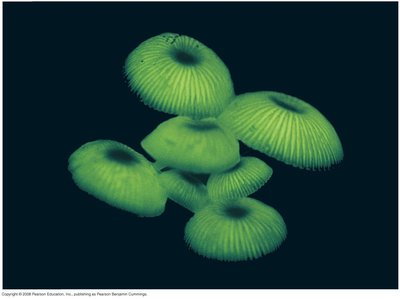
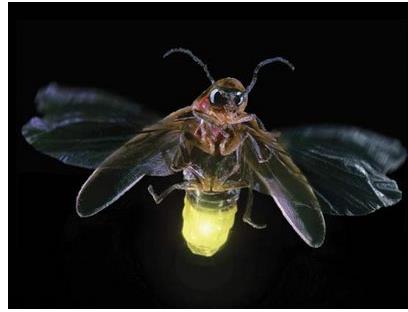
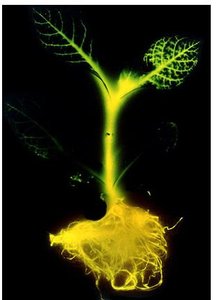
Metabolism encompasses all chemical reactions occurring within a living cell, enabling the extraction and application of energy for cellular work. Some organisms, such as those capable of bioluminescence, convert energy into light, demonstrating the diversity of metabolic processes.
Metabolism: The sum of all chemical reactions in an organism.
Bioluminescence: The production and emission of light by living organisms, a metabolic process.
Concept 8.1: Metabolism and Thermodynamics
Metabolic Pathways
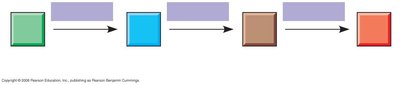
Metabolic pathways organize the chemistry of life, beginning with a specific molecule and ending with a product. Each step is catalyzed by a specific enzyme, ensuring efficiency and regulation.
Catabolic pathways: Break down complex molecules, releasing energy (e.g., cellular respiration).
Anabolic pathways: Build complex molecules from simpler ones, consuming energy (e.g., protein synthesis).
Bioenergetics: Study of how organisms manage their energy resources.
Forms of Energy
Energy is the capacity to cause change and exists in various forms, some of which can perform work.
Kinetic energy: Energy of motion.
Heat (thermal energy): Kinetic energy associated with random movement of atoms or molecules.
Potential energy: Energy due to location or structure.
Chemical energy: Potential energy available for release in a chemical reaction.

Thermodynamics in Biology
Thermodynamics is the study of energy transformations. Biological systems are open, exchanging energy and matter with their surroundings.
Closed system: Isolated from surroundings.
Open system: Exchanges energy and matter with surroundings (organisms are open systems).
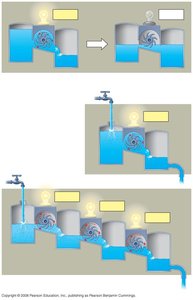
The Laws of Thermodynamics
First Law: Energy can be transferred and transformed, but cannot be created or destroyed.
Second Law: Every energy transfer increases the entropy (disorder) of the universe; some energy is lost as heat.
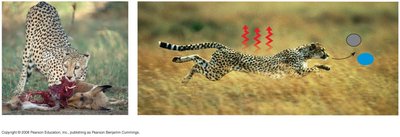
Free Energy and Metabolic Reactions
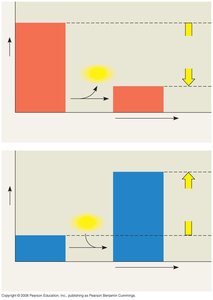
Free-Energy Change ()
Free energy is the energy available to do work in a system at constant temperature and pressure. Only processes with a negative are spontaneous.
Exergonic reactions: Net release of free energy; spontaneous ().
Endergonic reactions: Absorb free energy; nonspontaneous ().
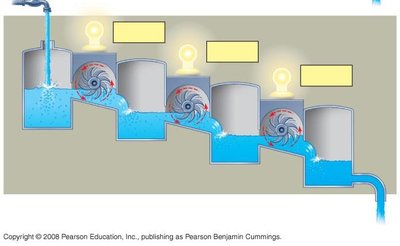
Equilibrium and Metabolism
Reactions in a closed system reach equilibrium and do no work. Cells, as open systems, maintain a constant flow of materials and never reach equilibrium, allowing continuous metabolic activity.
Concept 8.3: ATP and Energy Coupling
ATP Structure and Function
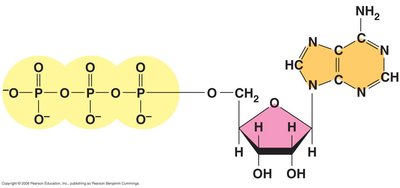
ATP (adenosine triphosphate) is the cell’s energy shuttle, composed of ribose, adenine, and three phosphate groups. It mediates energy coupling by linking exergonic and endergonic reactions.
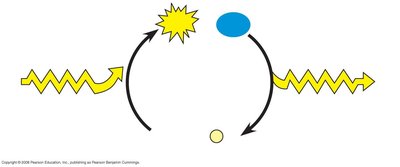
ATP hydrolysis: Releases energy when the terminal phosphate bond is broken.
Energy coupling: Use of exergonic processes to drive endergonic ones, primarily via ATP.
ATP in Cellular Work
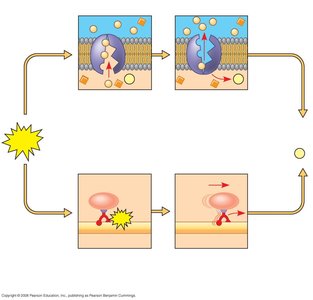
Cells use ATP to perform chemical, transport, and mechanical work. ATP is regenerated by phosphorylation of ADP, using energy from catabolic reactions.
Transport work: ATP phosphorylates transport proteins.
Mechanical work: ATP binds to motor proteins and is hydrolyzed.
Concept 8.4: Enzymes and Activation Energy
Enzyme Function and Activation Energy
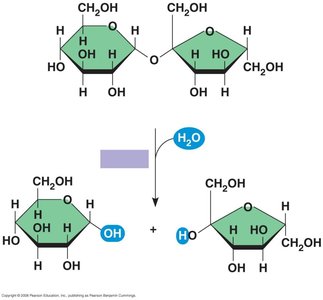
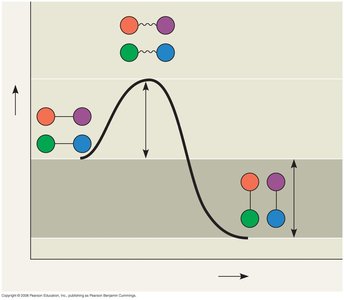
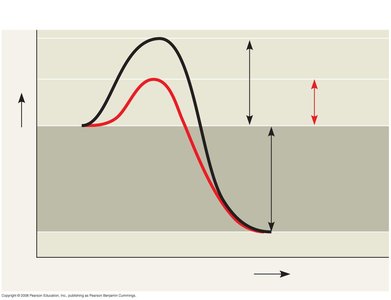
Enzymes are catalytic proteins that speed up metabolic reactions by lowering the activation energy barrier (). Activation energy is the initial energy required to start a reaction, often supplied as heat.
Catalyst: Chemical agent that speeds up a reaction without being consumed.
Activation energy (): Energy needed to initiate a reaction.
Substrate Specificity and Catalysis
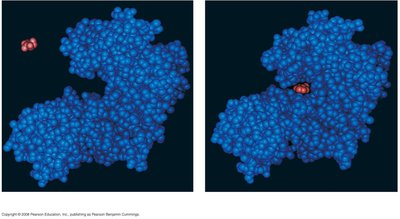
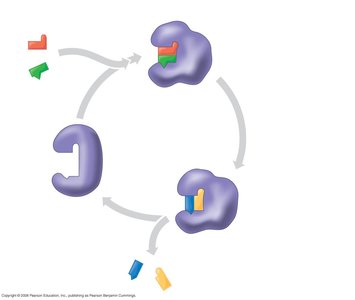
Enzymes are highly specific, acting on substrates that bind to their active sites. The induced fit model describes how substrate binding alters the enzyme’s shape to enhance catalysis.
Substrate: Reactant acted upon by an enzyme.
Active site: Region on enzyme where substrate binds.
Induced fit: Enzyme changes shape to better fit substrate.
Optimal Conditions and Cofactors
Each enzyme has optimal temperature and pH for function. Cofactors, which may be inorganic or organic (coenzymes), assist enzyme activity. Coenzymes include vitamins.
Concept 8.5: Regulation of Enzyme Activity
Enzyme Regulation and Inhibition
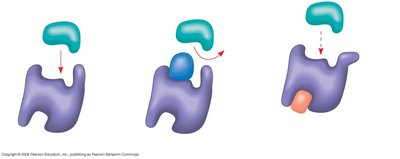
Cells regulate metabolism by controlling enzyme activity and gene expression. Enzyme inhibitors can be competitive (bind to active site) or noncompetitive (bind elsewhere, altering enzyme shape).
Competitive inhibitors: Compete with substrate for active site.
Noncompetitive inhibitors: Bind to another part of enzyme, changing its shape.
Feedback Inhibition
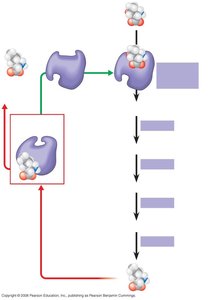
Feedback inhibition occurs when the end product of a metabolic pathway shuts down the pathway, preventing wasteful overproduction.
Localization of Enzymes
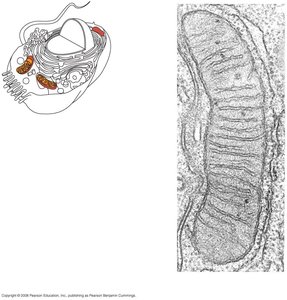
Enzymes are often localized within specific cellular structures, such as mitochondria, to optimize metabolic efficiency.
Summary Table: Key Metabolic Concepts
Term | Definition | Example |
|---|---|---|
Catabolic Pathway | Breaks down molecules, releases energy | Cellular respiration |
Anabolic Pathway | Builds molecules, consumes energy | Protein synthesis |
Kinetic Energy | Energy of motion | Muscle movement |
Potential Energy | Energy due to position/structure | Water behind dam |
Exergonic Reaction | Releases free energy () | ATP hydrolysis |
Endergonic Reaction | Absorbs free energy () | Glutamine synthesis |
Competitive Inhibitor | Binds active site, blocks substrate | Drug blocking enzyme |
Noncompetitive Inhibitor | Binds elsewhere, alters enzyme shape | Allosteric regulation |
Study Guide Questions
Distinguish between catabolic and anabolic pathways; kinetic and potential energy; open and closed systems; exergonic and endergonic reactions; competitive and noncompetitive inhibitors.
Compare and contrast a “building” reaction and a “breaking” reaction.
Explain the first and second law of thermodynamics in your own words.
Describe how cells obtain energy to do cellular work.
Explain how ATP helps perform cellular work through energy coupling.
Describe mechanisms by which enzymes lower activation energy.
Compare and contrast competitive and non-competitive regulation.
Additional info: Academic context was added to clarify metabolic pathways, enzyme function, and regulatory mechanisms, ensuring completeness and self-contained explanations for exam preparation.
