 Indietro
Chemical Bonds and Molecular Structure: Study Notes for General Biology
Guida di studio - Note intelligenti
 Appunti personalizzati basati sui tuoi materiali, ampliati con definizioni chiave, esempi e contesto.
Chemical Bonds and Atomic Properties
Electron Affinity and Atomic Radius
Electron affinity is the energy change when an atom gains an electron, and atomic radius is the distance from the nucleus to the outermost electron shell. These properties influence how atoms interact and form bonds.
Electron Affinity: Atoms with higher electron affinity more readily accept electrons.
Atomic Radius: Decreases across a period and increases down a group in the periodic table.
Example: Fluorine (F) has a higher electron affinity than boron (B), carbon (C), or oxygen (O).
Order of Increasing Atomic Radius: Cs > Ba > Bi > Pb
Electronegativity
Electronegativity is a measure of an atom's ability to attract shared electrons in a chemical bond. It increases as atomic radius decreases and is related to ionization energy.
Trends: Elements with high first ionization energy have high electronegativity.
Relative Values: Electronegativity values are not directly measured but are relative.
Types of Chemical Bonds
Ionic, Covalent, and Metallic Bonds
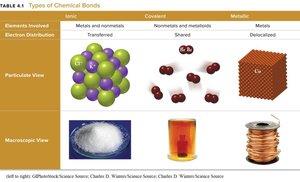
Chemical bonds are classified based on how electrons are distributed between atoms. The three main types are ionic, covalent, and metallic bonds.
Ionic Bonds: Formed by transfer of electrons from metals to nonmetals, resulting in cations and anions arranged in a crystal lattice.
Covalent Bonds: Formed by sharing electrons between nonmetals.
Metallic Bonds: Involve a 'sea of electrons' shared among metal atoms, leading to conductivity.
Lattice Energy
Lattice energy is the energy released when one mole of an ionic compound forms from its ions in the gas phase. It reflects the strength of the ionic bond.
Example: CaS has a much higher lattice energy than LiF due to the charges and sizes of the ions involved.
Bond Polarity
Bond polarity arises when atoms in a covalent bond have different electronegativities, leading to unequal sharing of electrons.
Nonpolar Covalent:
Polar Covalent:
Ionic:
Naming Compounds
Binary Molecular Compounds
When two nonmetals react, they form binary molecular compounds. Naming follows specific rules:
First Element: Use the element's name.
Second Element: Change ending to 'ide'.
Prefixes: Indicate the number of each atom (mono-, di-, tri-, etc.).
Example: CO is carbon monoxide; N2O4 is dinitrogen tetroxide.
Binary Ionic Compounds
Compounds with group 1-2 metals and Al follow these rules:
Cation: Name of the element.
Anion: 'ide' form of the element.
No Prefixes: Prefixes are not used.
Example: NaCl is sodium chloride; MgCl2 is magnesium chloride.
Transition Metals with Multiple Charges
Transition metals can form cations with different charges. Roman numerals indicate the charge.
Example: PbCl2 is lead(II) chloride; PbCl4 is lead(IV) chloride.
Polyatomic Ions
Polyatomic ions are groups of atoms covalently bonded, acting as a single ion.
Examples: Ammonium (NH4+), hydroxide (OH-), nitrate (NO3-), sulfate (SO42-), acetate (CH3COO-).
Oxoanions and Acids
Oxoanions contain oxygen and another element. Binary acids are hydrogen plus a halogen or polyatomic ion, producing H+ in water.
Examples: Chlorate (ClO3-), perchlorate (ClO4-), chlorite (ClO2-), hypochlorite (ClO-).
Acid Naming: Hydrochloric acid (HCl).
Lewis Structures and the Octet Rule
Lewis Structures
Lewis structures represent the arrangement of electrons in molecules. Atoms share electrons to achieve a noble gas configuration (octet rule).
Octet Rule: Main group atoms tend to fill s and p orbitals.
Steps: Count valence electrons, place least electronegative atom in the center, connect atoms with single bonds, fill octet/duet, check electron count.
Example: H2O has 10 valence electrons; COH4 has 14.
Lewis Structures of Ionic Compounds
Lewis structures can also represent ionic compounds, showing electron transfer.
Bond Length and Bond Order
Bond length depends on the number of electrons shared and the identity of the elements. Bond order is the number of bonds between two atoms.
Example: Ozone (O3) has bond lengths between single and double bonds.
Allotropes and Resonance
Allotropes
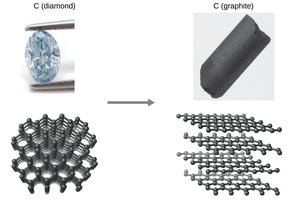
Allotropes are different forms of the same element with distinct properties due to different bonding arrangements.
Example: Carbon exists as diamond and graphite, each with unique structures.
Resonance Structures
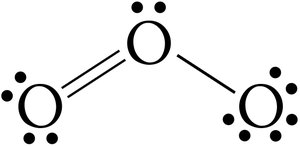
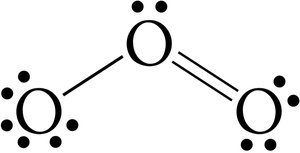
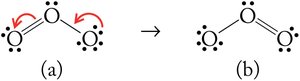
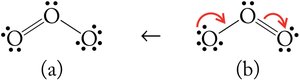
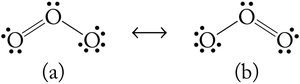
Resonance occurs when multiple equivalent Lewis structures can be drawn for a molecule, indicating electron delocalization and increased stability.
Resonance Stabilization: Delocalization of electrons increases molecular stability.
Example: Ozone (O3) has two resonance structures.
Bond Order in Resonance Structures
The bond order in molecules with resonance is the average of the possible bond orders. For ozone, both O–O bonds are intermediate between single and double bonds.
Bond Order Formula:
Example: Ozone bond order is 1.5.
Formal Charge and Choosing the Best Lewis Structure
Formal Charge
Formal charge is the difference between the number of valence electrons an atom expects and the number it has in a molecule. The best Lewis structure minimizes formal charges, especially on electronegative atoms.
Criteria: Minimize formal charge; negative charges should be on more electronegative atoms.
Exceptions to the Octet Rule
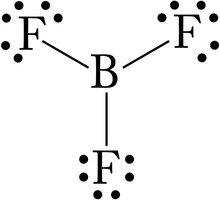
Electron-Deficient Molecules
Some elements (Be, B, Al) form molecules with fewer than eight electrons.
Expanded Octets
Atoms like S and P can accommodate more than eight electrons, forming expanded octets.
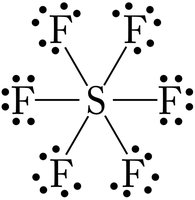
Odd-Electron Molecules: Some molecules have an odd number of valence electrons.
