 Indietro
Chemistry of Life: Atoms, Molecules, and Water
Guida di studio - Note intelligenti
 Appunti personalizzati basati sui tuoi materiali, ampliati con definizioni chiave, esempi e contesto.
Chemistry of Life: Atoms and Molecules
Why Study Chemistry in Biology?
Biology is fundamentally based on the principles of chemistry and physics. All living organisms are composed of matter, which consists of chemicals—either simple inorganic or complex organic compounds. Understanding the chemical basis of life is essential for comprehending biological processes.
Matter: Anything that occupies space and has mass.
Elements: Simplest form of matter with unique properties, designated by one/two letter symbols (e.g., H for Hydrogen, C for Carbon).
There are 118 elements, 92 of which occur naturally. Hydrogen, Carbon, Nitrogen, and Oxygen are found in all living organisms.
Atoms: Structure and Properties
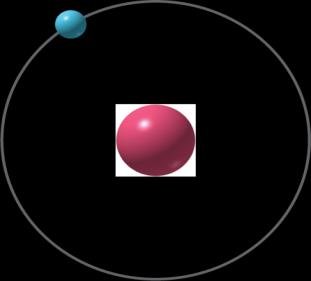
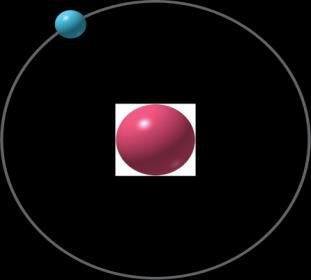
An atom is the smallest unit of an element that retains its chemical properties. Atoms are composed of:
Protons: Positively charged particles located in the nucleus.
Neutrons: Neutral particles also in the nucleus.
Electrons: Negatively charged particles orbiting the nucleus.
Atoms are electrically neutral, having equal numbers of protons and electrons.
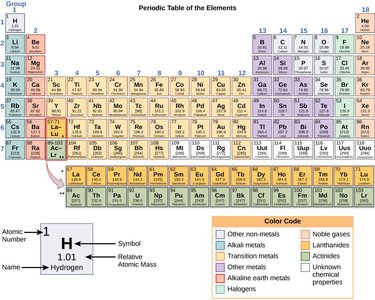
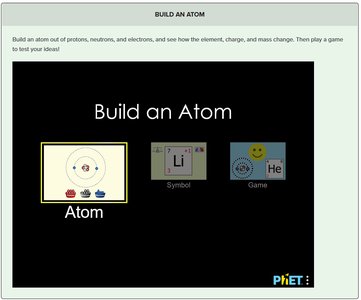
Atomic Terms
Atomic Number: Number of protons in the nucleus; defines the element.
Atomic Mass: Sum of protons and neutrons, measured in atomic mass units (amu) or Daltons.
Periodic Table: Chart organizing elements by atomic number and chemical behavior.
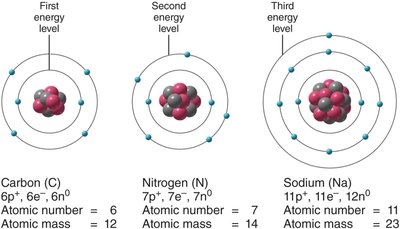
Isotopes and Radioisotopes
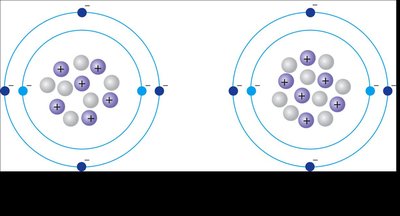
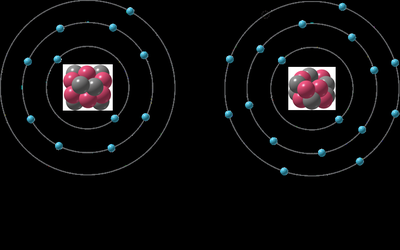
Isotopes are atoms of the same element with different numbers of neutrons. All isotopes have identical chemical properties, but some are unstable (radioisotopes) and emit radiation.
Uses of radioisotopes: Medicine (tumor destruction, imaging), food preservation, and dating fossils (e.g., radiocarbon dating).
Atomic Structure: Bohr Model
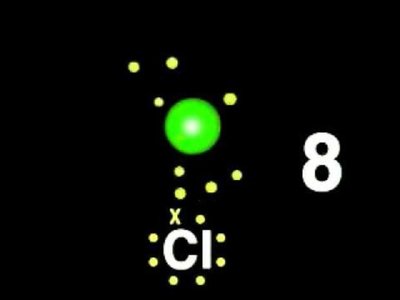
Electrons occupy energy levels (shells) around the nucleus. The outermost shell contains valence electrons, which determine chemical properties and bond formation.
Molecules, Compounds, and Chemical Bonds
Molecules and Compounds
Molecule: Two or more atoms bonded together.
Compound: Molecule composed of two or more different elements.
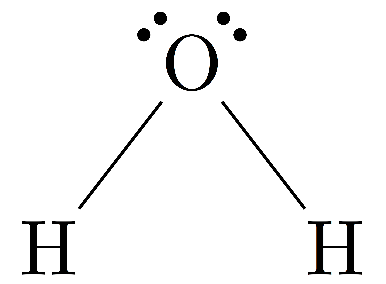
Molecular Formula: Shows types and numbers of atoms (e.g., H2O).
Structural Formula: Shows arrangement of atoms in a molecule.
Ions and Ionization
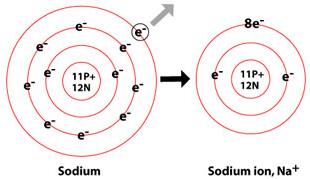
Ions are charged particles formed when atoms gain or lose electrons. Ionization is the process of electron transfer between atoms.
Anion: Gains electrons (negative charge).
Cation: Loses electrons (positive charge).
Oppositely charged ions attract to form stable salts.
Chemical Bonds
Chemical bonds are forces that hold atoms together within molecules or attract molecules to each other. Types of bonds include:
Ionic Bonds: Electrons are transferred, forming anions and cations. Strong bond.
Covalent Bonds: Electrons are shared between atoms. Can be nonpolar (equal sharing) or polar (unequal sharing).
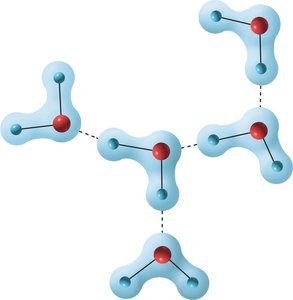
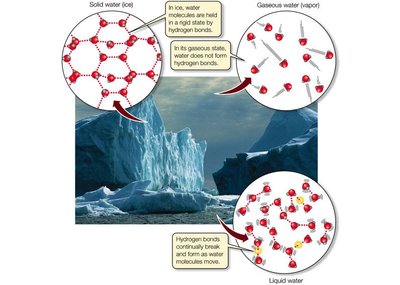
Hydrogen Bonds: Weak attraction between a slightly positive hydrogen atom and a slightly negative atom (O or N).
Van der Waals Forces: Weak, brief attractions between neutral atoms due to temporary polarity.
Polar and Nonpolar Covalent Bonds
Nonpolar Covalent Bond: Electrons shared equally (e.g., C—C bond).
Polar Covalent Bond: Electrons shared unequally, creating partial charges (e.g., O—H bond in water).
Hydrogen Bonds and Van der Waals Forces
Hydrogen Bonds: Important in water, DNA, and protein structure.
Van der Waals Forces: Significant in protein folding and molecular interactions.
Properties of Water
Water: Essential for Life
Water makes up 50–75% of body weight and is a polar, V-shaped molecule. Its unique properties support life:
Solvency: Universal solvent, dissolves polar and charged molecules (hydrophilic), but not nonpolar molecules (hydrophobic).
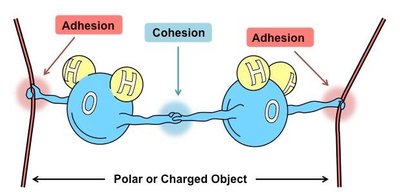
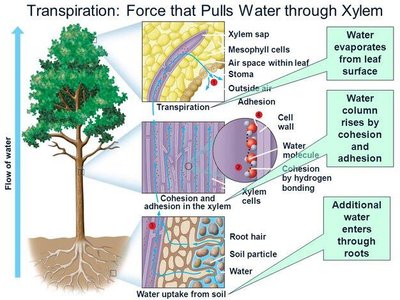
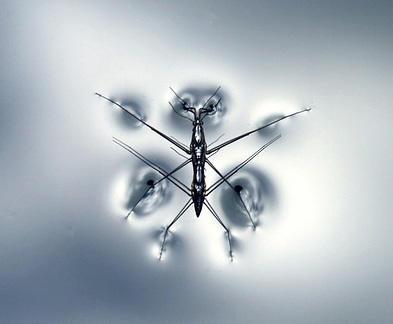
Cohesion: Water molecules stick to each other, creating surface tension.
Adhesion: Water molecules stick to other substances.
Chemical Reactivity: Participates in hydrolysis and dehydration synthesis reactions.
Thermal Stability: High specific heat, evaporative cooling, ice formation provides insulation.
Acids, Bases, and pH
Acids, Bases, and pH Scale
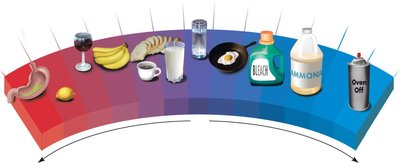
An acid is a proton donor (releases H+ ions), while a base is a proton acceptor (accepts H+ ions or releases OH-). The pH scale measures acidity or alkalinity from 0 to 14.
pH = 7: Neutral ([H+] = [OH-])
pH < 7: Acidic ([H+] > [OH-])
pH > 7: Basic ([H+] < [OH-])
Physiological (blood) pH: 7.35–7.45
Buffers: Solutions that resist changes in pH.
The pH of a solution affects molecular shape, reaction rates, binding ability, and solubility.
Review Questions
Define element, atom, and molecule. What are their differences?
How many electrons, protons, and neutrons are there in an atom of a particular atomic number and mass?
Define the term isotope. What are their uses?
Define: ions, cations, anions, ionization, salts.
What are valence electrons? How does the location and number of electrons in an atom influence bond formation?
What are the characteristics of ionic and covalent bonds?
What type of bond would two carbon atoms usually form?
What is a hydrogen bond? How is it different from a non-polar covalent bond?
Describe the properties of water that are critical to maintaining life.
What is a pH scale? How do we measure acidity or alkalinity?
What makes a solution acidic or alkaline? What is a neutral pH?
Additional info: Academic context was added to clarify atomic structure, chemical bonds, and water properties, as well as to expand on the physiological importance of pH and buffers.
